


LinkedIn Outreach Template: Boost Your Cold Outreach Success with Proven Messaging
Estimated reading time: 15 minutes
Key Takeaways
- Using an effective LinkedIn outreach template boosts your response rates and saves time.
- Personalization, clear value propositions, and low-pressure CTAs are essential to stand out in cold outreach tech.
- Templates help maintain consistency and professionalism without sacrificing authenticity.
- Follow-ups spaced 5-7 days apart with new value increase engagement while avoiding fatigue.
- Leveraging proven LinkedIn DM scripts enhances scalability and efficiency.
Table of contents
- Understanding LinkedIn Outreach: What It Is and Why Templates Matter
- Key Elements of a Successful LinkedIn Outreach Template
- Examples of LinkedIn Outreach Templates That Get Results
- Networking Message Examples to Inspire Genuine Engagement
- Using LinkedIn DM Scripts for Effective Cold Outreach Tech
- Best Practices and Tips for LinkedIn Cold Outreach in Tech
- Conclusion: Elevate Your Outreach with LinkedIn Outreach Templates and Scripts
- Frequently Asked Questions
LinkedIn outreach is a strategic method used by professionals to connect, engage, and build valuable relationships on the world’s largest professional networking platform. Using an effective LinkedIn outreach template can dramatically improve your message response rates and save the time spent crafting each individual note. This structured approach is especially important in cold outreach tech, where volume and speed of interactions matter but authenticity must remain intact.
Whether you’re sending networking message examples to build connections or leveraging LinkedIn DM scripts for scalable outreach, having a well-crafted template as your foundation sets you apart from the sea of generic messages on LinkedIn.
Understanding LinkedIn Outreach: What It Is and Why Templates Matter
LinkedIn outreach describes the practice of sending personalized connection requests and direct messages to professionals beyond your immediate network, typically 2nd and 3rd-degree contacts. This process extends your reach to prospects, industry peers, or potential partners with the goal of initiating meaningful conversations.
A thoughtfully designed LinkedIn outreach template streamlines this effort:
- Provides a consistent, repeatable structure for messaging
- Saves time by reducing the need to compose each note from scratch
- Improves effectiveness by focusing on personalization and clear value
Cold outreach on LinkedIn poses challenges. The platform is flooded with generic, mass-mailed messages. Recipients quickly learn to ignore or delete messages that feel like spam. To break through this noise, your outreach must be different.
A well-crafted message achieves this by:
- Demonstrating genuine research about the recipient
- Offering clear, relevant value instead of a sales pitch
- Maintaining a friendly, conversational tone that feels peer-to-peer, not pushy
Templates are a critical asset in cold outreach tech, enabling teams to scale their interactions without losing the critical personal touch that builds trust and encourages engagement (source, source, source).
For more on scaling a startup or tech growth strategy alongside outreach techniques, consider reading our detailed guide on Essential Startup Growth Strategies, which complements your outreach efforts by focusing on product-market fit and customer acquisition.
Key Elements of a Successful LinkedIn Outreach Template
Creating an effective LinkedIn outreach template involves more than filling in blanks. It requires attention to personalization, value, calls to action, and best practices in tone and timing.
Personalization Techniques
Start with authentic, specific references to the recipient. Avoid generic compliments or vague introductions. Good personalization examples include:
- Mentioning a recent post or article they shared
- Referencing a shared LinkedIn group or mutual connection
- Highlighting attendance at the same industry event or conference
This instantly signals your message is tailored, not a mass send-out. Early personalization helps your outreach avoid the spam folder and shows you’ve done your homework (source).
Related to this, if you want to deepen your understanding of effective event follow-ups and leveraging conferences in tech, check out our article on Major Tech Conferences in 2025, which includes insights on engaging with event attendees and maximizing networking ROI.
Clear Value Proposition
Lead with the recipient’s challenges or goals—not your product features. Frame your message around outcomes or improvements that matter to them.
- Use mini success stories or relevant statistics
- Pose insightful questions that engage their thinking
- Share a quick teaser of how you’ve solved problems similar to theirs
This approach swaps a sales pitch for a value conversation, building curiosity and trust (source, source).
For more on how to structure value conversations backed by data, see our guide on Tech Industry Research, which explains how market analysis and industry deep dives inform persuasive outreach.
Call to Action (CTA)
A low-pressure, micro-commitment CTA works best. Examples include:
- “Would you like me to share a quick example?”
- “Can I send you a case study relevant to your role?”
- “Would it be helpful to discuss how others in your industry are tackling this?”
Avoid immediate meeting asks or pushy sales language. The goal is to encourage a simple response that keeps the conversation open (source).
Best Practices: Tone, Length, and Timing
- Brevity: Keep connection requests under 300 characters and first follow-up messages to 150-200 words in short paragraphs.
- Tone: Friendly yet professional, clear and conversational. Write as if speaking to a peer at an event. Avoid jargon, salesiness, or excessive formality.
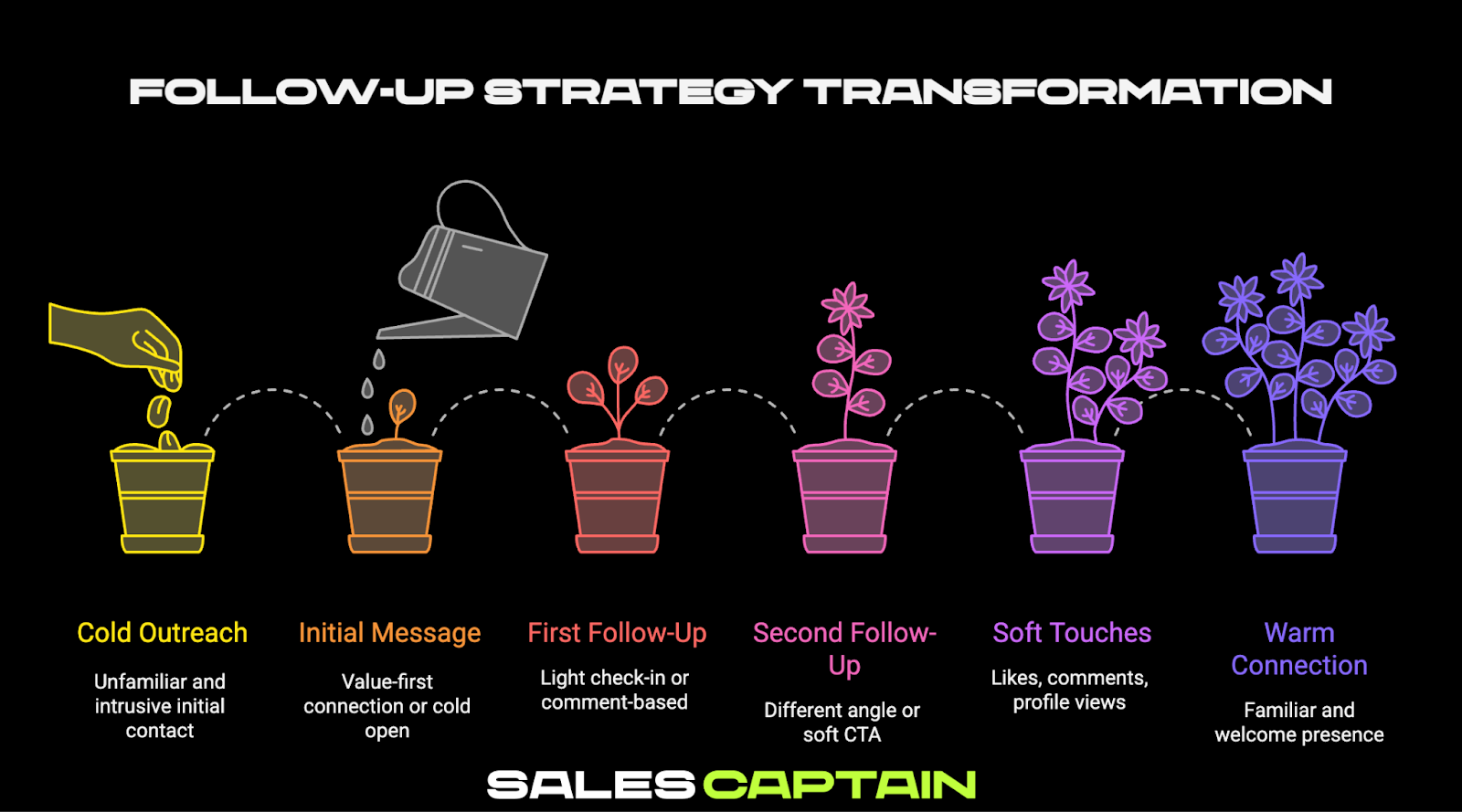
- Follow-ups: Space them 5-7 days apart. Use different angles or add new value each time, limiting attempts to 2-3 to avoid fatigue or negative impressions (source, source).
To optimize message timing and sequence, our article on Future of Work Trends highlights techniques to improve remote and hybrid communication flows, relevant for asynchronous engagement on platforms like LinkedIn.
By combining these elements, you develop outreach messages that stand out and foster real engagement across LinkedIn’s dynamic environment.
Examples of LinkedIn Outreach Templates That Get Results
Here are six proven LinkedIn outreach template examples with context and explanations illustrating how and why they succeed, especially in cold outreach tech.
1. Shared Industry Challenge
Hi [First Name],
As a fellow [Job Title] working on [specific challenge], I wanted to connect and exchange insights about how you’re approaching [challenge/topic]. Looking forward to swapping experiences!
Why it works: It addresses a common, relevant pain point that creates instant rapport and encourages practical conversation rather than a generic invite. Response rates in niche industries like engineering are often above 12% using this approach (source).
2. Values-Driven Connection
Hi [First Name],
I’m looking to expand my network of [industry] professionals who share a commitment to [shared value or mission]. Would love to connect and learn from your experience.
Why it works: This shows genuine intent to build meaningful professional relationships, not just add contacts. It yields response rates of over 40% across sectors (source).
3. Content Appreciation
Hi [First Name],
I really enjoyed your recent post on [topic]. The insight about [specific stat or takeaway] was eye-opening. I’m working on a similar project in [industry] and would love to connect and share ideas.
Why it works: Referencing specific recipient content demonstrates authentic engagement and opens a door to peer-level conversation (source).
4. Tech-Specific Cold Outreach
Hi [First Name],
I noticed your team at [Company] is scaling rapidly. We faced similar growth challenges recently and found a couple of strategies that really helped. Would you like me to share one?
Why it works: This speaks directly to the recipient’s business context, offering concrete value without pressure, a key approach in scaling cold outreach tech pipelines (source).
For additional scaling strategies and understanding startup growth in tech, see the Essential Startup Growth Strategies article, which complements outreach with broader growth tactics.
5. Event Follow-Up
Hi [First Name],
We both attended [Event Name] last week – I thought it would be great to connect here and continue the conversation around [topic].
Why it works: Ties outreach to a shared, recent experience to justify the connection and build immediate rapport (source).
See also What Makes Event Recap Articles Essential for Tech Communities to learn how event knowledge sharing strengthens post-event networking.
6. Micro-Commitment Approach
Hi [First Name],
I came across your work on [project/topic] and thought there might be a fit. Would you be open to a quick example of how we’ve helped others tackle similar challenges?
Why it works: By inviting a small, simple response first, you reduce pressure and increase the chance of a reply, laying groundwork for deeper engagement (source).
Networking Message Examples to Inspire Genuine Engagement
Successful networking messages strike a balance between professionalism and approachability. Here’s an example template designed for easy adaptation:
Hi [Name],
I noticed we’re both members of the [Industry Group] on LinkedIn. Your recent post on [topic] really resonated with me—especially the data you shared on [specific insight]. I’m working on similar challenges in [industry] and would love to connect and exchange ideas (no sales pitch).
Why it works:
- Opens with a shared interest or group
- References specific recipient content to show genuine attention
- Establishes common ground relevant to both parties
- Sets clear expectations for a peer exchange, not a sales call
- Uses a friendly tone to invite dialogue
To customize for your industry or audience, swap group names, topics, and industry terms while maintaining the friendly, conversational style (source).
If you’re interested in mastering networking in tech further, our guide on How to Network in Tech provides additional strategies for building connections, especially in startup and VC environments.
Using LinkedIn DM Scripts for Effective Cold Outreach Tech
In the fast-moving tech sector, pre-built LinkedIn DM scripts offer efficiency and scalability while ensuring consistency in outreach. However, success hinges on personalization.
Why Use Scripts?
Scripts help you:
- Save time composing initial and follow-up messages
- Maintain a professional structure and tone across outreach
- Rapidly test and iterate messaging based on recipient response
Yet, rigidly using the same script erodes authenticity. Personalization—tailoring details and tone—is essential to avoid coming off as spammy (source, source).
Sample DM Scripts for Tech Roles and Goals
For SDR/BDR Outbound Outreach:
Hi [Name],
I’m working with [Company] helping engineering teams reduce onboarding time by 30%. Noticed [Their Company] is growing your team—would it make sense to explore what’s worked for others in similar-sized companies?
For Partnership Outreach:
Hi [Name],
We’re seeing strong traction with companies in the [sector] space. Given your background in [specific area], I thought you’d appreciate how we tackled [challenge]. Happy to share if you’re interested.
For Recruitment/Networking:
Hi [Name],
I’ve enjoyed your posts on [topic]. We’re building something similar at [Company] and would love to chat about [industry challenge]. Would 15 minutes work?
Tips to Customize Scripts
- Never blast identical messages; tweak details each time (source).
- Reference specific recent LinkedIn posts, company news, or milestones for relevance.
- Match the recipient’s communication style: formal, casual, or emoji-friendly (source).
- Use data to test which scripts and CTAs drive the best engagement and iteratively improve (source).
If you want to explore advanced DevOps and tech delivery strategies that relate to scaling tech teams and outreach alignment, see DevOps Best Practices to understand modern software delivery context impacting tech outreach teams.
Best Practices and Tips for LinkedIn Cold Outreach in Tech
Timing and Follow-Up
- Send messages Tuesday to Thursday mornings in the recipient’s local time zone for peak response rates (source).
- Use a staged follow-up process:
- First follow-up after 5-7 days
- Second follow-up 7-10 days later
- Each with new value or a gentle check-in, never just a repeat of the first message
- Limit yourself to 2-3 total outreach attempts before moving on to protect reputation and avoid fatigue (source).
Maintaining Professionalism and Authenticity
- Keep tone professional but human; avoid aggressive or spammy language.
- Position as a peer or industry expert offering insights, not a pushy salesperson (source).
- Use clear, concise language and short paragraphs for readability.
Track, Analyze, and Iterate
- Track metrics like:
- Connection acceptance rate: Aim for 30-40% with well-personalized requests
- Reply rate: Typically 5-15%, can reach 12-42% in highly personalized outreach
- Meeting conversion rate: Monitor how replies turn into conversations
- A/B test messaging variations to find what works best for each audience (source, source).
- Document successful approaches by industry and role, and refine templates regularly to maintain efficacy (source).
To enhance overall tech insight and engagement strategies, also explore our curated Latest Tech News 2025 to stay abreast of market and industry shifts that can inform outreach relevance.
Conclusion: Elevate Your Outreach with LinkedIn Outreach Templates and Scripts
Mastering LinkedIn outreach is about blending the efficiency of templates and LinkedIn DM scripts with the authenticity and personalization that drives engagement. A well-crafted LinkedIn outreach template reduces time spent messaging while boosting your chance of real, meaningful responses.
Whether you’re leveraging networking message examples, tech-specific scripts, or best practice strategies, the key is to customize templates to reflect your audience, goals, and unique value proposition.
Start by adopting the templates here as frameworks. Personalize each message with genuine references and clear value. Track your response metrics closely, test variations, and refine your approach.
By doing so, you’ll scale your cold outreach tech efforts sustainably and transform LinkedIn into a powerful channel for professional growth and opportunity.
Get started today—craft your own personalized LinkedIn outreach messages and watch your network and opportunities grow.
Frequently Asked Questions
- What is a LinkedIn outreach template?
- A LinkedIn outreach template is a pre-designed message framework used to consistently and efficiently send personalized connection requests or direct messages on LinkedIn to expand professional networks.
- How do I personalize my LinkedIn messages effectively?
- Focus on mentioning specific details such as recent posts, mutual connections, shared groups, or events. Avoid generic compliments and tailor the message to reflect an understanding of the recipient’s background or challenges.
- What are the best times to send LinkedIn outreach messages?
- Tuesday to Thursday mornings in the recipient’s local time zone typically generate the highest response rates according to outreach research.
- How many follow-ups should I send on LinkedIn?
- Limit follow-ups to 2-3 attempts. Space them 5-7 days apart, each containing new value or a gentle reminder, to avoid fatigue or annoying the recipient.
- Can I use DM scripts for scalable outreach?
- Yes, DM scripts ensure consistency and save time but must be personalized to avoid coming off as spam. Tailor each message’s details and tone to the recipient’s context.