
BaaS vs Embedded Finance: Understanding the Future of Digital Financial Solutions
Estimated reading time: 12 minutes
Key Takeaways
- Banking as a Service (BaaS) offers modular banking infrastructure through API integrations, enabling businesses to offer banking products without a license.
- Embedded finance integrates financial services directly into non-financial platforms, creating seamless user experiences within everyday apps.
- Both models rely heavily on robust fintech infrastructure, including APIs, cloud computing, and compliance tools.
- The fintech landscape is rapidly evolving, with embedded finance projected to exceed $7 trillion in transactions by 2026.
- Understanding each model’s strengths and challenges helps businesses choose the right approach for innovation and customer engagement.
Table of contents
- Overview of Banking as a Service (BaaS): Modular Fintech Infrastructure Delivered via APIs
- Overview of Embedded Finance: Seamless Financial Services Within Non-Financial Platforms
- Key Differences: BaaS vs Embedded Finance
- How Fintech Infrastructure Enables Both Models
- Benefits and Challenges of BaaS and Embedded Finance
- Future Trends and Implications of BaaS vs Embedded Finance
- Conclusion: Harnessing BaaS and Embedded Finance for the Digital Financial Future
- Frequently Asked Questions
The world of digital financial solutions is evolving at a breakneck pace. Advances in APIs, cloud computing, and open banking have unlocked new possibilities for integrating financial services into everyday platforms. This transformation is significantly shaped by two key fintech models: BaaS vs embedded finance.
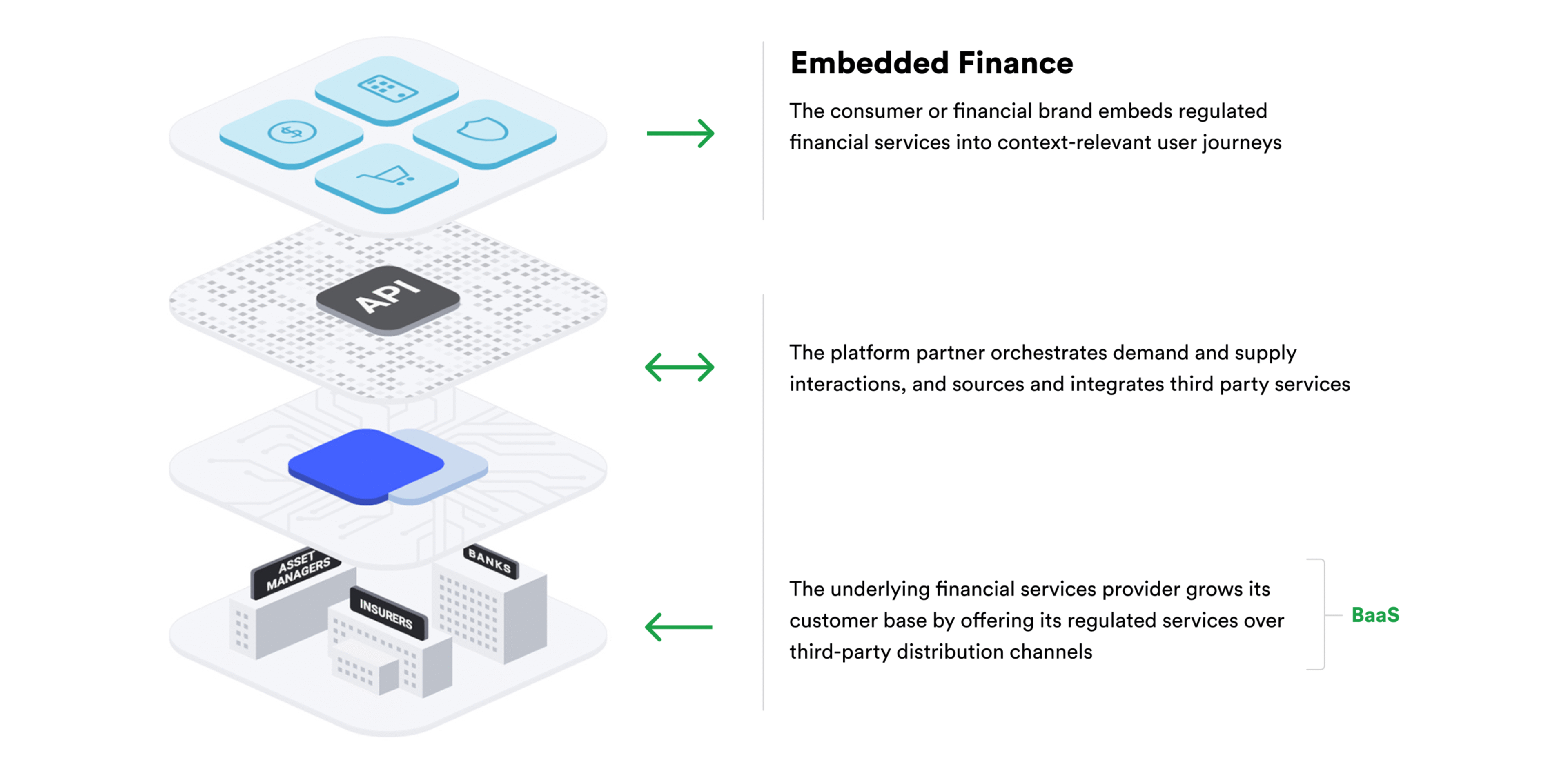
Banking as a Service (BaaS) is where licensed banks provide modular banking infrastructure—like account management, payments, lending, and investments—via APIs to third-party businesses. This enables organizations without a banking license to offer sophisticated financial products quickly and efficiently.
In contrast, embedded finance refers to the integration of specific financial services such as payments, lending, or insurance directly into non-financial apps or platforms. This integration offers a seamless user experience that keeps customers engaged within a single ecosystem.
This article will clarify the differences between BaaS and embedded finance, explore real-world use cases, and highlight the business implications of adopting either model. Understanding these will help businesses navigate fintech infrastructure effectively and capitalize on the rapid growth of digital financial services.
Overview of Banking as a Service (BaaS): Modular Fintech Infrastructure Delivered via APIs
Banking as a service (BaaS) is a fintech model where licensed banks expose their core banking infrastructure—such as account management, payment processing, lending, and investment services—to fintechs, startups, and non-bank businesses. This is done through API integrations that enable scalable and modular access to banking capabilities without the third party needing a full banking license.
How BaaS Works
- Licensed banks maintain the regulatory responsibilities.
- Banks open their core banking systems through APIs.
- Third parties integrate these modular components into their offerings.
- The third party typically handles the front-end user experience, onboarding flows, and compliance activities.
- This creates a “banking à la carte” model where companies can pick and choose banking features tailored to their needs.
Common Use Cases
- Neo-banks that provide mobile-first banking experiences without owning a bank license.
- Small and medium enterprises (SMEs) offering embedded payment and lending tools to their customers.
- Gig economy payout platforms where independent workers receive earnings seamlessly.
Notable BaaS Providers
- Mambu: Known for cloud-native, composable banking infrastructure.
- Stripe: Offers a suite of APIs enabling payment acceptance, card issuing, and financial accounts.
BaaS’s flexibility and modular API architecture help fintech startups and established companies rapidly launch financial products with reduced infrastructure overhead and regulatory burden.
Overview of Embedded Finance: Seamless Financial Services Within Non-Financial Platforms
Embedded finance takes financial services out of their traditional silos and integrates them directly into the user experience of non-financial applications and platforms. It aims to make access to payments, lending, insurance, or investing effortless and natural, so users never have to leave the host app.
What is Embedded Finance?
- Financial products like payments, loans, or insurance are embedded into non-financial ecosystems.
- Users transact or access financial services natively, without app switching or redirects.
- Reduces friction and increases customer engagement.
Embedded Banking: A Key Subset
- A specialization of embedded finance.
- Focuses on banking services embedded into platforms.
- Examples include instant loans disbursed within ride-sharing apps or wallet functionalities integrated into marketplaces.
Common Real-World Examples
- Retail apps offering buy-now-pay-later options at checkout.
- Travel platforms embedding insurance policies tailored to specific bookings.
- Gig economy platforms integrating lending or instant payout capabilities for workers.
Growth and Market Projections
Embedded finance is experiencing explosive growth, with projections estimating $7 trillion in U.S. transactions by 2026 alone. This surge is fueled by consumer demand for convenience and tailored financial experiences embedded in digital everyday life.
Key Differences: BaaS vs Embedded Finance
Understanding BaaS vs embedded finance requires a clear comparison of their core characteristics, users, and business models. Below is a detailed breakdown:
Aspect
Banking as a Service (BaaS)
Embedded Finance
Core Focus
Back-end APIs providing modular banking infrastructure (accounts, payments, lending)
Front-end integration of financial services within non-financial apps
Target Users
Fintech developers, startups, SMEs building financial products
End users/customers of non-financial platforms (retail shoppers, gig workers)
User Experience
Custom-built UX by clients; often dedicated fintech apps
Seamless, native experience embedded directly in existing apps, no redirects
Business Model
Modular APIs; compliance and onboarding handled mostly by API users
Turnkey, white-label solutions with built-in compliance services
Relationship
Foundation powering embedded finance solutions; raw banking infrastructure exposed
Application layer using BaaS to embed financial products in ecosystems
Summary of Differences
- BaaS is primarily about giving developers and fintechs back-end infrastructure as modular tools.
- Embedded finance is about delivering financial services effortlessly to consumers inside everyday apps.
- Embedded banking acts as a practical example of embedded finance, often powered by BaaS APIs.
This distinction clarifies roles in the fintech ecosystem and helps guide strategic decisions about internal capabilities and partnerships.
How Fintech Infrastructure Enables Both Models
The rapid rise of banking as a service and embedded finance is powered by robust fintech infrastructure—a technological foundation including APIs, cloud computing platforms, and compliance tools that allow for rapid, scalable innovation.
Core Components of Fintech Infrastructure
- APIs: Enable modular and flexible access to banking services such as payments, account creation, lending, and investment features. APIs allow platforms to connect seamlessly with bank systems.
- Cloud Computing: Offers scalable, secure, and distributed resources that support quick deployment and scaling needed by fintech providers.
- Compliance & Regulatory Tools: Fintech infrastructure powers essential compliance functions like Know Your Customer (KYC) and Anti-Money Laundering (AML). BaaS clients usually handle more compliance burden themselves, whereas embedded finance platforms increasingly offer “Compliance as a Service” to reduce complexity.
Addressing Legacy Banking Challenges
Traditional banks often face technological limitations such as outdated systems and siloed operations. The modern fintech stack helps bridge these gaps, enabling:
- Composable banking approaches.
- Access to open banking frameworks.
- Support for advanced payment methods like Variable Recurring Payments (VRPs).
- Secure data handling protocols.
These elements underpin the seamless user experiences in embedded finance and provide the modularity fintech clients rely on in BaaS.
Benefits and Challenges of BaaS and Embedded Finance
Both BaaS and embedded finance offer compelling advantages that accelerate fintech innovation but also come with their own unique challenges.
Benefits
Model
Benefits
BaaS
- Speeds up fintech product launches by providing ready-made banking components.
- Customizable modules enable niche and underbanked market services.
- Reduces costs and time compared to building banking infrastructure from scratch.
Embedded Finance
- Enhances customer retention by offering frictionless and context-specific financial services.
- Provides sector-specific insights fueling personalized offers.
- Expands financial service reach by embedding offerings into everyday apps.
Shared
- Avoids need for costly banking licenses.
- Accelerates innovation with access to scalable fintech services.
Challenges
Model
Challenges
BaaS
- Third parties bear significant compliance risk (e.g., KYC, AML).
- Developing intuitive, user-friendly financial interfaces is complex.
- Faces intensified regulatory scrutiny due to direct banking exposure.
Embedded Finance
- Highly dependent on partner ecosystems for integration and compliance.
- Data silo issues and integration complexities can arise.
- Functionality often limited by platform-specific contexts (e.g., retail, gig economy).
Shared
- Technological complexity can slow development cycles.
- Regulatory oversight risks require constant adaptation.
- Traditional banks may find it difficult to keep pace or compete effectively.
Navigating these benefits and challenges requires strategic planning and leveraging fintech infrastructure suited for the business’s operational model.
Future Trends and Implications of BaaS vs Embedded Finance
The lines between BaaS vs embedded finance are blurring as these models converge to reshape the financial services landscape. BaaS acts as the engine powering the continued expansion of embedded finance, projected to reach $7.2 trillion in global transactions shortly.
Emerging Trends
- AI-driven Personalization: Fintech platforms increasingly use artificial intelligence to tailor financial product recommendations and risk assessments in real-time.
- Expanded Open Banking & VRP Capabilities: New open banking standards and Variable Recurring Payments will enable more flexible, consumer-friendly payment models.
- Middleware Platforms: Specialized layers help shift compliance and risk mitigation from banks and fintech providers to third-party compliance “as a service” platforms.
Impact on Traditional Banking
- Banking services become commoditized and modular, reducing reliance on monolithic banking products.
- Non-bank companies from retail, travel, and other verticals enter financial services markets via embedded finance.
- Banks focus on deposit-gathering and balance sheet management by partnering with fintech ecosystems rather than direct retail.
Future Outlook
- Hybrid models combining automated compliance, advanced data analytics, and seamless user experiences will redefine value chains in finance.
- Financial inclusion will improve through tailored embedded services in everyday digital ecosystems.
- Businesses embracing these trends will unlock competitive advantages in an increasingly digital-first economy.
Conclusion: Harnessing BaaS and Embedded Finance for the Digital Financial Future
In summary, the distinction between banking as a service and embedded finance is essential for businesses aiming to innovate in digital financial solutions.
- BaaS provides the back-end banking infrastructure and modular APIs that enable fintech companies and businesses to build customized financial products without the heavy lift of full banking licenses.
- Embedded finance focuses on delivering those financial services directly into everyday platforms, providing users with seamless, context-specific financial functions. Embedded banking is a direct application of this, often powered by BaaS components.
Together, they rely on robust fintech infrastructure, including APIs, cloud services, and compliance frameworks, to speed development, enhance scalability, and navigate regulatory landscapes.
Understanding these models allows organizations to strategically adopt, integrate, and compete in an immensely promising market—expected to exceed $7 trillion in embedded finance transactions alone. Exploring embedded banking and scalable fintech infrastructure solutions is critical for staying at the forefront of this digital revolution.
Frequently Asked Questions
What is Banking as a Service (BaaS)? BaaS is a model where licensed banks provide modular banking infrastructure via APIs, allowing third-party companies to offer financial services without owning a banking license. How does embedded finance differ from BaaS? Embedded finance integrates financial services directly into non-financial apps, providing seamless user experiences, whereas BaaS offers the underlying banking infrastructure primarily consumed by developers. What are the main benefits of embedded finance? It enhances customer engagement by embedding financial products in everyday platforms, reduces friction, and expands financial inclusion by integrating tailored services inside apps users already use. Which companies provide BaaS solutions? Notable BaaS providers include Mambu and Stripe, among others. What are the challenges of adopting BaaS or embedded finance? BaaS faces challenges around regulatory compliance and UI complexity, while embedded finance depends heavily on partner ecosystems and can suffer from data silos and platform-specific limitations.
This article aimed to deliver a clear, detailed understanding of the BaaS vs embedded finance distinction and its role in reshaping fintech. Businesses seeking to integrate financial services effectively would benefit greatly by further exploring these transformative models.