
Digital Transformation vs Digitization: Understanding the Key Differences for Business Success
Estimated reading time: 12 minutes
Key Takeaways
- Digital transformation vs digitization are often confused but represent fundamentally different concepts crucial to business innovation.
- Digitization is primarily about converting analog data into digital formats for easier access and management.
- Digital transformation (DX) entails a company-wide strategic shift that redefines culture, operations, and value delivery using technology.
- Automation is a specific technology-driven approach focused on improving task efficiency, often part of but not equivalent to DX.
- Recognizing these differences enables better technology investment decisions, clearer project scopes, and successful change management.
Table of contents
- Section 1: Definitions of Digital Transformation, Digitization, and Automation
- Section 2: Digital Transformation vs Digitization—Key Differences
- Section 3: Digitization vs Automation—Clarifying the Roles
- Section 4: Digital Transformation (DX) vs Automation—Strategic vs Tactical
- Section 5: Why Distinguishing These Concepts Matters for Businesses
- Conclusion: Mastering the Digital Landscape
- Frequently Asked Questions
Section 1: Definitions of Digital Transformation, Digitization, and Automation
Before diving into the comparison, let’s define the core concepts clearly:
Digitization: Converting Analog Data to Digital
Digitization is the process of converting analog information into digital formats. This could mean scanning paper documents or converting physical records into electronic files. The main goal is data capture and storage, making information easier to access, share, and manage.
Example: Turning paper manufacturing records into digital spreadsheets or databases is digitization. Without digitization, digital tools cannot process data efficiently.
Reference: PTC Blog on Digitization
Digital Transformation (DX): Comprehensive Organizational Change
Digital transformation (DX) is much broader. It involves using digital technology to fundamentally change a company’s strategy, culture, operations, and customer experiences. This is a top-to-bottom evolution that rethinks how a business competes and delivers value.
Example: A manufacturer moving from traditional equipment sales to an equipment-as-a-service model powered by IoT and cloud analytics illustrates digital transformation.
Reference: Yokogawa White Paper on DX
Automation: Technology-Driven Task Efficiency
Automation uses technology to automatically execute repetitive tasks, reducing the need for manual human input. It enhances efficiency and accuracy but is generally more narrowly focused than digital transformation.
Example: Using software robots (RPA) to automatically process invoices without manual data entry.
Reference: Agility CMS Blog
Why the Confusion?
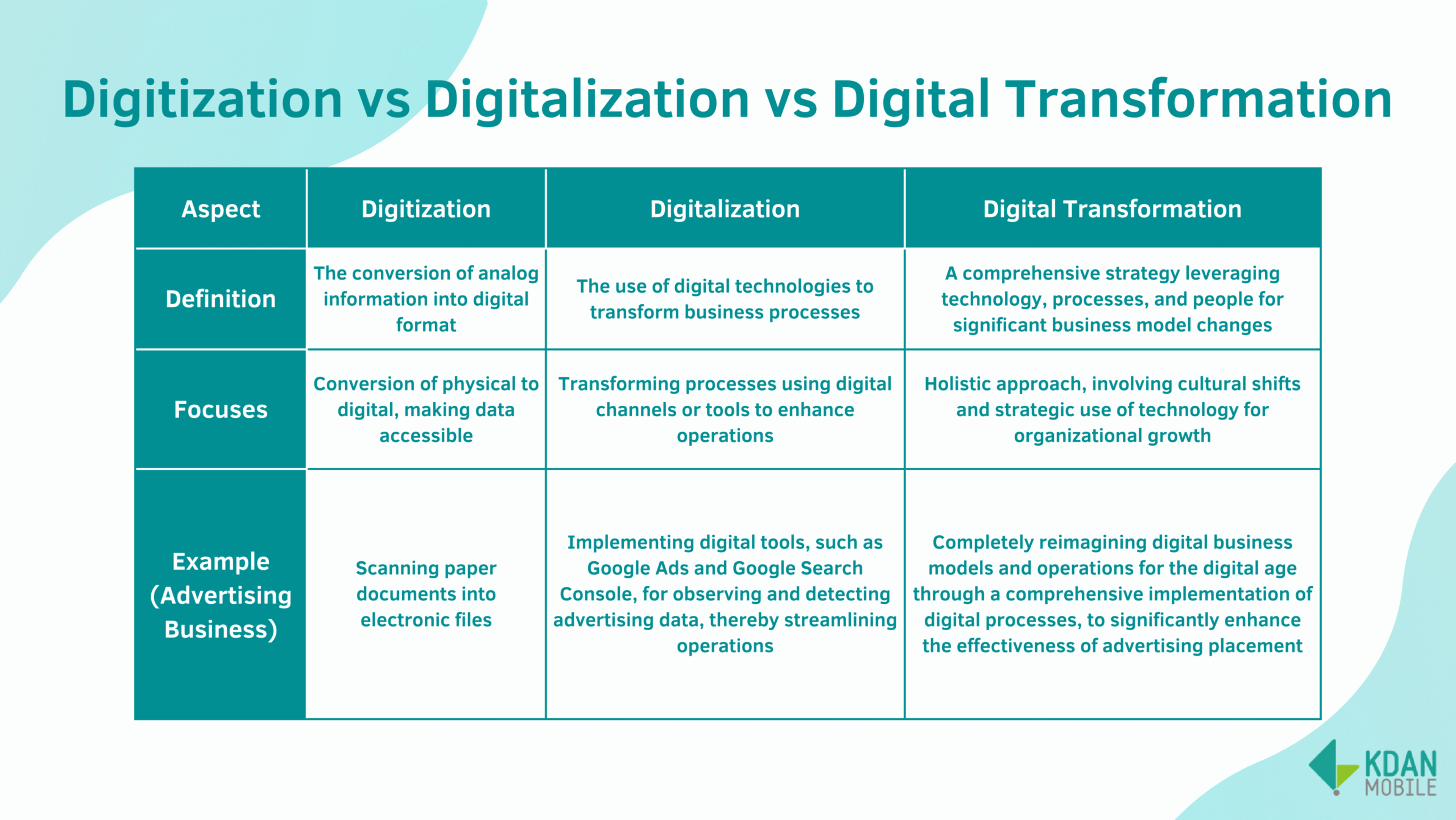
These terms are interconnected, forming a continuum of digital evolution, but are often mixed up:
- Digitization: Basic data conversion
- Digitalization: Using digital data to improve processes
- Digital Transformation (DX): Strategic, company-wide change enabled by digital tech
- Automation: Tool/application for efficiency within these stages
Using these interchangeably can cause strategic misunderstandings and misguided investments.
References:
Agility CMS on Digital Concepts
PTC Blog
Keywords: definitions, digital transformation vs digitization, DX vs automation, digitization vs automation
Section 2: Digital Transformation vs Digitization—Key Differences
Understanding the distinction between digital transformation vs digitization is essential for business leaders and IT professionals.
Digitization: Foundational Data Conversion
- Converts analog data (paper, physical records) into digital format. For more on foundational tech shifts, see this guide on digital transformation strategy and enterprise tech adoption.
- Focuses on making data accessible and storable.
- Limited scope: primarily an operational improvement.
- Example: Scanning production logs into a digital database.
Digital Transformation: Strategic Organizational Shift
- Involves reorganizing business models, culture, and operations.
- Uses digital tools to reimagine how the company delivers value and competes.
- Enterprise-wide impact: affects all departments and customer touchpoints.
- Example: A manufacturer shifts from selling equipment to delivering it as a service, using digital platforms to monitor and maintain machines remotely.
Comparison Table: Digital Transformation vs Digitization
Aspect
Digitization
Digital Transformation (DX)
Scope
Data conversion and storage
Organization-wide strategic change
Goal
Preserve and organize information
Enable new business models and customer value
Focus
Data accessibility and management
Culture, operations, customer engagement
Examples
Paper to digital records
Shifting to digital business models
Impact
Operational efficiency
Competitive advantage and innovation
Digitization is essential as a prerequisite for digital transformation but does not itself represent strategic change.
Reference: Yokogawa on DX vs Digitization
Reference: Agility CMS Blog
Keywords: digital transformation vs digitization, definitions, DX vs automation
Section 3: Digitization vs Automation—Clarifying the Roles
Automation: Enhancing Process Efficiency
Automation is the use of technology to automatically perform repetitive tasks with minimal human intervention. For example, automating invoice approval or customer service chatbots.
Reference: Agility CMS Explanation
Key Differences Between Digitization and Automation
Aspect
Digitization
Automation
Primary focus
Data conversion and management
Efficiency improvement of tasks
Purpose
Making information digital
Reducing manual work and human error
Dependency
Foundation for many automation
Can exist without digitized data
Example
Scanning paper invoices
Software auto-approving digitized invoices
Interplay Between Digitization and Automation
- Digitization creates the digital data foundation for automation projects.
- For instance, digitized invoices allow automated invoice processing.
- However, automation can be applied to tasks without digitized data, such as automated scheduling based on fixed rules.
- Both work best in tandem but are distinct concepts.
Reference:
PTC Blog on Digitization and Automation
Agility CMS Blog
Keywords: digitization vs automation, digital transformation vs digitization, DX vs automation
Section 4: Digital Transformation (DX) vs Automation—Strategic vs Tactical
Automation as a Component of Digital Transformation
While automation improves individual workflows or routine tasks by streamlining processes, digital transformation entails strategic, cultural, and operational shifts across the enterprise. For comprehensive guidance on managing such transformations, check out the linked guide above.
- Automation example: Robotic Process Automation (RPA) handling accounts payable.
- Digital Transformation example: Moving from product sales to a subscription-based model with AI-driven customer insights and cloud-enabled service delivery.
Strategic Implications of DX vs Automation
- Automation aims to optimize existing processes.
- Digital transformation redefines business models and customer engagement.
- DX requires planning, change management, and collaboration among departments.
- Automation can be executed as isolated projects; DX is a holistic, coordinated initiative.
References:
Agility CMS Blog on DX vs Automation
Yokogawa White Paper
Keywords: DX vs automation, digital transformation vs digitization, definitions, digitization vs automation
Section 5: Why Distinguishing These Concepts Matters for Businesses
Recognizing the distinctions between digital transformation vs digitization and related terms is essential for success.
Strategic Decision-Making
- Avoid confusing digitization projects (data-focused) with full-blown digital transformation (organizational change).
- This clarity guides appropriate investment in infrastructure versus culture and strategy.
Reference: Agility CMS on Strategy
Clear Project Scope and Expectations
- Treat digitization as foundational work.
- Frame digital transformation as strategic, enterprise-wide change.
- Prevent frustration caused by expecting transformative outcomes from simple data projects.
Reference: PTC Blog on Project Clarity
Defining Success Metrics Correctly
- Digitization: Data accessibility, reduced storage cost.
- Automation: Process speed, error reduction.
- Digital Transformation: Revenue growth, market agility, customer satisfaction.
Reference: Agility CMS on Metrics
Common Pitfalls to Avoid
- Mistaking digitization for transformation leads to limited impact.
- Automating without digitized data creates bottlenecks.
- Pursuing fragmented digitalization hampers cohesive strategic progress.
Keywords: digital transformation vs digitization, digitization vs automation, DX vs automation, definitions
Conclusion: Mastering the Digital Landscape
To summarize:
- Digitization is the foundational step of converting analog data into digital form, essential but narrow in focus.
- Automation improves task efficiency by reducing manual work through technology but is tactical.
- Digital transformation (DX) is a comprehensive, strategic initiative that redefines business models, culture, and operations enabled by digital technologies, encompassing but extending far beyond automation.
Understanding and clearly distinguishing these concepts helps businesses make smarter technology investments, set practical goals, and run successful modernization initiatives that drive true competitive advantage.
Next Steps: Take stock of your current digital projects. Are they digitization efforts, automation improvements, or part of an enterprise-wide digital transformation strategy? Clarifying this will help you allocate resources wisely and plan for maximum impact.
By mastering the difference between digital transformation vs digitization, and how they relate to automation, your organization can unlock the full potential of digital innovation.
References:
– https://agilitycms.com/blog/digitization-digitalization-and-digital-transformation-explained
– https://www.yokogawa.com/library/resources/white-papers/the-differences-between-digitization-digitalization-and-digital-transformation-in-manufacturing/
– https://www.ptc.com/en/blogs/corporate/digitization-digitalization-and-digital-transformation
Frequently Asked Questions
What is the difference between digitization and digital transformation?
Digitization refers to converting analog data into digital form to improve accessibility and storage. Digital transformation is a strategic, organization-wide change that redefines business models, culture, and customer engagement using technology.
How does automation relate to digital transformation?
Automation focuses on using technology to streamline specific tasks or processes, often as part of broader digital transformation initiatives. While automation improves efficiency, digital transformation drives comprehensive business change.
Can automation exist without digitization?
Yes, some automation tasks operate on fixed rules or physical systems without relying on digitized data. However, digitization creates a strong foundation that expands automation possibilities and effectiveness.
Why is it important for businesses to distinguish these concepts?
Clear understanding prevents misaligned investments, sets correct project expectations, and enables organizations to build effective strategies for innovation and competitive advantage.
Where can I learn more about digital transformation strategies?
Explore resources such as the digital transformation strategy guide and change management in digital transformation for detailed insights on planning and execution.