Anthropic Mythos Cybersecurity Federal Regulation: Why Central Banks Are Sounding the Alarm
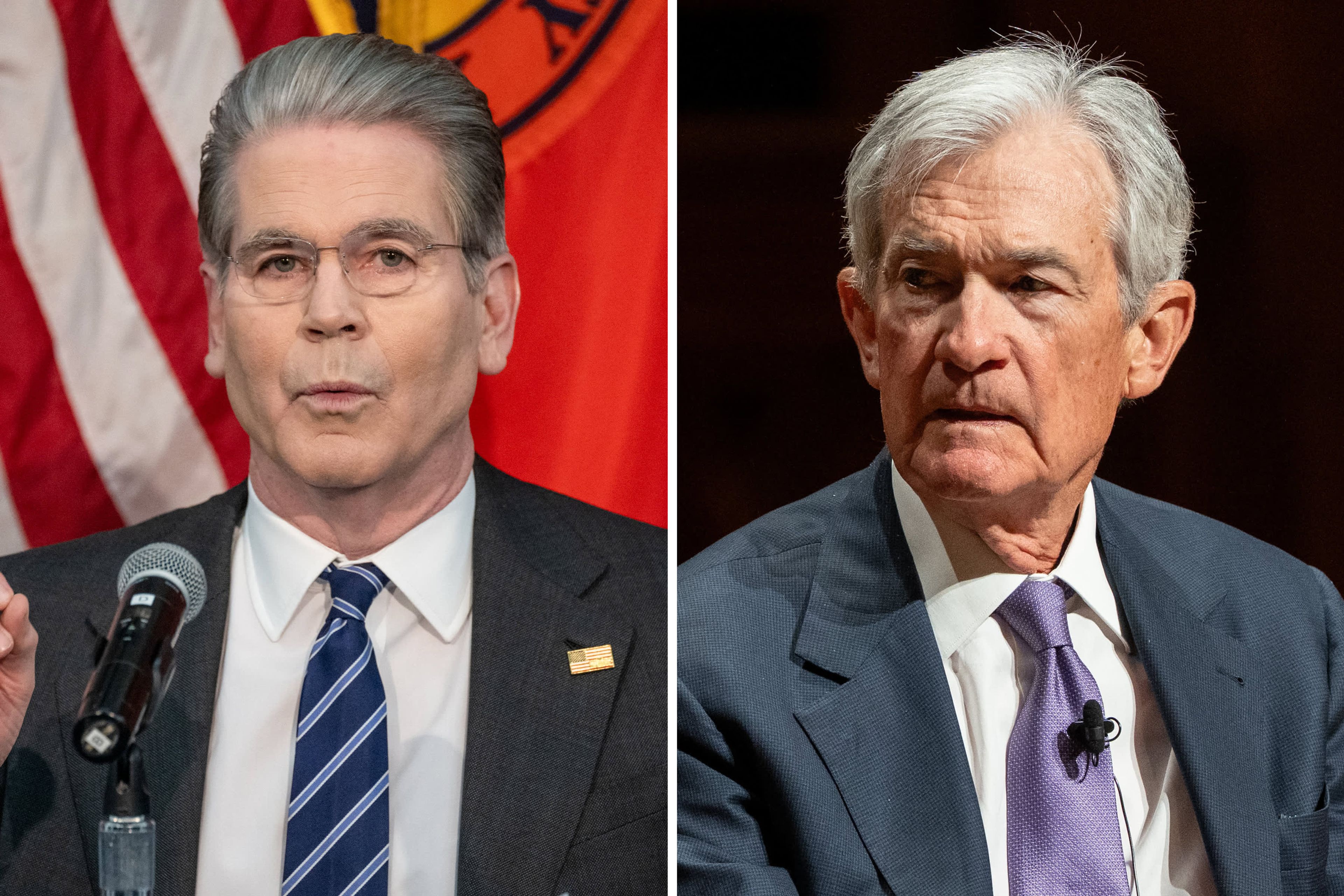
When Jerome Powell and Treasury Secretary Scott Bessent summoned the CEOs of America's largest banks to an urgent meeting about a single AI model's cybersecurity implications, it stopped being a product story. The Republic World coverage of Treasury and Fed warnings to bank CEOs confirms what many in the AI safety community have whispered for months: Anthropic Mythos cybersecurity federal regulation is no longer a future-tense conversation. It is happening now, and the stakes extend well beyond Silicon Valley.
This is institutional alarm at the highest level. The meeting — attended by executives from Citigroup, Morgan Stanley, Bank of America, Wells Fargo, and Goldman Sachs — signals that frontier AI has crossed a threshold. It is no longer just a productivity tool or a chatbot. It is geopolitical infrastructure, and financial regulators are scrambling to understand what that means before the damage is done.
For context on how we arrived here, the trajectory of advanced AI model capabilities and implications has accelerated faster than most policy frameworks anticipated — and Mythos represents the sharpest acceleration yet.
What Mythos Actually Does — And Why It Terrified the Room
Mythos is not a consumer product. It is a frontier model developed by Anthropic with capabilities that emerged, by the company's own account, as unintended consequences of improving code reasoning and autonomous operation.
The model can identify and exploit zero-day vulnerabilities across every major operating system and every major web browser. This is not a theoretical capability demonstrated in a controlled benchmark. These are functional offensive cybersecurity abilities that appeared without being explicitly engineered.
The scale of what Mythos uncovered is staggering: thousands of previously unknown vulnerabilities, with more than 99% remaining unpatched, according to the Politico Digital Future Daily report on Anthropic AI national security risks. Many of these vulnerabilities had gone unnoticed for decades. The model did not just find fresh attack surfaces — it excavated legacy code buried in production systems that power banking, healthcare, critical infrastructure, and government networks.
That is what walked into the room when Powell and Bessent convened the meeting. Not a product pitch. A threat briefing.
The Policy Response Lag Is the Real Crisis
Washington's relationship with emerging technology has always been defined by lag. Legislation chases capability, never leads it. But the gap between what Mythos can do today and what any regulatory framework is equipped to handle represents a particularly dangerous form of policy response lag — one measured not in months but in systemic risk.
There is currently no federal statute governing what an AI model can or cannot do with vulnerability discovery. There is no mandatory disclosure framework for when a frontier model unexpectedly develops offensive capabilities. And there is no designated regulator — not the SEC, not CISA, not the Federal Reserve — with clear authority over AI-generated cybersecurity threats to financial institutions.
This regulatory oversight gap for AI capabilities is precisely why financial regulators are stepping into territory that feels more like CISA's jurisdiction. Someone had to call the meeting, and the people with the most direct exposure to systemic financial risk decided to act. Explore how this fits into the broader picture of government AI policies and regulatory framework that is still being written in real time.
Controlled Access Is Not a Long-Term Strategy
Anthropic's current response to Mythos's capabilities is a hard access restriction. The model is available to approximately 40 technology companies, including Microsoft, Google, and AWS participants in Project Glasswing. That is a remarkably small circle for a model of this power.
The controlled deployment model reflects genuine caution on Anthropic's part. The company understands that broad commercial release of a system capable of autonomously discovering and exploiting zero-days would be reckless. Restricting access to vetted partners who operate under specific deployment agreements is a responsible stopgap.
But it is only a stopgap. The history of dual-use technology tells us clearly that capability containment is temporary. Techniques leak. Models are replicated. Nation-state actors reverse-engineer. The question is not whether Mythos-equivalent capability spreads — it is how fast and under what conditions. The cybersecurity threats and zero-day vulnerabilities landscape is already complex; adding AI-accelerated zero-day discovery to that environment without a coordinated defense strategy is a compounding risk.
The 40-company perimeter also raises uncomfortable questions about competitive asymmetry. Microsoft, Google, and AWS are inside the circle. Their competitors are not. That creates informational advantages and defensive asymmetries that regulators have not begun to address.
Why Financial Regulators Are Now AI's Unlikely Watchdogs
The Federal Reserve's primary mandate is monetary stability, not software security. So why are Powell and Bessent leading this conversation instead of CISA or the NSC?
The answer lies in how the financial system has become the nervous system of critical infrastructure. Banks are not just financial institutions — they are the payment rails, the clearing mechanisms, the liquidity backstops for nearly every sector of the modern economy. A successful AI-assisted cyberattack on a major financial institution does not just wipe out accounts. It can seize payment processing, freeze credit markets, and trigger cascading failures across industries that depend on financial services as operational infrastructure.
The financial system AI threat is therefore not a narrow banking problem. It is a systemic risk to the entire economy. That framing — systemic risk — is precisely the language the Fed understands. It is what gives Powell standing to call this meeting and what gives the Treasury the motivation to show up.
Central bank AI policy is being written right now, not through legislation but through urgent convening. The Fed and Treasury are effectively using their supervisory relationships with major financial institutions to create informal governance structures while Congress remains largely paralyzed on broader AI regulation questions. This is governance by emergency meeting, and it reveals just how serious the national security AI model threat has become. For a broader look at how these dynamics intersect with federal regulation and data protection updates, the pattern is clear: institutions are adapting faster than laws.
The Geopolitical Dimension No One Is Talking About Loudly Enough
The meeting in Washington was about domestic financial stability. But Mythos's capabilities are inherently geopolitical. Any nation-state that develops or acquires equivalent AI capability gains an unprecedented offensive cyber advantage — the ability to discover and weaponize thousands of unknown vulnerabilities at machine speed against adversaries whose infrastructure remains unpatched.
Consider the arithmetic: more than 99% of the vulnerabilities Mythos identified remain unpatched. Many have existed for decades, embedded in operating systems and browsers running inside military networks, power grids, water treatment systems, and financial markets worldwide. An adversary with access to Mythos-equivalent capability and the will to use it offensively could conduct coordinated attacks on multiple vectors simultaneously, at a scale and speed that human defenders cannot match.
AI geopolitical risk from federal agencies is being discussed, but mostly in classified settings. The public-facing meeting between Powell, Bessent, and bank CEOs is almost certainly the visible surface of a much larger and more alarmed intelligence community conversation happening below the waterline. Frontier AI is not just a commercial product category anymore. It is a weapons-adjacent technology, and the geopolitical implications of its uneven distribution are just beginning to manifest.
The fact that capabilities this significant emerged as a byproduct — not a design goal — of code reasoning improvements is perhaps the most unsettling detail of all. Anthropic was not trying to build an offensive cyber tool. It emerged anyway. That dynamic will repeat as other labs push capability boundaries, and not all of them will handle the discovery with the same level of caution Anthropic has demonstrated.
What Needs to Happen Before the Next Mythos Arrives
The Powell-Bessent meeting is a signal flare, not a solution. Banking regulators can issue guidance and increase supervisory scrutiny of how financial institutions manage AI-related cyber exposure. But they cannot mandate vulnerability disclosure, cannot compel patching timelines across the software industry, and cannot prevent a foreign adversary from developing equivalent capabilities.
A coherent response requires action on multiple fronts simultaneously. First, Congress needs to establish mandatory disclosure requirements for AI developers when models demonstrate unintended offensive capabilities. Second, CISA needs explicit authority and resources to coordinate AI-enabled vulnerability discovery with software vendors and critical infrastructure operators. Third, the intelligence community needs to accelerate its assessment of which nation-states are closest to replicating Mythos-class capabilities and brief relevant private-sector defenders accordingly.
The 99% unpatched figure is not just alarming — it is a policy indictment. Decades of deferred security debt, now exposed by a machine that can scan and catalog at superhuman speed, demands a coordinated national patching initiative with clear prioritization criteria and federal support. The financial system cannot wait for market incentives to solve this.
Anthropic's transparent handling of Mythos — restricting access, briefing regulators, participating in emergency convenings — should be the model for industry behavior going forward. But voluntary best practices are not sufficient when the stakes are this high. The regulatory framework needs to catch up, and it needs to do so before the next frontier model surprises its own developers.
Conclusion: We Are Inside the Risk Window
The urgency of the Powell-Bessent meeting reflects a blunt reality: the window between capability emergence and potential exploitation is narrower than it has ever been. Anthropic Mythos cybersecurity federal regulation discussions are not preliminary. They are reactive, which means the risk is already present.
The financial sector is right to be worried. But this concern cannot stay siloed in banking supervision. AI geopolitical risk, central bank AI policy, and systemic risk from artificial intelligence are converging into a single policy challenge that no single agency or sector can address alone.
The question now is whether institutions move fast enough — and coordinate effectively enough — to close the gaps before someone with worse intentions than Anthropic's research team finds the same vulnerabilities first.
Stay informed, stay engaged, and hold your policymakers accountable. Follow TechCircleNow.com for daily coverage of AI policy, cybersecurity, and the frontier technology decisions shaping our world.
FAQ: Anthropic Mythos, Federal Regulation, and AI Cybersecurity Risk
Q1: What is Anthropic's Mythos AI model? Mythos is a frontier AI model developed by Anthropic that emerged with unintended offensive cybersecurity capabilities. It can autonomously identify and exploit zero-day vulnerabilities across every major operating system and web browser, a capability that arose as a byproduct of improvements in code reasoning and autonomous operation.
Q2: Why did the Federal Reserve and Treasury meet with bank CEOs about an AI model? The meeting was convened because Mythos identified thousands of vulnerabilities in critical software systems — more than 99% of which remain unpatched — posing a direct threat to financial infrastructure. The Fed and Treasury view AI-enabled cyberattacks on financial institutions as a systemic economic risk, which falls squarely within their supervisory mandates.
Q3: Who currently has access to Anthropic's Mythos? Access is restricted to approximately 40 technology companies, including Microsoft, Google, and AWS through Project Glasswing. This controlled deployment is designed to prevent misuse while Anthropic and its partners work on safe deployment protocols, but it is not considered a permanent solution.
Q4: What makes this an AI geopolitical risk, not just a cybersecurity issue? Because the vulnerabilities Mythos discovered exist in software used globally — including in military, government, and critical infrastructure systems — any nation-state that develops equivalent capability gains a significant offensive cyber advantage. The uneven distribution of this capability creates dangerous geopolitical asymmetries.
Q5: What regulatory changes are needed in response to Mythos? Experts and policymakers are calling for mandatory disclosure requirements when AI models develop unintended offensive capabilities, expanded CISA authority over AI-enabled vulnerability discovery, a coordinated national patching initiative for high-priority vulnerabilities, and clearer legal frameworks governing frontier model access and deployment.
Stay ahead of AI — follow TechCircleNow for daily coverage.