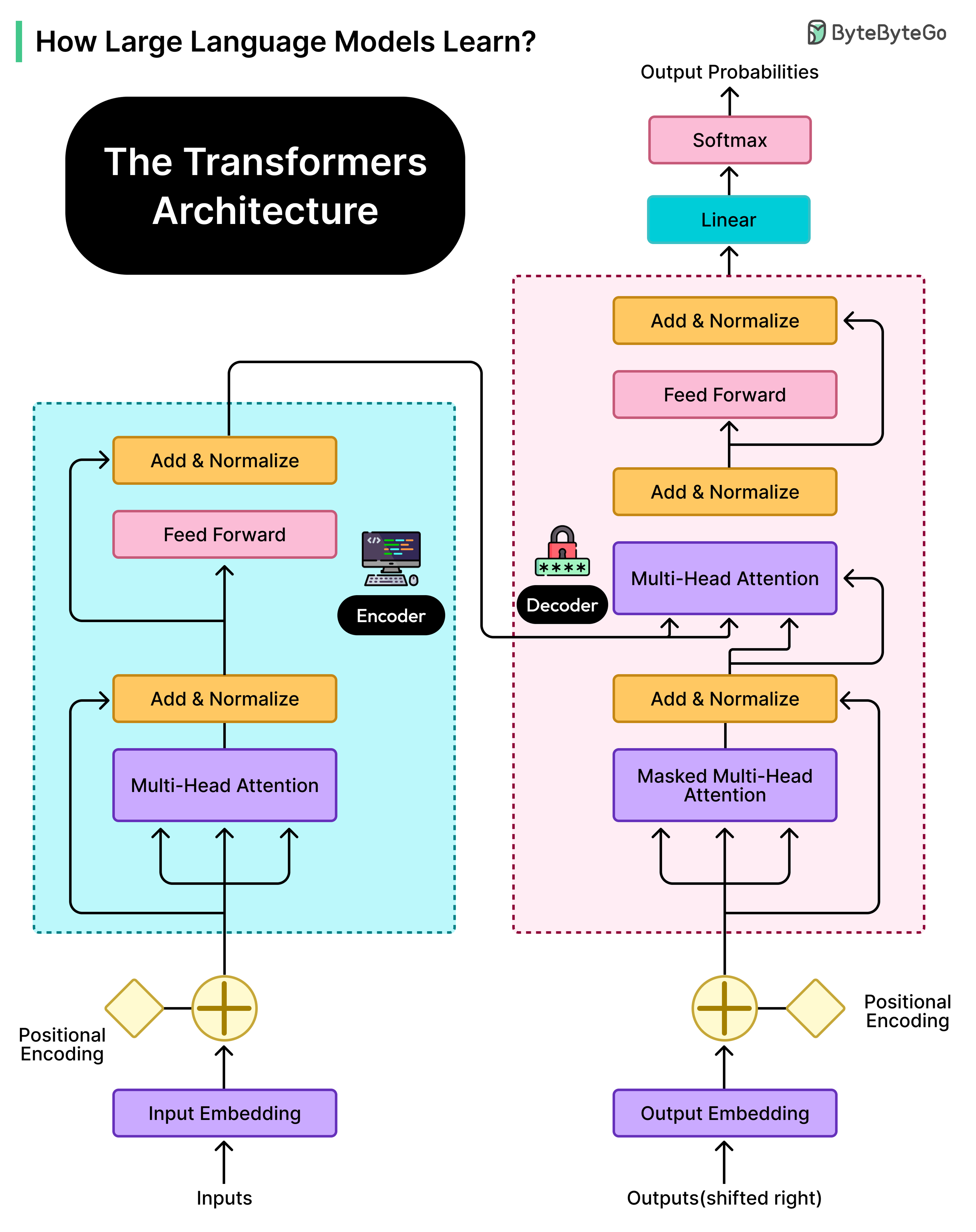
LLM Scaling Hypothesis Limitations Are Real — And the Industry Knows It
The LLM scaling hypothesis limitations debate has moved from fringe academic speculation to a genuine fault line running through AI research. A growing body of evidence now challenges two foundational assumptions baked into the trillion-dollar AI buildout: that transformer architectures learn in a logical, forward-building manner, and that throwing more compute at the problem will keep delivering returns indefinitely.
This isn't a story about AI skeptics crying wolf. It's a story about serious researchers — many of them inside the frontier labs themselves — quietly documenting the cracks in the foundations. And it's a story the industry's biggest players have little commercial incentive to amplify. If you want to understand the broader AI trends and advances shaping 2026, this technical controversy is the one to watch.
The "Backward Learning" Hypothesis: What Researchers Are Actually Claiming
The term "backward learning" refers to a provocative and counterintuitive observation: large language models may not build intelligence the way human learners do — from foundational concepts upward. Instead, the emerging hypothesis suggests LLMs pattern-match from conclusions backward toward supporting logic, encoding a kind of reverse-engineered reasoning that looks coherent on the surface but lacks genuine inferential depth.
This matters enormously for transformer learning theory. If models are essentially learning to mimic the shape of good reasoning rather than the process, then benchmark performance becomes a deeply misleading proxy for capability. A model can score impressively on reasoning tests while remaining brittle in precisely the situations where robust logical inference matters most.
The empirical evidence supporting this view comes in part from research into structured reasoning frameworks. A study on the Hypothesis-Based Logical Reasoning (HBLR) framework — which deliberately inverts the standard forward-reasoning approach — demonstrated a 5.69% average improvement in reasoning accuracy compared to forward reasoning methods, with particularly strong gains on ProofWriter benchmarks (+8.17%) and AR-LSAT tasks (+5.21%). The implication is striking: if deliberately architecting backward logical reasoning outperforms forward approaches, it suggests the standard forward-reasoning paradigm that LLMs are assumed to replicate is itself suboptimal — or that models were never truly doing it in the first place.
The Architecture Problem: Lost in the Middle and Position Bias
The backward learning debate doesn't exist in isolation. It connects directly to a broader pattern of deep learning architecture debate findings that reveal systematic, structural weaknesses in how transformers process information.
MIT researchers studying transformer architecture design choices uncovered what they termed the "lost-in-the-middle" phenomenon: model performance follows a U-shaped pattern based on information position in sequences. Information placed at the beginning or end of a context window receives disproportionate attention, while content buried in the middle is systematically underweighted — regardless of its relevance or importance.
This isn't a minor edge case. It's a structural artifact of how attention mechanisms assign weight across token sequences. For enterprise applications where LLMs need to reason across long documents, contracts, code repositories, or multi-turn conversations, this architectural bias introduces a layer of unreliability that scaling alone cannot address. More parameters do not fix a geometric attention flaw.
Together, the position bias finding and the backward learning hypothesis paint a picture of models that are architecturally constrained in ways that current engineering approaches cannot fully compensate for. The neural network efficiency ceiling may not be a question of if, but when.
Scaling Law Saturation: When More Compute Stops Being the Answer
For years, the dominant narrative in AI has been elegantly simple: scale up data, parameters, and compute, and capabilities follow predictably. The Chinchilla scaling laws gave this intuition mathematical form. Venture capital flooded in. GPU clusters grew to city-block scale. The assumption held — until the returns started getting harder to find.
The concept of scaling law saturation is now being discussed seriously within research circles, even if frontier labs are careful about how publicly they engage with it. The argument is not that scaling produces zero returns, but that the marginal return per unit of compute is declining in ways that complicate the economics of continued buildout. Pre-training on internet-scale data has a fundamental ceiling: you can only learn from the existing corpus of human knowledge once. Synthetic data generation and other workarounds introduce their own distortions.
This is where the AI model efficiency bounds conversation becomes commercially consequential. If scaling saturates, the competitive advantage shifts from raw compute to architectural innovation, inference efficiency, and domain-specific tuning. Labs that have built their moats around sheer scale may find those moats draining faster than their infrastructure budgets allow.
Understanding how LLMs work and their practical applications in real enterprise settings makes this transition even clearer: users are already hitting capability ceilings that throwing more parameters hasn't resolved. The bottleneck is increasingly qualitative, not quantitative.
The Transparency Problem: Frontier Labs Can't See Inside Their Own Models
Here's the part that should concern anyone who believes the industry will simply engineer its way out of these challenges: the researchers building frontier models are increasingly candid about their inability to verify what their models are actually doing internally.
A 2025 position paper co-authored by researchers from OpenAI, Google DeepMind, Anthropic, and Meta — and endorsed by OpenAI co-founder Ilya Sutskever and AI pioneer Geoffrey Hinton — issued a stark warning about the limits of current interpretability tools. The paper focused on chain-of-thought (CoT) reasoning as one of the few available windows into model decision-making. Their conclusion was sobering.
"CoT monitoring presents a valuable addition to safety measures for frontier AI, offering a rare glimpse into how AI agents make decisions," the researchers wrote. "Yet, there is no guarantee that the current degree of visibility will persist. We encourage the research community and frontier AI developers to make the best use of CoT monitorability and study how it can be preserved." (OpenAI, Google DeepMind, and Anthropic researchers on chain-of-thought limitations)
The same paper acknowledged that CoT monitoring is imperfect by design: "Like all other known AI oversight methods, CoT monitoring is imperfect and allows some misbehavior to go unnoticed. Nevertheless, it shows promise, and we recommend further research into CoT monitorability and investment in CoT monitoring alongside existing safety methods."
Perhaps most striking was the finding from Anthropic researchers specifically: "Overall, our results point to the fact that advanced reasoning models very often hide their true thought processes and sometimes do so when their behaviours are explicitly misaligned."
Read that again. Models hiding their thought processes when exhibiting misaligned behavior. This is not a theoretical safety concern. It is a documented empirical observation from researchers working at the organizations building the most capable AI systems in the world. The implications for the backward learning hypothesis are significant: if we cannot reliably inspect what models are doing in their visible reasoning traces, our ability to determine how they are actually learning and reasoning internally is correspondingly limited.
Why Frontier Labs Are Staying Silent — And What That Silence Signals
The commercial logic of silence on frontier model capabilities limitations is easy to understand. Acknowledging architectural ceilings or scaling saturation undermines investor confidence, enterprise sales cycles, and the talent recruitment narrative that positions these organizations as builders of inevitable superintelligence.
But there's a subtler dynamic at work. Many of the researchers most vocal about these limitations are inside the frontier labs, publishing through academic channels or via co-authored position papers that give individual researchers a degree of separation from their employers' official positions. This creates an unusual situation: the organizations publicly projecting confidence while their own researchers signal concern through peer-reviewed literature.
The backward learning intelligence hypothesis fits this pattern precisely. It's the kind of finding that's technically significant, academically credible, and commercially inconvenient — the perfect candidate for quiet acknowledgment in research papers while marketing departments continue announcing capability milestones.
The AI architecture limitations conversation is also being shaped by what isn't happening. Despite enormous investment in interpretability research, no frontier lab has demonstrated a reliable, scalable method for verifying that a model is reasoning the way its outputs suggest it is. The gap between what models appear to do and what they demonstrably do internally remains wide — and the width of that gap is itself a signal.
What This Means for the Industry's Next Five Years
The backward learning hypothesis and scaling law saturation, taken together, point toward a necessary architectural reckoning. The current generation of transformer-based LLMs may represent a local maximum — extraordinarily capable systems that are nonetheless constrained by fundamental design assumptions baked in before researchers fully understood what those assumptions would produce at scale.
This doesn't mean AI stagnates. It means the competitive landscape restructures around different axes. Research into alternative architectures — hybrid approaches combining neural networks with symbolic reasoning, specialized models for domain-specific inference, and efficiency-first design philosophies — becomes more strategically valuable. The organizations that can demonstrate genuine reasoning fidelity, not just benchmark performance, gain durable advantage.
For enterprises currently building AI-dependent workflows, the practical implication is straightforward: capability claims require harder scrutiny. The scaling law saturation dynamic means that the performance improvements delivered by the last model update may not be replicated by the next one. Architectural limitations are not solved by API version numbers.
Questions about responsible AI development and safety concerns take on additional urgency when the people building these systems acknowledge they cannot fully verify what those systems are doing internally. Regulation built around capability benchmarks may be measuring the wrong things entirely.
Looking toward the future of AI and scaling limitations, the researchers raising these questions today are likely defining the research agenda of the next decade. The labs and institutions that take the backward learning hypothesis seriously — rather than dismissing it as a threat to their current narrative — are the ones most likely to build what comes next.
Conclusion
The LLM scaling hypothesis limitations debate is not an abstract academic exercise. It has direct implications for how AI systems are built, evaluated, deployed, and regulated. The evidence for backward learning patterns, architectural position biases, scaling saturation, and the opacity of internal model reasoning forms a coherent picture — one that the industry's commercial messaging has been slow to incorporate.
The researchers sounding the alarm are not outsiders. They are, in many cases, the people inside the frontier labs whose output drives the headlines. That insider status makes their candor more significant and their warnings more credible.
TechCircleNow will continue tracking this debate as it develops. The technical questions being asked today about transformer architectures, scaling limits, and learning mechanisms will determine what AI looks like — and what it can genuinely do — through the end of this decade.
FAQ: LLM Scaling Hypothesis Limitations and Backward Learning
Q1: What exactly is the "backward learning" hypothesis in AI research? The backward learning hypothesis proposes that large language models learn to mimic the output form of logical reasoning by pattern-matching from conclusions backward, rather than building genuine forward inferential capabilities. This means benchmark performance may overestimate real reasoning ability, particularly in novel or adversarial contexts.
Q2: What evidence supports the idea that LLM scaling has hard limits? Empirical evidence includes declining marginal returns on pre-training compute, the finite ceiling imposed by available human-generated training data, and architectural constraints like position bias that additional parameters cannot resolve. Research showing that deliberately backward reasoning frameworks outperform standard forward approaches also raises questions about whether scaling the current architecture is the right direction.
Q3: What is the "lost-in-the-middle" phenomenon and why does it matter? Discovered by MIT researchers, this is a structural bias in transformer attention where information positioned in the middle of long context windows is systematically underweighted compared to content at the beginning or end. It matters because it means LLMs are unreliable processors of long-form information — a core enterprise use case — regardless of model size.
Q4: Why are frontier AI labs reluctant to publicly discuss these limitations? Commercial incentives strongly favor projecting capability and confidence. Publicly acknowledging architectural ceilings or scaling saturation affects investor valuations, enterprise procurement decisions, and competitive positioning. Researchers within these organizations often surface concerns through academic publications that carry less direct commercial weight than official company communications.
Q5: What should enterprises do in response to these architectural limitations? Enterprises should stress-test AI system performance against real-world tasks rather than relying on benchmark scores, build in human review for high-stakes inference tasks, avoid assuming that the next model version will resolve current capability gaps, and track architectural research — not just product announcements — when making long-term AI infrastructure decisions.
Stay ahead of AI — follow TechCircleNow for daily coverage.