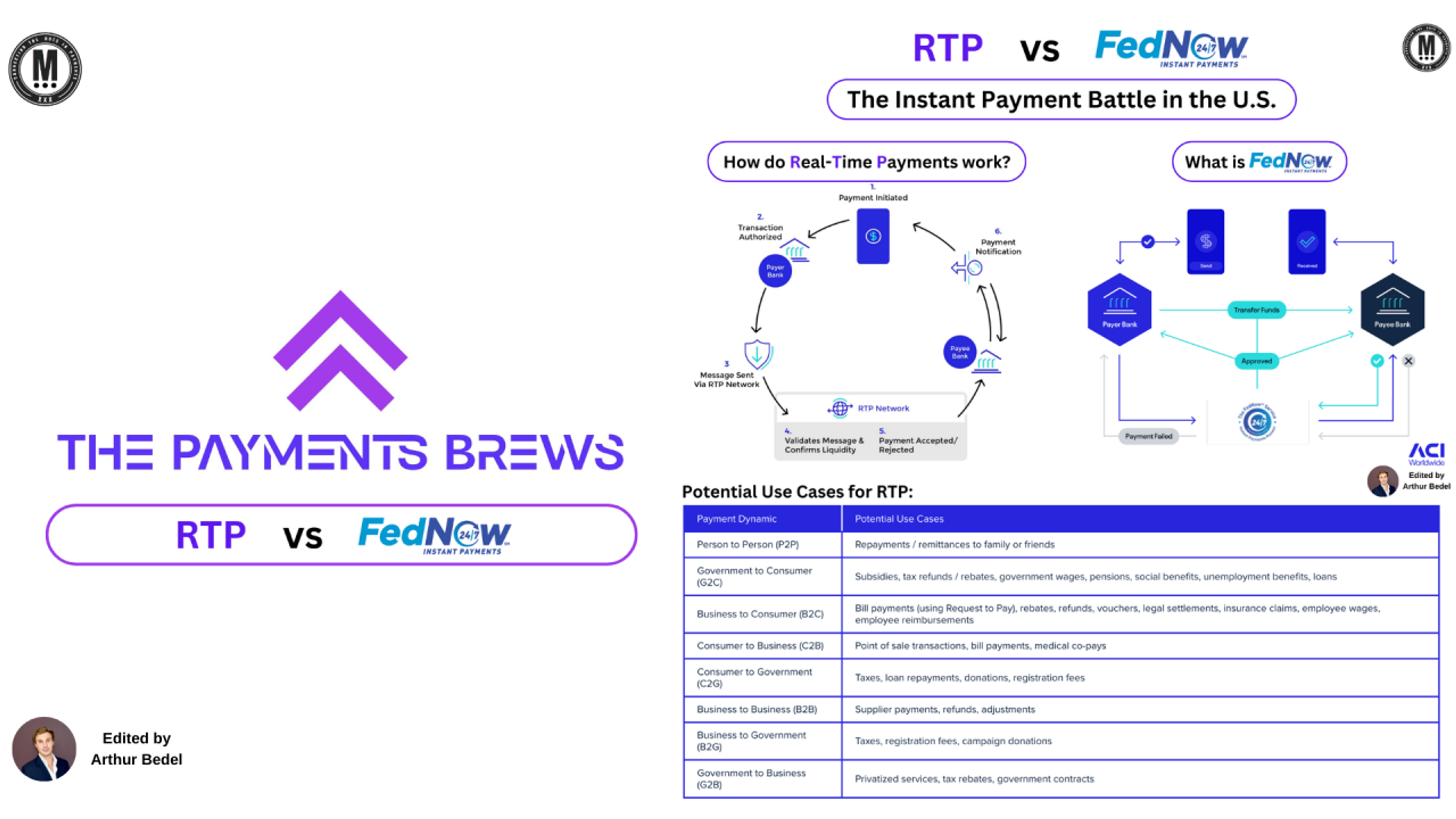
Real-Time Payments: Understanding RTP, FedNow, SEPA Instant, and Instant Payments Explained
Estimated reading time: 12 minutes
Key Takeaways
- Real-time payments enable near-instant bank-to-bank fund transfers that settle within seconds, available 24/7/365.
- The major systems driving instant payments include RTP, FedNow, and SEPA Instant.
- RTP and FedNow serve distinct roles in the US with private versus public networks, respectively, both enhancing speed and accessibility.
- SEPA Instant plays a crucial role in Europe, enabling rapid cross-border euro payments across 36 countries.
- Real-time payments promote better cash flow, fraud resistance, and operational efficiency for consumers, businesses, and banks.
- The future of real-time payments involves richer data standards, broader ecosystem integration, and accelerating global adoption.
Table of contents
- What Are Real-Time Payments? Instant Payments Explained
- Overview of Major Real-Time Payment Systems
- RTP vs FedNow: A Comparative Analysis
- How SEPA Instant Fits into the Global Real-Time Payments Landscape
- Benefits of Real-Time Payments
- Future Trends and Developments in Real-Time Payments
- Conclusion
- Frequently Asked Questions
What Are Real-Time Payments? Instant Payments Explained
At its core, real-time payments — or instant payments — refer to direct bank-to-bank fund transfers that complete within seconds. Unlike traditional payments that rely on card networks or slow wire transfers, real-time payments bypass these multi-step processes, delivering near-immediate money availability. Learn more.
Key Features of Real-Time Payments
- Speed: Settlement occurs instantly or within seconds after transaction initiation. This speed eliminates the multi-day delays familiar in ACH or wire transfers, making funds accessible right away.
- Availability: Real-time payment systems operate nonstop — 24 hours a day, 7 days a week, 365 days a year, including weekends and holidays. This eliminates delays caused by banking business hours and holidays.
- Finality: Payments are irrevocably settled upon completion. Once funds arrive in the recipient’s account, they are immediately and securely available to use, providing payment certainty.
- Convenience: Real-time payments support everyday use cases such as splitting restaurant bills, payroll payouts, supplier and vendor payments, and even emergency cash transfers. They often carry enriched payment data, simplifying reconciliation and enabling advanced fraud protection. Explore features.
These features collectively make real-time payments a powerful solution for streamlining personal and business financial transactions, increasing transparency, and improving liquidity.
Sources:
- NMI – Real-Time Payments Explained
- Mastercard – RT Payments Defined
- JPMorgan – RTP and FedNow Finality
- Thunes – Real-Time Payments Trends
Overview of Major Real-Time Payment Systems
Understanding the landscape of current real-time payments involves exploring major players: RTP, FedNow, and SEPA Instant. These systems set the stage for near-instant money movement in their respective regions and use cases.
RTP Network (U.S.)
- Launched in 2017 by The Clearing House, RTP is a private-sector real-time payment network operating in the U.S.
- It enables instant bank-to-bank transfers for both consumers and businesses, focusing on speed, liquidity, and rich payment data.
- RTP’s architecture supports 24/7 availability and final settlement within seconds, facilitating payments like bill pay, vendor invoices, and person-to-person (P2P) transfers. More details.
FedNow Service (U.S.)
- Launched in 2023 by the Federal Reserve, FedNow provides a public real-time payments infrastructure accessible to all eligible banks and credit unions.
- With over 1,000 certified institutions participating post-launch, FedNow aims to democratize real-time payments across the broad U.S. banking ecosystem.
- Designed for round-the-clock availability, FedNow offers the same instant fund settlement benefits, supporting diverse use cases spanning consumers to complex business needs. Learn more.
SEPA Instant (Europe)
- SEPA Instant (Single Euro Payments Area Instant Credit Transfer) is Europe’s pan-regional instant payment network.
- Covering 36 countries, it enables euro-denominated transfers in under 10 seconds, 24/7/365.
- SEPA Instant fosters cross-border euro payments with fast finality, helping unify the fragmented European payments market and enhancing cross-border B2B and consumer transactions. Details.
Together, these systems demonstrate global and regional approaches to real-time payments, underpinning the modern digital economy.
Sources:
- NMI – RTP Network Overview
- Mastercard – Real-Time Payments Overview
- JPMorgan – FedNow Details
- Commerce Bank – Rise of Digital Payments
RTP vs FedNow: A Comparative Analysis
In the United States, two primary real-time payment frameworks exist: RTP, run by The Clearing House, and FedNow, operated by the Federal Reserve. Both provide 24/7 instant, irrevocable fund transfers but differ in structure and reach.
Feature
RTP (The Clearing House)
FedNow (Federal Reserve)
Operator
Private consortium
Public Federal Reserve
Coverage
Private network with broad adoption across banks
Public network with 1,000+ certified institutions post-2023
Operating Hours
24/7/365
24/7/365
Technology
Uses ISO 20022 messaging for rich data and flexibility
ISO 20022-compatible, emphasizing interoperability
Transaction Limits
Bank-dependent; typically higher for business payments
Initial cap at $500,000 per transaction (subject to change)
Adoption Status
Launched in 2017 with strong B2B usage
Launched 2023, growing rapidly, projected 31.7% CAGR through 2028
Impact on Businesses
- RTP leads in private sector integration, driving liquidity improvement and facilitating complex payments with enriched data.
- FedNow promotes broadened access, reaching smaller banks and credit unions previously underserved by instant transfers.
- Both improve cash flow management, reconciliation efficiency, and vendor payment speed, transforming financial operations. Read more.
Consumer Benefits
- Both systems reduce reliance on slower Automated Clearing House (ACH) transfers or checks, offering immediate access to funds for P2P payments, bill settlement, and emergencies.
- This immediate availability enhances financial visibility and convenience for everyday consumers.
The synergy of RTP’s private efficiency with FedNow’s extensive inclusivity is accelerating the US transition to a real-time payments economy.
Sources:
- JPMorgan – RTP vs FedNow
- NMI – US Real-Time Payments Landscape
- Commerce Bank – Payment Growth
- Paystand – Benefits of Real-Time Payments
How SEPA Instant Fits into the Global Real-Time Payments Landscape
SEPA Instant is Europe’s critical infrastructure for instant euro payments, integrating 36 countries under one streamlined payment ecosystem.
- Enables 24/7 instant credit transfers with settlement usually under 10 seconds.
- Designed for cross-border euro transactions, SEPA Instant fosters faster, simpler payments between countries within the Single Euro Payments Area.
- Adoption is growing steadily, with some European jurisdictions mandating large banks’ participation by 2025.
- Increasingly integrated with mobile wallets and QR code payments, broadening financial inclusion and everyday usability.
- EU reliance on SEPA Instant contrasts with the US real-time payments focus, which centers more on domestic payment flows (RTP, FedNow).
- Globally, real-time payments in over 70 countries experienced a 42.2% transaction growth in 2023, where SEPA Instant contributes as a strong European anchor.
SEPA Instant exemplifies how regional systems support global real-time payment expansion and digital economic integration. More insights.
Sources:
Benefits of Real-Time Payments
Real-time payments deliver significant value across consumers, businesses, and banks by driving speed, efficiency, and transparency.
Benefits for Consumers
- Instant fund availability enables rapid reimbursements, bill payments, and emergency financial support.
- Reduced transaction fees compared to traditional methods.
- Enhanced financial clarity and spending visibility. Learn more.
Benefits for Businesses
- Improved cash flow cited as the top advantage by 24% of surveyed firms.
- Simplified reconciliation through rich payment data.
- Stronger vendor and supplier relationships from swift payments.
- Projected to handle 50% of global B2B payments by 2025.
- Global cost savings of $116.9 billion in 2023 from decreased float times and fees. More info.
Benefits for Banks and Financial Institutions
- New revenue opportunities from efficient, fraud-resistant payment processing.
- Reduction of manual intervention and error through enriched data, saving $50–60 per error avoided.
- Enhanced fintech partnerships and system integrations.
- Broader customer bases through real-time services enhancing competitiveness.
The multifaceted advantages underscore why real-time payments are becoming foundational in modern finance.
Sources:
- Mastercard – Benefits of Real-Time Payments
- Paystand – Real-Time Payments for Businesses
- PaymentsJournal – Consumer and Business Benefits
- Commerce Bank – Bank Benefits
Future Trends and Developments in Real-Time Payments
The real-time payments space is rapidly evolving with ongoing enhancements and industry expansion, poised to reshape financial ecosystems globally.
RTP and FedNow Developments
- Enhancements to ISO 20022 messaging standards enable richer data transmission, improving reconciliation, analytics, and fraud detection.
- Growing interoperability between systems and fintech applications is expanding use cases, including supply chain finance platforms and embedded payments. Explore trends.
- Continued expansion in institution participation, increasing network coverage and adoption rates.
SEPA Instant and Global Linkages
- SEPA Instant may become mandatory for major banks throughout Europe, enforcing wider adoption by 2025 and beyond.
- Expansion goals include linking with other real-time payment ecosystems globally, mirroring significant growth in Asia-Pacific and Latin America.
- Integration with mobile wallets, QR code payments, and digital ID solutions will further increase accessibility and inclusion. Details.
Real-Time Payments Powering Fintech and Inclusion
- Real-time payments underpin fintech innovations that onboard unbanked populations via mobile apps and frictionless digital processes.
- Economic growth benefits arise from streamlined commerce, faster settlements, and enhanced liquidity worldwide.
- Global savings from real-time payments are projected to reach $245.8 billion by 2028 as adoption and system efficiencies improve.
As real-time payments continue to mature, they will become central to how money moves and businesses operate, enabling new financial services and economic models.
Sources:
- Mastercard – Payments Future
- JPMorgan – RTP and FedNow Trends
- Paystand – Real-Time Payment Growth
- PaymentsJournal – Global Real-Time Payments Impact
- Commerce Bank – Trends and Opportunities
Conclusion
Real-time payments are transforming the global financial landscape by enabling near-instant, round-the-clock fund transfers. Their capacity to settle transactions within seconds is accelerating business operations, improving cash management, and offering everyday convenience to consumers.
Key systems such as RTP, FedNow, and SEPA Instant exemplify how different regions are embracing instant payments to enhance liquidity, streamline supply chains, and improve customer experiences. Both private and public networks are expanding rapidly, driving adoption and innovation in banking and fintech ecosystems worldwide.
As real-time payments continue to evolve with richer data standards and broader integration, staying informed about these systems is essential for businesses, banks, and consumers alike. The future promises even greater speed, inclusion, and economic impact as instant payments become the backbone of the global digital economy. Read more.
Sources:
- Paystand – Benefits of Real-Time Payments
- Mastercard – Real-Time Payments Explained
- PaymentsJournal – Global Real-Time Payments
Frequently Asked Questions
What is the difference between RTP and FedNow?
RTP is a private-sector network launched by The Clearing House in 2017, focusing on speed, enriched data, and high-value business payments. FedNow is a public service by the Federal Reserve launched in 2023, designed to broaden access to real-time payments across all eligible US banking institutions, including smaller banks and credit unions.
How fast are SEPA Instant payments?
SEPA Instant payments typically settle within 10 seconds, enabling nearly immediate euro transfers 24/7/365 across 36 participating European countries, making cross-border euro payments seamless and rapid.
Are real-time payments available all day?
Yes, real-time payment systems operate 24 hours a day, 7 days a week, including weekends and holidays, allowing users to send and receive payments instantly at any time.
What are the benefits of real-time payments?
Real-time payments improve cash flow, reduce payment delays, offer immediate fund availability, lower transaction costs, enhance fraud detection, and facilitate stronger financial relationships for consumers, businesses, and banks alike.
Will real-time payments replace traditional payment systems?
While real-time payments are growing rapidly and becoming foundational, traditional systems like ACH and wire transfers may continue for specific use cases. However, real-time payments are gradually capturing a significant share of transactions due to their speed and convenience.