The Coder's Crisis: Developer Skill Decay and AI Debugging Dependency Are Reshaping Software Engineering
Developer skill decay and AI debugging dependency are no longer theoretical concerns whispered in Slack channels. They're now confessions posted publicly on Reddit—and the engineering community is paying close attention.
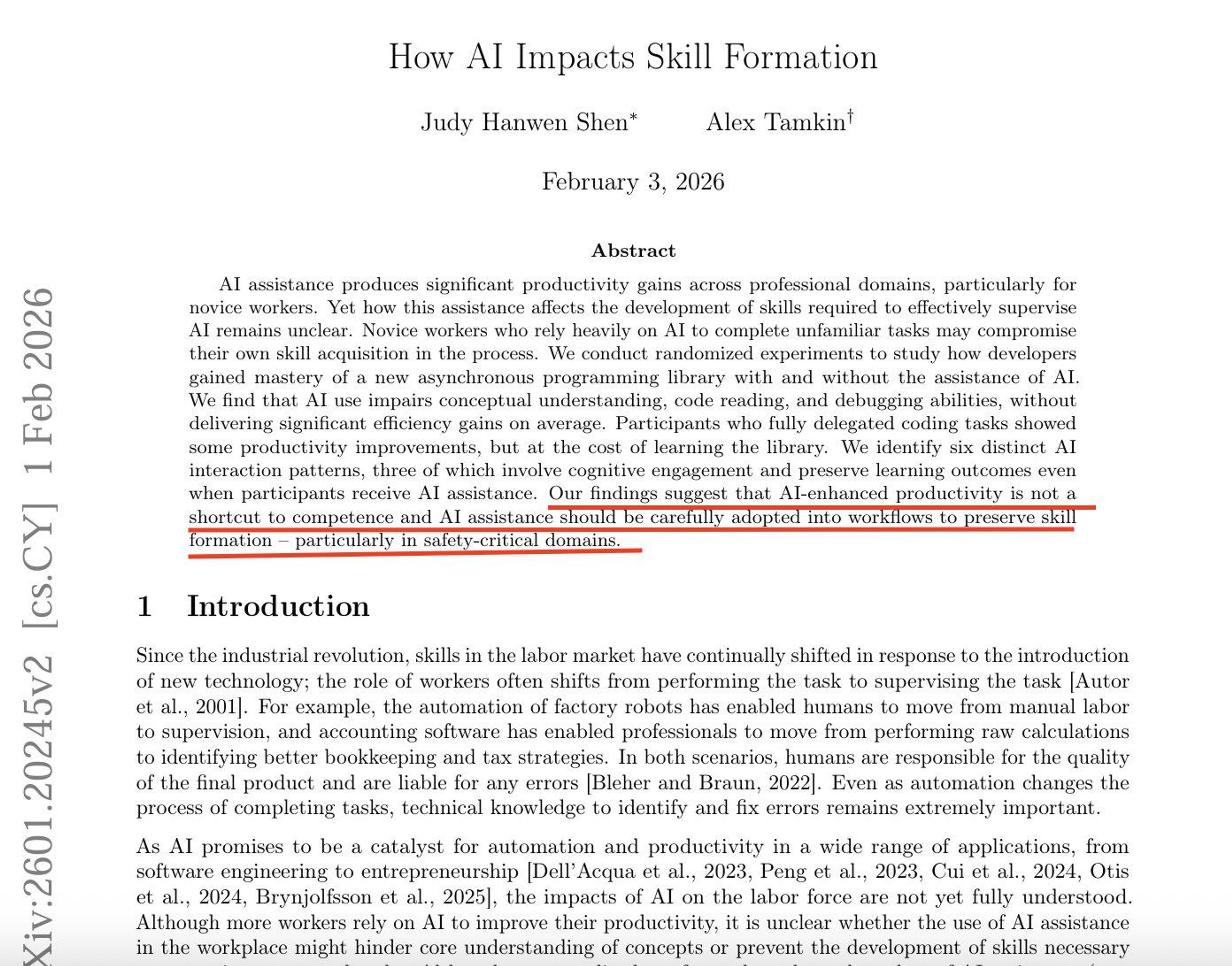
A viral thread from an 11-year software development veteran rattled the programming world when the developer admitted they could no longer debug effectively without AI assistance. Not occasionally. Not for complex edge cases. Routinely. For problems they would have solved instinctively three years ago. The post sparked thousands of responses, many of them uncomfortably recognizable to senior engineers across the industry.
This isn't just one person's story. It's a signal. And the data behind it is damning enough to demand a serious conversation about what AI-augmented development workflows are actually doing to the humans inside them. As we examine the broader AI trends reshaping developer tools in 2025, the developer dependency question sits at the center of every hard conversation.
The Reddit Confession That Broke the Engineering Internet
The post itself was disarmingly honest. The developer described reaching for GitHub Copilot or ChatGPT reflexively, before even attempting to trace a bug manually. They described a creeping anxiety when those tools weren't available—a kind of learned helplessness that had developed gradually, invisibly, over roughly 18 months of heavy AI tool usage.
What resonated wasn't the confession alone. It was the replies. Dozens of engineers with 5, 8, 12 years of experience described the same pattern. One senior backend developer commented that they'd recently struggled to write a basic recursive function without prompting an AI first. Another said they'd caught themselves unable to explain why a piece of AI-generated code worked—only that it did.
This is the uncomfortable texture of professional capability regression in real time. And it's happening across experience levels, not just among junior developers.
What the Numbers Actually Say About AI Cognitive Offloading
The anecdotal evidence has a quantitative backbone, and it's worth examining closely.
AI generates 41% of all code written globally, totaling 256 billion lines in 2024. A quarter of Y Combinator's Winter 2025 batch featured codebases that were 95% AI-generated. These numbers reframe the Reddit confession: this isn't an isolated behavioral quirk. It's a structural shift in how software gets built.
GitHub Copilot users report 51% faster coding speeds and 26% more completed tasks—metrics that sound unambiguously positive. But the GitClear analysis of 211 million code changes in 2024 tells a more complicated story. Code duplication increased eightfold. Code churn—revisions made within two weeks of initial commit—is projected to double from pre-AI baselines. Refactoring dropped from 25% to less than 10% of all changes. Copy-pasted lines rose from 8.3% to 12.3%.
Speed went up. Code quality went down. And developers, perceiving a 24% speedup from AI assistance, are actually experiencing a measured 19% slowdown when you account for the increased time spent on verification, debugging AI errors, and fixing cycles—per a METR study. The perception gap alone is a red flag for any organization making workforce decisions based on developer self-reporting.
AI Cognitive Offloading: The Psychology Behind the Problem
Cognitive offloading is not inherently dangerous. Humans have always used external tools to reduce mental load—from writing things down to using calculators. The psychological literature on distributed cognition treats this as a feature of intelligence, not a flaw.
But AI cognitive offloading among engineers introduces a variable that calculators never did: the tool makes judgment calls. It doesn't just store information or perform arithmetic. It reasons, infers, and generates solutions. When a developer repeatedly delegates that reasoning to an AI, the cognitive pathways that perform that reasoning atrophy through disuse. This is the neurological basis for what the Reddit developer described.
Stanford HAI researcher Joon Sung Park's work on AI behavioral modeling points toward the depth of this challenge. His research frames AI systems as capable of simulating human reasoning at a demographic scale—which means the line between augmentation and substitution is genuinely blurry. When the tool reasons like you, the temptation to let it reason for you is structurally unavoidable.
Lex Fridman, speaking at an MIT AI conference, framed it this way: "As AI gets better, the value of being a generalist grows versus being a specialist." His point was optimistic, but it implies a real cost—specialists who built their identity around deep, specific technical skills face the steepest technical skill erosion curve.
The Security Blindspot Nobody Wants to Talk About
There's a dimension of this problem that goes beyond productivity metrics and professional identity. It has consequences for every user of software built this way.
Stanford University researchers found that 48% of AI-generated code contains vulnerabilities. AI-assisted developers produced 2.74 times more cross-site scripting (XSS) vulnerabilities, 1.88 times more improper password handling issues, and 1.91 times more insecure object references—and this occurred in 80% of the tasks studied. These aren't rare edge cases. They're statistical baselines.
Understanding security vulnerabilities in AI-generated code has become one of the defining challenges of the 2025 security landscape. When developers can't debug without AI assistance, they also lose the ability to critically audit AI-generated code for security implications they don't fully understand. The dependency loop closes on itself.
Dorothy Chou at Google DeepMind has emphasized building harm awareness into AI systems from the ground up: "We basically did a taxonomy of all the potential harms from language models and we held back our first language model paper until we could release both at the same time so you build that awareness into the system." But that institutional caution doesn't automatically transfer to developers using AI tools under deadline pressure.
Of the 90% of surveyed developers who use AI for development assistance, only 48% always check AI-generated code before committing it. That means more than half are committing AI-generated code to production without consistent review. Given the vulnerability statistics, the implications for enterprise security posture are significant.
Programmer Autonomy vs. AI Assistants: Is There a False Choice?
The debate that erupted from that Reddit post often collapses into an unhelpful binary: AI tools are either eroding developer skills or they're just the next evolution of the IDE. Both framings miss the actual complexity.
Programmer autonomy vs. AI assistants isn't a zero-sum contest. The more precise question is: what does healthy human-AI collaboration actually look like, and are most engineering teams anywhere close to it? The current evidence suggests they are not. The way developers are using AI tools for productivity is often reactive and undisciplined—reaching for AI as a first resort rather than a vetted second opinion.
Sandro Gianella of OpenAI has pushed back on alarmism: "There's a lot of fear around AI, but as someone close to the work, I'm not worried. The lesson of the last decade isn't to avoid the tech platforms—it's to structure them the right way with the right people around the table." This is a reasonable position. The problem is that most engineering organizations are not structuring AI tool use with that level of intentionality.
The 96% of developers who do not fully trust AI-generated code's functional correctness—yet use it anyway—are operating in a state of productive dissonance. They know the tool is unreliable. They use it anyway because the speed benefits feel real even when the productivity data says otherwise. This is not a rational workflow. It's a habit pattern.
Stephen Wolfram's reply at the MIT AI conference to Fridman's observation carries weight here. When Fridman noted that "ChatGPT is good at sounding correct, without actually being correct," Wolfram replied, "Just like humans." The joke lands. But it also identifies the real risk: when both the human and the AI are confidently producing plausible-sounding output without deep verification, the system has no reliable error-correction mechanism.
Does AI-Assisted Debugging Actually Produce Better Production Code?
Here is the flip side that the doom framing tends to ignore: in some contexts, AI-assisted development does produce measurably better outcomes.
AI tools catch certain classes of bugs that human developers routinely miss, particularly in pattern-matching scenarios—identifying deprecated API usage, flagging obvious type mismatches, surfacing edge cases in common data structures. For experienced developers who use AI as a genuine second opinion rather than a first-draft generator, the collaboration model can produce code with lower defect density than either human or AI working alone.
The critical variable is debugging without AI limitations—that is, maintaining enough baseline competency to evaluate AI suggestions critically. Developers who retained strong foundational skills and layered AI assistance on top reported the highest confidence in their output and the lowest rate of production incidents. The developers who showed the steepest capability regression were those who adopted AI early, used it most intensively, and had less time building foundational skills before the tools became available.
This creates a structural problem for the pipeline. Junior developers entering the field in 2024 and 2025 are building professional habits in an environment where AI is the default. The human-AI collaboration costs are front-loaded in skill development and back-loaded in production risk. Organizations hiring junior developers shaped by AI-first workflows are accepting hidden technical debt they won't fully see for two to three years.
The knowledge worker autonomy question is real. When a developer can't independently verify the correctness of the code they're shipping, they're not a developer who uses tools. They're a reviewer of AI output—a different job with different risk profiles, and one the industry hasn't yet built reliable quality frameworks around.
Conclusion: The Reckoning the Industry Needs to Have
The 11-year developer's confession wasn't a personal failing. It was a diagnostic. The conditions that produced that confession—frictionless AI access, productivity pressure, diminishing tolerance for slow manual debugging—are present in virtually every engineering organization operating at scale in 2025.
The response cannot be to abandon AI tools. The productivity ceiling for manual development is real, and the competitive pressure to use AI assistance is not going away. The response has to be more deliberate than that.
It requires addressing risks and ethical concerns in AI-assisted development at the organizational level, not leaving it to individual developers to self-regulate. It requires structured practices—mandatory manual debugging rotations, code review standards that require explainability, and onboarding processes that build foundational skills before AI tools are introduced. It requires acknowledging that the Stanford HAI research on AI cognitive offloading and the GitClear production data are not abstract concerns. They are describing what is already happening inside your engineering team.
The question isn't whether AI is changing how developers work. It already has. The question is whether that change is being managed or just experienced. For addressing risks and ethical concerns in AI-assisted development, the window for proactive policy is narrowing faster than most organizations realize.
Meanwhile, the TechCrunch AI infrastructure developments tracking AI's expanding energy footprint—natural gas plants being built specifically to power AI data centers—remind us that the resource commitment to these tools is accelerating, not reversing. The infrastructure is being built. The question is whether the human capacity to work alongside it responsibly is being built at the same pace.
It isn't. Not yet.
FAQ: Developer Skill Decay and AI Debugging Dependency
Q: Is AI causing genuine skill decay in experienced developers, or is this just adaptation to new tools? A: The evidence suggests both are happening simultaneously. Developers who built strong fundamentals before heavy AI adoption tend to adapt well; those who adopted AI before establishing baselines show measurable capability regression in manual debugging and architectural reasoning tasks.
Q: What percentage of AI-generated code is actually vulnerable to security exploits? A: Stanford University researchers found that 48% of AI-generated code contains security vulnerabilities. AI-assisted developers produced significantly higher rates of XSS vulnerabilities, improper password handling, and insecure object references compared to developers working without AI assistance.
Q: Do AI tools actually make developers faster? A: Developers perceive a 24% speedup from AI tools, but METR's measured data shows a net 19% slowdown when factoring in time spent on verification, debugging AI errors, and revision cycles. The perception of speed and the reality of output diverge significantly.
Q: What's the risk of junior developers learning to code primarily with AI assistance? A: Junior developers who rely on AI before building foundational skills may develop professional habits that limit their ability to critically evaluate AI output. This creates delayed production risk—organizations won't fully see the impact until those developers are responsible for complex, high-stakes systems.
Q: What can engineering organizations do right now to prevent AI cognitive offloading from becoming a liability? A: Organizations should implement structured manual debugging requirements, build explainability standards into code review processes, audit AI-generated code for security vulnerabilities before production deployment, and ensure onboarding programs establish foundational competency before introducing AI tools as standard workflow.
Stay ahead of AI — follow [TechCircleNow](https://techcirclenow.com) for daily coverage.