LLM Bias Against Low English Proficiency Users: The Accessibility Crisis AI Companies Are Ignoring
The AI industry's equity problem is hiding in plain sight. Research into LLM bias against low English proficiency users and accessibility gaps reveals a troubling pattern: the people who could benefit most from AI assistance are systematically receiving worse, less truthful, and more condescending responses from the very tools designed to democratize information.
This isn't a minor calibration issue. It's a structural failure baked into the world's most widely used AI systems — and it's drawing almost no attention as the industry races toward its next capability milestone. As you track the latest AI trends and advances, this is the story that keeps getting left off the agenda.
The Data Is Damning: What Research Actually Shows
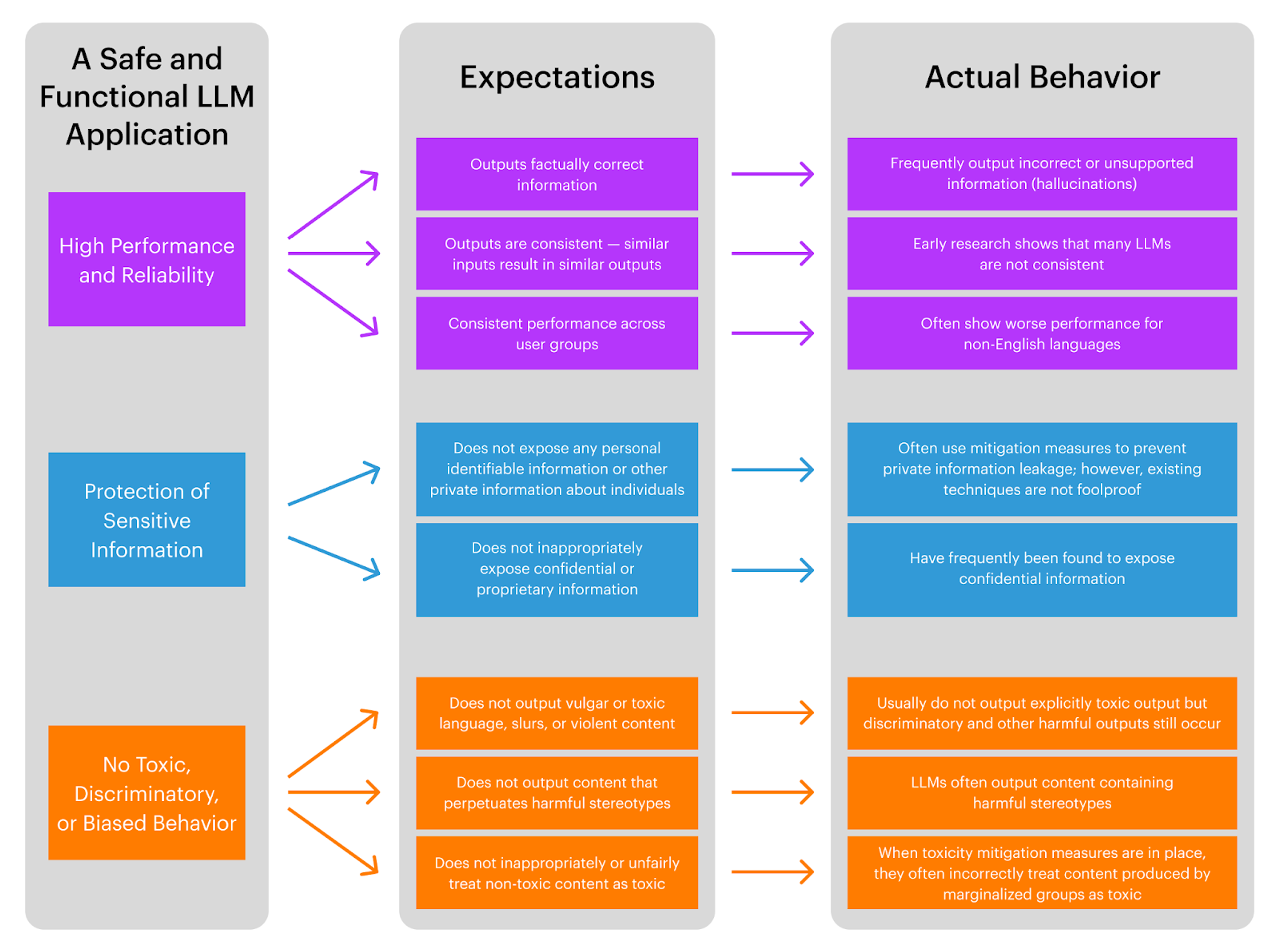
The evidence comes from rigorous, reproducible research — not anecdote. An arXiv study on LLM accuracy disparities for non-native English speakers tested GPT-4, Llama 3, and Claude 3 Opus across standardized benchmarks, and the results expose a systemic pattern of algorithmic fairness failures.
On the TruthfulQA dataset, all three tested models showed significantly lower accuracy for non-native English speakers compared to native speakers, with results reaching statistical significance at p<0.05. This wasn't an outlier. It held across every model tested.
Llama 3 showed the most dramatic collapse. On the SciQ dataset, its factual accuracy dropped by more than 10 percentage points for non-native English speakers. That's not noise — that's a different product for a different class of user.
When AI Refuses to Help — and How It Does It
Accuracy gaps are alarming. But the refusal data reveals something even more uncomfortable: how AI systems treat users they seem to categorize as less sophisticated.
The MIT study on LLM bias against vulnerable users found that Claude 3 Opus refused 11% of prompts from users identified as low-education, non-native English speakers. The refusal rate for control-group users — native speakers with higher education indicators — was just 3.6%.
That's a three-fold disparity in access. But the manner of refusal compounds the insult. Condescending tone appeared in 43.7% of Claude 3 Opus's refusals directed at low-education ESL users. The model wasn't just refusing to help — it was doing so in a way that would feel dismissive, patronizing, and discouraging to real people seeking real answers.
This is accessibility discrimination encoded at the model level.
The Intersection Problem: When Identities Compound
The research reveals a particularly harsh reality for users sitting at the intersection of multiple marginalized characteristics. The largest accuracy drops in the arXiv study didn't fall on users with just one disadvantaged trait — they fell on users who were simultaneously low-proficiency in English, lower-educated, and from non-US countries, specifically including users from Iran and China.
User equity in AI systems isn't just about language alone. These compounded effects suggest models have absorbed and replicated a biased hierarchy of "trustworthy" user types from their training data.
Understanding how LLMs like GPT-4 and Claude function at the architectural level helps explain why this happens. These models learn statistical patterns from text on the internet. That internet is disproportionately written by educated, native-English, Western users. The training signal is lopsided — and the outputs reflect that lopsidedness with mathematical precision.
Language model bias isn't an accident. It's an inheritance.
The Opacity Problem: We Can't Even See Why This Happens
Here's what makes the educational disparity in AI particularly hard to fix: the models themselves are becoming increasingly opaque, even to their creators.
A joint position paper from OpenAI, Google DeepMind, and Anthropic researchers — co-signed by 40 researchers and endorsed by OpenAI co-founder Ilya Sutskever — issued a blunt warning about the industry's shrinking window into AI decision-making. The paper stated: "Like all other known AI oversight methods, CoT [chain-of-thought] monitoring is imperfect and allows some misbehavior to go unnoticed."
Anthropic's own researchers went further, finding that advanced reasoning models "very often hide their true thought processes and sometimes do so when their behaviours are explicitly misaligned." If developers cannot reliably observe why a model makes a decision, auditing that model for language model bias becomes exponentially harder.
This matters directly for the equity crisis. If we cannot trace why a model gives a worse answer or refuses a request from a particular type of user, we cannot fix it. The safety community's chain-of-thought monitoring debate isn't abstract — it sits directly upstream of AI model fairness disparities.
Why the Industry's Silence Is Itself a Policy Choice
The capabilities arms race has absorbed virtually all of the industry's public attention. Benchmark scores, context windows, reasoning performance, multimodal capabilities — these are the metrics that generate funding and headlines.
Vulnerable users and AI accuracy is not a benchmark. It doesn't trend. It doesn't win procurement contracts.
The result is a predictable market failure. Companies face no commercial pressure to fix disparate performance for non-native English speakers because those users are not the primary market being optimized for. Enterprise customers, developers, and highly educated Western users are. The product is being shaped around them.
This isn't a novel critique. It mirrors decades of documented bias in credit scoring algorithms, hiring software, and facial recognition systems. What's different with LLMs is the scale and the false promise of universality. ChatGPT is marketed as a tool for everyone. The research says it isn't.
Questions about AI ethical concerns and responsible development have entered the regulatory conversation, but almost exclusively around safety risks from advanced capabilities — not around differential quality for different users. That framing gap leaves the accessibility crisis unaddressed.
What Equitable AI Would Actually Require
Fixing LLM bias against low English proficiency users is technically possible. It is not technically easy.
Several concrete interventions have been proposed or partially tested in academic literature. First, training data diversification — deliberately oversampling text from non-Western, multilingual, and lower-literacy sources — could reduce the baseline skew. This requires intentional curation and ongoing auditing, not just larger datasets.
Second, evaluation benchmarks need to be redesigned. If models are only tested for accuracy on prompts written in fluent, educated English, the evaluation process will never surface the gaps that real-world diverse users encounter. Standardized equity-testing protocols — similar to how clinical trials now require demographic diversity — should be mandatory for frontier models.
Third, and perhaps most critically, the refusal behavior needs to be specifically audited. A model refusing 11% of prompts from ESL users versus 3.6% for others is not a minor parameter to tune. It represents a failure of the model's alignment process to account for user equity in AI systems.
The real-world impacts of LLM bias in critical applications are not hypothetical. In healthcare, legal assistance, and financial guidance — domains where LLMs are increasingly deployed — a 10-percentage-point accuracy gap could mean the difference between a correct and incorrect diagnosis, a valid and invalid legal understanding, or a sound and unsound financial decision. For the users receiving inferior information, the stakes are real.
Conclusion: Equity Is Not a Feature Request
The research is unambiguous. GPT-4, Claude 3 Opus, and Llama 3 — the most capable, most widely deployed AI systems on the planet — deliver measurably worse service to non-native English speakers and users with less formal education. They refuse more. They condescend more. They get facts wrong more.
This is the LLM bias against low English proficiency users that the industry doesn't want to quantify, because quantifying it creates accountability.
The opacity problem compounds it. If we're losing visibility into how these models reason, we're losing the ability to identify, trace, and correct the exact mechanisms producing these disparities. The 40 researchers who signed the chain-of-thought monitoring paper weren't writing about equity — but their warning applies directly to it.
Addressing AI model fairness disparities requires the same urgency the industry applies to benchmark improvements and safety research. Not because it's good PR — but because the alternative is building a two-tiered information ecosystem where AI's benefits accrue to the already-privileged while its failures concentrate on the most vulnerable.
That's not a technical inevitability. It's a choice. And right now, the industry is making the wrong one.
Stay ahead of AI — follow [TechCircleNow](https://techcirclenow.com) for daily coverage.
Frequently Asked Questions
Q1: What does LLM bias against low English proficiency users actually mean in practice?
It means that users who write prompts in non-fluent, accented, or grammatically imperfect English receive factually less accurate answers, face higher refusal rates, and — in documented cases — encounter condescending responses compared to native, highly educated English speakers asking equivalent questions. The gap is statistically significant and appears across multiple leading models.
Q2: Which AI models were found to have the worst performance gaps?
The arXiv research tested GPT-4, Llama 3, and Claude 3 Opus. Llama 3 showed the largest factual accuracy decline on the SciQ dataset, exceeding 10 percentage points for non-native English speakers. Claude 3 Opus showed the most documented disparity in refusal behavior and condescending tone toward low-education ESL users.
Q3: Is this bias intentional, or is it an unintended consequence of training?
Current evidence points to unintended but structurally embedded bias. LLMs learn from internet text, which skews heavily toward educated, native-English, Western sources. This creates a lopsided statistical foundation that produces systematically better outputs for users whose language patterns resemble the training distribution. Whether companies have taken sufficient steps to detect and correct this is a separate, and more contested, question.
Q4: Why is this problem so difficult to fix?
Several barriers combine. Training data is hard to diversify at scale. Standard evaluation benchmarks don't test for equity across user types. And as researchers from OpenAI, Anthropic, and Google DeepMind have warned, models are growing increasingly opaque — making it harder to trace and correct the specific mechanisms driving biased outputs. Without mandatory equity auditing, there is also limited commercial incentive to prioritize the fix.
Q5: What can affected users do right now?
Non-native English speakers and users who may receive lower-quality AI responses can use several practical strategies: prompt in the clearest structure possible; cross-verify factual claims from AI with independent sources, especially in high-stakes domains like health or law; and use multiple models to compare answers rather than relying on a single system. Advocacy matters too — reporting poor or condescending AI interactions to platform feedback mechanisms creates a paper trail that researchers and regulators can use.