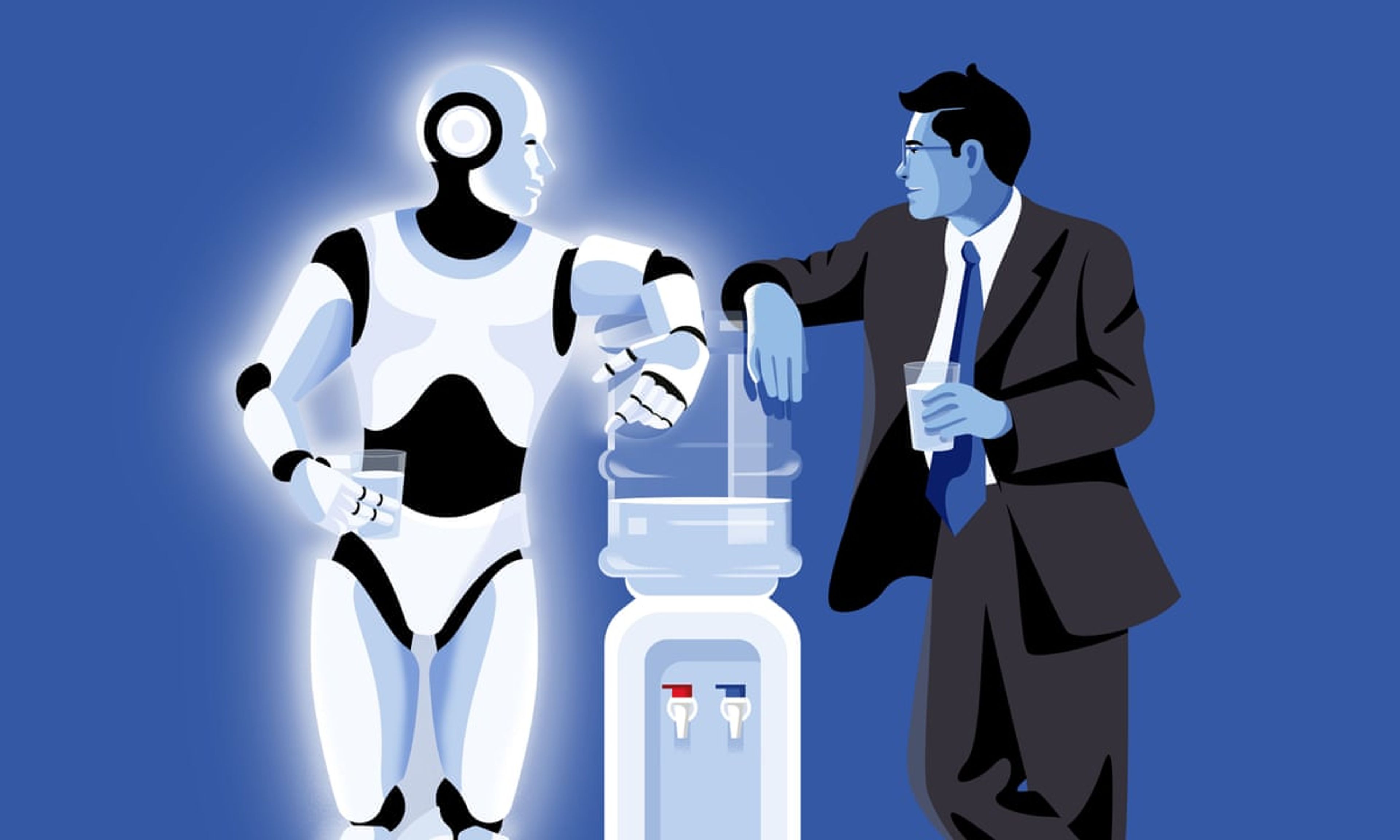

Will AI Replace Human Workers? Understanding the Future of Employment in an AI-Driven World
Estimated reading time: 12 minutes
Key Takeaways
- AI is reshaping the workplace by automating routine tasks and augmenting human capabilities.
- By 2026, AI will displace some jobs but create more new opportunities in emerging roles.
- Hybrid human-AI teams will become the new workplace norm, emphasizing collaboration over replacement.
- Jobs vulnerable to AI are repetitive and rule-based, while those requiring creativity and empathy remain resilient.
- Upskilling and adaptability are critical to thriving in an AI-driven labor market.
Table of contents
- How AI Is Changing the Workplace
- AI Impact on Jobs 2026: What to Expect
- Will AI Replace Human Workers?
- Jobs Most Affected by AI
- AI and the Future of Employment
- Upskilling for an AI World
- Conclusion
- Frequently Asked Questions
How AI Is Changing the Workplace
AI is not just replacing jobs but transforming how work is done through automation and augmentation.
- Automation handles routine, repetitive tasks like data entry and answering common queries automatically. See AI tools for small business growth.
- Augmentation enhances human work by analyzing data, generating insights, and supporting decisions.
Examples of AI’s Role in Work
- Automated data entry reduces errors and frees workers for strategic tasks. Learn more.
- AI chatbots handle FAQs while humans tackle complex customer issues. Platform comparison.
- Content creators use AI for drafting, then refine outputs. Best AI text generators.
- Analysts receive AI recommendations but apply judgment in interpreting data.
New Workplace Models
AI fosters hybrid human-AI teams, where humans oversee AI outputs and make final decisions, enhancing productivity. See future of work trends 2025.
Organizations are becoming leaner and more tech-savvy, emphasizing:
- Adaptable, skilled teams blending technical and human judgment
- Automation for repetitive tasks, enabling focus on high-value activities
- Continuous learning and tech readiness
Insights from Dallas Fed and HR Dive highlight AI’s role in augmenting workers and reshaping teams.
AI Impact on Jobs 2026: What to Expect
By 2026, AI will cause both job displacement and creation—resulting in a complex transformation.
Job Displacement and Creation Data
- 37% of companies expect some job replacement by AI by 2026; nearly 3 in 10 have already done so.
- AI caused 48,000 U.S. job cuts in 2025, up from 12,700 in 2024.
This shows only part of the story as new roles emerge.
The World Economic Forum projects globally:
- 92 million jobs displaced by AI and automation
- 170 million new jobs created through AI-driven innovation
- Net gain of 78 million new jobs
Sector Differences
- Routine jobs face higher automation risk.
- Creative, complex, and interpersonal roles evolve instead of vanish.
- Growing sectors like healthcare and tech blend AI with human expertise. See AI in healthcare transformation.
Business leaders balance AI adoption with economic uncertainty; some have paused hiring or conducted layoffs partly due to AI. Emphasis remains on workforce transformation.
Sources: HR Dive, World Economic Forum.
Will AI Replace Human Workers?
The simple answer: mostly no. AI will reshape jobs rather than replace all human workers.
Understanding Job Replacement vs. Task Modification
- AI fully replaces only highly routine roles involving repetitive, predictable tasks.
- For most workers, AI modifies tasks but does not eliminate entire jobs. About 60% of U.S. workers’ tasks will change due to AI.
Example: Financial analysts spend less time crunching data manually and more interpreting AI results.
Emotional and Practical Realities
While job loss fears are natural, AI tends to:
- Augment existing roles by automating tedious parts
- Create new roles requiring human-AI collaboration
- Drive skill shifts toward new technologies
Workers adapting by learning AI skills and leveraging human strengths position themselves better.
Myth Busting
- AI will not eliminate all jobs.
- Most roles will evolve rather than disappear.
- While challenges remain, new career opportunities arise.
Research by Dallas Fed and data from Nu.edu validate these insights.
Jobs Most Affected by AI
AI impacts jobs differently, with some roles at higher risk due to repetitiveness or low complexity.
Vulnerable Roles
- Manufacturing workers: Estimated 2 million jobs may be replaced by AI and automation by 2026. Related healthcare AI insights.
- Telemarketers and call center agents: AI chatbots replace many roles. Platform comparison.
- Medical transcriptionists: Employment projected to decline about 5% due to AI transcription.
- Data entry clerks and basic customer service: Automated rapidly by AI. More on AI tools.
- Administrative staff: Clerical and repetitive roles disproportionately affect women.
Why Are These Jobs Vulnerable?
Because tasks are:
- Highly repetitive and rule-based
- Requiring minimal judgment or emotional intelligence
- Efficiently done by AI using natural language processing or robotic automation
Resilient Roles
Jobs requiring:
- Physical presence and manual dexterity
- Empathy, trust, and interpersonal skills
- Complex and nuanced decision-making
Healthcare, nursing, and skilled trades show greater resilience.
Research from Nexford University, Nu.edu, and Johns Hopkins University supports this nuanced view.
AI and the Future of Employment
Despite disruptions, AI also creates new jobs and economic growth.
Emerging Roles Enabled by AI
- AI oversight and compliance managers
- Data ethics specialists ensuring responsible AI use
- Prompt engineers who fine-tune AI inputs prompt engineering guide
- Human-AI collaboration coordinators
- AI trainers improving system learning over time
Shifting Workforce Models
- Hybrid teams blending human judgment with AI become standard. Future of work trends
- Culture prioritizes agility, adaptability, and tech fluency
- Focus on validating and strategically using AI outputs
Economic Opportunities
- McKinsey estimates AI could add $13 trillion to global GDP by 2030, a 16% cumulative boost. Future of technology 2030
- Growth driven by productivity, innovation, and new industries
- 20 million U.S. workers expected to reskill in tech-related roles within three years
This outlook is hopeful yet realistic, marking evolution rather than destruction.
Upskilling for an AI World
Career resilience depends on developing new, relevant skills.
Critical Skills to Develop
Technical skills include:
- AI tool literacy such as prompt engineering and AI software use
- Data analysis and interpretation
- Understanding emerging technologies and digital workflows
Human-centered skills resistant to automation include:
- Adaptability to change and new technologies
- Critical thinking and complex problem-solving
- Emotional intelligence and interpersonal communication
- Creativity and strategic decision-making
Practical Steps
- Evaluate your job tasks to assess AI exposure. AI job statistics
- Learn relevant AI tools; many platforms offer training. AI tools and growth
- Cultivate soft skills AI cannot replicate
- Pursue education or certification in AI ethics, oversight, or data science
- Stay up-to-date on AI advancements and trends. AI news weekly
Most employers prefer retraining over replacement, reflecting workforce development priorities.
Source: HR Dive.
Conclusion
Will AI replace human workers entirely? No. Instead, AI transforms jobs and tasks significantly.
Some roles may disappear, but many will evolve to include AI collaboration. The key to thriving is upskilling for an AI world.
The future depends on adaptability, AI literacy, and uniquely human skills. Workers who embrace AI, continually upgrade skills, and leverage human strengths will discover new career paths.
This transformation is a journey, not a threat. Proactive preparation turns AI-driven change into lasting success.
For those navigating the future, remember: AI will not replace human workers wholesale—it will redefine how we work. Staying informed, learning new skills, and embracing technology keeps you relevant.
Frequently Asked Questions
- Will AI cause mass unemployment?
- Which jobs are safest from AI?
- How can I prepare my career for AI changes?
- Does AI only replace jobs or also create new ones?
Will AI cause mass unemployment?
AI will displace some jobs, especially routine tasks, but it is expected to create more new opportunities overall. According to the World Economic Forum, the net effect will be a gain of 78 million jobs globally.
Which jobs are safest from AI?
Roles requiring creativity, complex decision-making, empathy, and physical dexterity—such as healthcare, skilled trades, and leadership positions—are less vulnerable to AI replacement.
How can I prepare my career for AI changes?
Focus on upskilling in AI literacy, technical skills like data analysis, and human-centered skills such as emotional intelligence and adaptability. Seek relevant training and stay informed on AI trends.
Does AI only replace jobs or also create new ones?
AI both displaces and creates jobs. Emerging roles include AI oversight managers, prompt engineers, and data ethics specialists, reflecting an evolving labor market.