
How to Automate Business with AI: A Comprehensive Guide to AI Automation
Estimated reading time: 12 minutes
Key Takeaways
- How to automate business with AI involves leveraging intelligent systems to handle complex, repetitive tasks.
- Understanding what is AI automation is crucial to unlock its full potential in business.
- AI automation blends machine learning, NLP, RPA, and computer vision to outperform traditional automation.
- Businesses of all sizes, especially small businesses, can benefit from smarter, faster, and error-free processes.
- A structured implementation process ensures successful adoption and long-term optimization.
Table of contents
- What is AI Automation? Understanding the Intelligent Future of Business
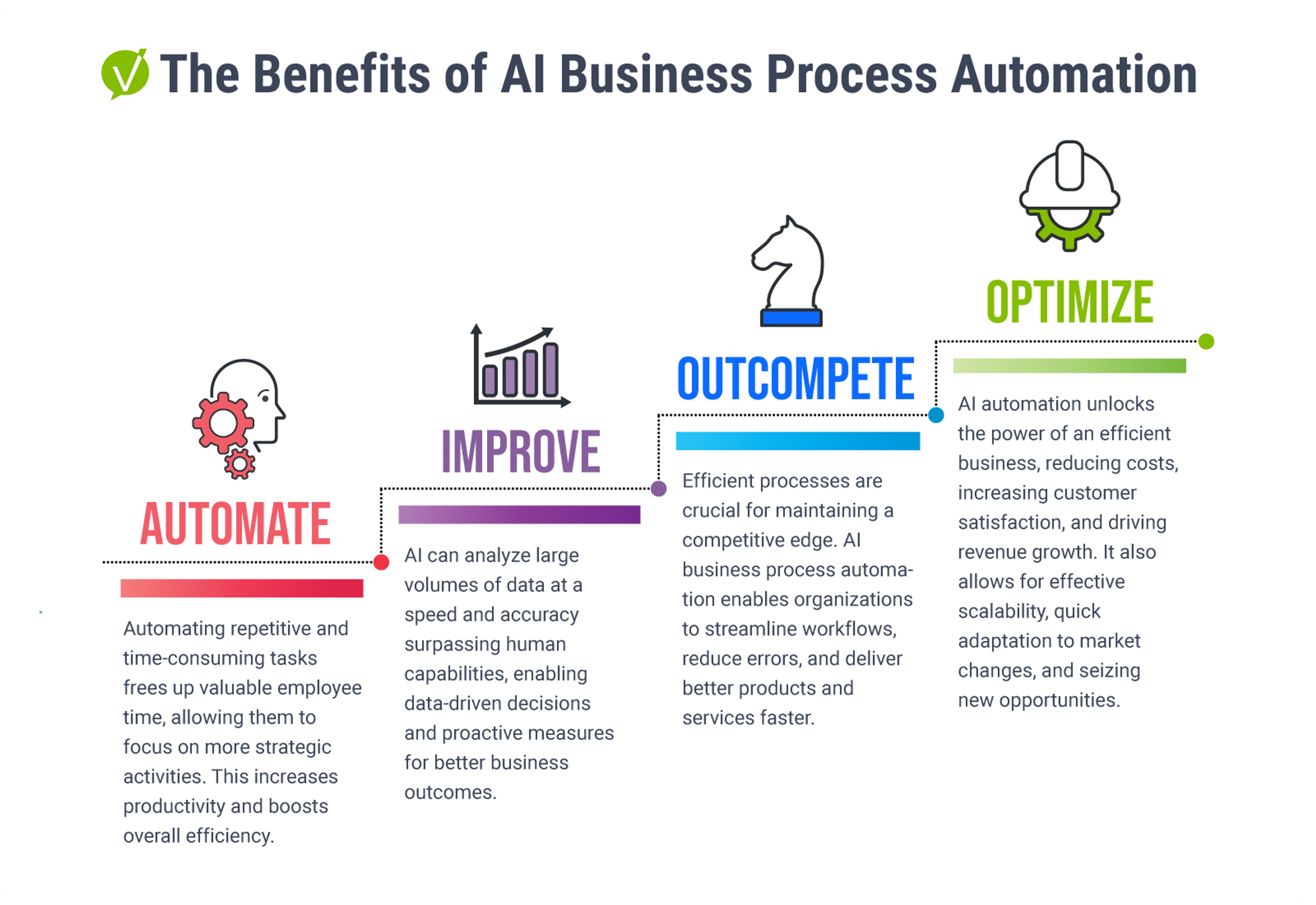
- Benefits of AI Automation: Why Businesses Should Embrace Intelligent Automation
- How to Automate Business with AI: Step-by-Step Implementation Guide
- AI Process Automation Tools: Choosing the Right Technology for Your Business
- AI Automation Examples for Business: Real-World Applications Driving Success
- Conclusion: Unlocking the Power of AI Automation for Your Business
- Frequently Asked Questions
In today’s fast-moving world, businesses must adapt to stay ahead. One of the most powerful ways to do this is by learning how to automate business with AI. But what does that really mean? What is AI automation? Simply put, AI automation means using intelligent computer systems—like machines that can learn, understand language, and see images—to handle complex, repetitive tasks that humans used to do. These smart systems work alongside your business to make operations faster, smoother, and more efficient.
This comprehensive guide will walk you through everything you need to know about AI automation. We will explore the meaning of what is AI automation, its major benefits including those especially useful for small enterprises, and practical steps on how to automate business with AI. You’ll also find examples of tools and real-life business applications that show AI automation in action.
With AI automation growing in importance across industries, businesses use it not only to improve performance but also to cut costs and stay competitive in today’s market. Whether you run a large corporation or a small business, understanding and leveraging AI automation can open new pathways for growth and efficiency.
Source: heliosz.ai
What is AI Automation? Understanding the Intelligent Future of Business
AI automation is the fusion of artificial intelligence technologies with business processes to automate complex, often repetitive tasks that once required human effort. Unlike simple robotic automation that follows fixed rules, AI automation systems learn from data, adapt to new situations, and continuously improve their performance. This means AI can handle tasks involving unstructured data, decision-making, and complexity beyond traditional automation’s reach.
Key Technologies Behind AI Automation
- Machine Learning (ML): This allows systems to learn from past data and improve without being explicitly programmed for every scenario.
- Natural Language Processing (NLP): NLP equips machines to understand, interpret, and generate human language. You see this at work in AI chatbots and virtual assistants.
- Robotic Process Automation (RPA): RPA automates structured, rule-based repetitive tasks across multiple software systems, boosting accuracy and speed.
- Computer Vision: This technology analyzes visual inputs, such as images or videos, to perform tasks like quality control and inspection on production lines.
Because AI automation can process complex and unstructured data, it surpasses traditional automation. For example, while traditional tools might only automate fixed tasks, AI systems adjust dynamically to new information and situations, making them far more versatile.
These AI automation examples for business demonstrate the advanced capabilities AI delivers, transforming how organizations achieve efficiency.
Sources: abbyy.com | heliosz.ai
Benefits of AI Automation: Why Businesses Should Embrace Intelligent Automation
Implementing AI automation offers numerous benefits that can revolutionize business operations. But what exactly are the benefits of AI automation, and why should companies consider it, including small businesses?
Increased Operational Efficiency and Productivity
AI automation handles vast amounts of work swiftly and accurately. Tasks like data entry, customer support, or manufacturing processes are completed with consistent speed, freeing human employees for strategic and creative duties. Machine learning algorithms further optimize workflows by continuously analyzing performance data to identify improvements.
Learn more about AI productivity tools.
Cost Reduction and Resource Optimization
By automating repetitive tasks, businesses reduce reliance on manual labor, cutting labor and training expenses. Automation also minimizes human errors, reducing costly mistakes. Additionally, AI-powered predictive maintenance helps avoid unexpected equipment breakdowns, saving repair costs and preventing costly downtime.
Minimized Errors and Enhanced Accuracy
AI systems process information with precision that humans cannot match. This accuracy is essential in sensitive areas like finance, where AI enhances fraud detection, risk management, and regulatory compliance by analyzing large datasets in real time.
Discover AI in fintech fraud and credit scoring.
Scalability and Responsive Operations
AI automation offers flexibility by automatically scaling operations to meet demand fluctuations without sacrificing quality. For instance, e-commerce platforms powered by AI manage peak shopping periods smoothly by adjusting inventory and order processing dynamically.
Improved Decision-Making Through Data Analytics
AI uncovers hidden patterns in vast data, enabling businesses to make smarter, data-driven decisions. Whether it’s optimizing inventory levels or tailoring marketing strategies based on customer trends, AI analytics provide a competitive edge.
AI Automation for Small Businesses
For small businesses, AI automation is a true equalizer. It allows smaller players to automate complex tasks and processes with limited resources, leveling the playing field against larger enterprises. Whether it’s automating invoice processing or customer communications, AI gives small businesses the capability to operate efficiently and compete effectively.
Explore AI tools for small business growth.
Sources: heliosz.ai | abbyy.com | zendesk.es
How to Automate Business with AI: Step-by-Step Implementation Guide
Wondering how to automate business with AI? The process might seem daunting at first, but following a clear, structured path can lead to successful integration. Below is a step-by-step guide to help you implement AI automation systematically.
Step 1: Identify Repetitive Processes Ripe for Automation
Begin with a thorough audit of your current workflows. Focus on repetitive, time-consuming, and rule-driven tasks, such as:
- Data entry and system transfers
- Customer service queries and support tasks
- Invoice processing and billing
- Inventory monitoring and stock management
- Quality inspections and control
- Generating reports and analyzing data
Prioritize those that take up significant employee time or are prone to errors.
Detailed examples for small business automation.
Step 2: Assess Data Quality
AI automation relies heavily on good data. Evaluate your data infrastructure to ensure:
- Data is accurate, complete, and well-organized
- Any gaps or inconsistencies are identified and corrected
- Data governance policies are established to maintain quality over time
If your data foundation is weak, AI tools cannot perform optimally.
Step 3: Evaluate AI Process Automation Tools
Selecting the right tools is critical. Consider:
- Functionality: Does the tool fit the identified business processes?
- Scalability: Can it grow with your company’s needs?
- Integration: Will it seamlessly connect with existing systems?
- Ease of use: Is it user-friendly or does it require deep technical skills?
- Cost: Does it fit your budget and offer good value?
Step 4: Invest in Employee Training
Empower your workforce. Employees should:
- Understand the impact of AI automation on their roles
- Learn to collaborate effectively with AI systems
- Develop skills for monitoring and optimizing AI workflows
- Shift focus to high-value, strategic work
Training fuels adoption and maximizes automation benefits.
Step 5: Implement and Optimize
Roll out AI automation in phases, starting with safer, low-risk areas. Monitor performance closely, gather feedback, and refine the system continuously. AI learns over time, getting smarter as it processes more data and scenarios.
See AI workflow automation tools.
Sources: heliosz.ai | abbyy.com | creatio.com
AI Process Automation Tools: Choosing the Right Technology for Your Business
A variety of AI process automation tools serve different business needs. Understanding the main categories and their uses will help you select the best fit.
Chatbots and Virtual Assistants
Powered by natural language processing (NLP), these tools provide 24/7 customer support, quickly respond to routine queries, and personalize user engagement. They reduce overhead by automating front-line communications while enhancing customer experience.
Workflow Automation Platforms
These platforms analyze existing business processes to identify inefficiencies and dynamically adapt workflows to changing conditions. Their AI capabilities enable real-time process optimization and smarter task management.
Predictive Analytics and Maintenance Systems
Used mainly in manufacturing and equipment-heavy industries, these systems monitor machine health and forecast failures to schedule proactive maintenance, reducing downtime and repair costs.
Inventory and Supply Chain Management Tools
AI improves inventory accuracy by predicting demand patterns and managing supply logistics efficiently. This results in cost savings, less waste, and better stock availability.
Fraud Detection and Compliance Monitoring
In finance and related sectors, AI examines transactional data to detect fraudulent activities and ensure regulatory compliance in real-time. This reduces risk and boosts operational security.
More on AI in fintech fraud detection.
Recommendation Engines
These AI systems analyze customer behavior to offer personalized product suggestions, increasing sales and enriching the shopping experience.
Selecting AI Automation Tools: Key Criteria
- Align the tool capabilities with the processes identified for automation.
- Ensure the solution is scalable and integrates well with your current technology.
- Consider user-friendliness to reduce adoption barriers.
- Evaluate total cost of ownership and ROI potential.
Sources: heliosz.ai | abbyy.com | creatio.com
AI Automation Examples for Business: Real-World Applications Driving Success
Seeing AI automation in action across industries highlights its transformative power.
Explore deep industry dives on AI impact.
Manufacturing and Production
Computer vision automates quality control checks on assembly lines by detecting defects. Predictive maintenance systems monitor equipment to forecast failures before they happen, reducing costly downtime.
Retail and E-Commerce
AI tracks inventory in real time, launches personalized marketing campaigns, and uses recommendation engines to tailor product suggestions based on customer behavior. These enhance customer satisfaction and boost sales.
Finance and Banking
AI automates fraud detection, risk assessment, and compliance monitoring by analyzing vast transaction data instantly. This enhances security, detects fraud quickly, and supports risk management.
Learn more about AI in fintech fraud detection.
Customer Service
AI chatbots resolve common issues faster than human agents, process orders automatically, and personalize communications, improving customer experience and lowering support costs.
Supply Chain Management
AI forecasts demand, optimizes inventory, and streamlines logistics, minimizing waste and operational expenses, creating leaner and more responsive supply chains.
Small Business Examples
Small enterprises use AI automation for administrative tasks such as sending personalized emails and automatic invoice processing. This frees time for growth-related activities while keeping operations efficient without needing more staff.
View AI tools for small business growth.
Sources: heliosz.ai | creatio.com | sage.com
Conclusion: Unlocking the Power of AI Automation for Your Business
AI automation combines intelligent technologies with business operations to streamline workflows, reduce costs, and enhance decision-making. By understanding what is AI automation and embracing its key technologies—like machine learning, NLP, RPA, and computer vision—businesses can unlock significant advantages.
The benefits of AI automation include:
- Improved operational efficiency and productivity
- Significant cost reductions and resource optimization
- Enhanced accuracy with fewer errors
- Greater scalability and responsiveness
- Smarter, data-driven decision-making
For companies searching how to automate business with AI, success comes from following a step-by-step implementation: identifying repetitive processes, assessing data quality, choosing the right tools, training employees, and optimizing continuously.
Many tools are available today—chatbots, workflow platforms, predictive maintenance, inventory managers, fraud detection systems, and recommendation engines—all designed to help businesses automate successfully.
AI automation also levels the playing field for small businesses, enabling them to compete with larger firms by automating sophisticated tasks with limited resources.
Find out how AI empowers small businesses.
If you’re ready to begin, identify one high-impact process ripe for automation in your organization. Piloting AI automation there will build expertise, demonstrate value, and establish momentum for broader transformation.
Take the first step: assess your operations, explore the right AI tools, invest in employee readiness, and start unlocking the transformative potential of AI automation today.
Sources: heliosz.ai | abbyy.com | zendesk.es | creatio.com
Frequently Asked Questions
What is AI automation? AI automation refers to using artificial intelligence technologies to perform complex business tasks that traditionally require human intervention. It involves systems that can learn, adapt, and improve over time. How can small businesses benefit from AI automation? Small businesses benefit by automating routine, time-consuming tasks which lowers costs, improves efficiency, and allows focus on growth and innovation. Specialized tools support automation even with limited resources. What are the key technologies in AI automation? The key technologies include machine learning (ML), natural language processing (NLP), robotic process automation (RPA), and computer vision, each handling different aspects of intelligent automation. How do I start implementing AI automation in my business? Start by identifying repetitive processes suitable for automation, assess data quality, evaluate potential AI tools, train your employees, and roll out solutions in phases with ongoing optimization. What are some popular AI automation tools? Popular tools include AI chatbots, workflow automation platforms, predictive maintenance systems, inventory management solutions, fraud detection software, and recommendation engines.