Neuralink ALS Brain-Computer Interface: Real Breakthrough or Billionaire Experiment?
The Neuralink ALS brain-computer interface program has produced something the neurotechnology world has rarely seen: documented, functional results in living patients. An ALS patient controlling a robotic arm with his thoughts. Another composing messages through imagined speech. These aren't simulation demos — they're happening in FDA-approved clinical trials right now.
But this is also a field with a long history of overpromising and underdelivering. Before declaring the age of neural implants has arrived, it's worth asking harder questions — about safety failures quietly patched with software updates, about a patient count still stuck in the double digits, and about whether this is a genuine medical revolution or an extraordinarily expensive proof-of-concept funded by the world's richest man. If you're tracking cutting-edge brain-computer interface advances in 2025 and beyond, this is the story that separates signal from noise.
What Neuralink Has Actually Proven So Far
Let's start with the data, not the press releases.
As of the latest announcement, Neuralink has implanted its brain-computer interface in 21 patients worldwide. Across the PRIME Study, participants have collectively lived with implants for over 670 cumulative days and logged more than 4,900 hours using the Telepathy feature. That's not a rounding error — it's a meaningful dataset for an early-stage invasive neural recording device.
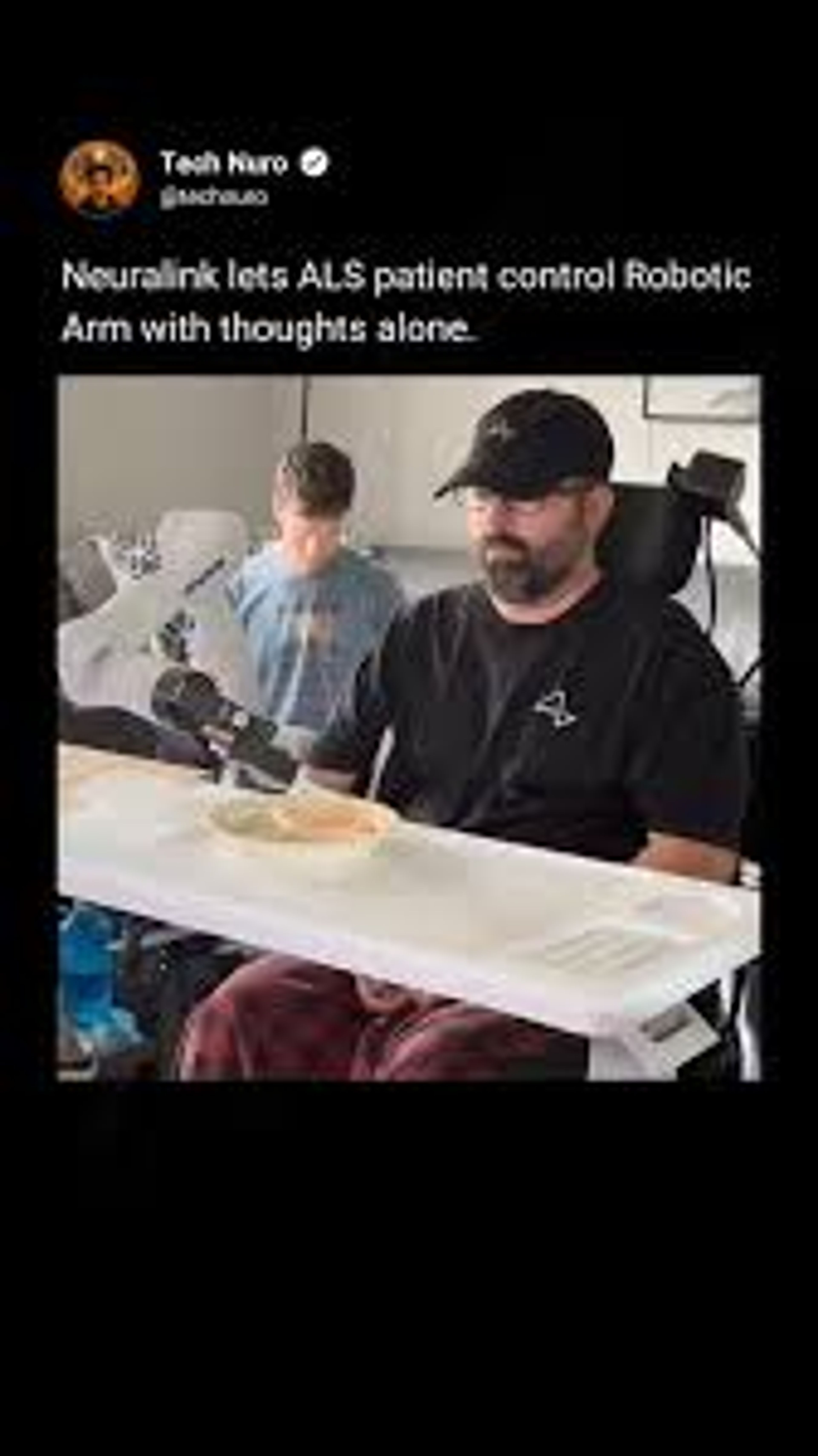
The clinical results are genuinely striking. ALS patient Nick Wray, the eighth implant recipient, used his Neuralink device to control a robotic arm during three consecutive 8-hour sessions in the FDA-approved CONVOY study — picking up a cup, operating a microwave, performing basic daily tasks he could no longer do with his own body. For someone with late-stage ALS, that's not a convenience feature. That's autonomy.
The speech restoration work is equally significant. Neuralink has received FDA Breakthrough Device Designation for speech restoration in individuals with severe speech impairment — a regulatory signal that the FDA views this application as addressing an unmet medical need. Breakthrough Designation doesn't mean approval; it means expedited review pathways. But it does mean the agency isn't dismissing this as science fiction.
The Hardware Failure Nobody Wants to Talk About
Here's where the hype needs to stop and the scrutiny needs to start.
Brad Smith, Neuralink's third implant recipient and an ALS patient, experienced a dramatic hardware failure: 85% of the electrode threads in his implant retracted within one month of surgery. Those threads are the mechanism by which the device records neural signals — without them, the implant is largely non-functional.
Neuralink's response was to push software updates that recalibrated the remaining electrodes to compensate for the signal loss. It worked well enough to restore partial functionality without reopening Smith's skull. But let's be clear about what this means: a critically ill patient, already dealing with a terminal neurodegenerative disease, had a majority of his neural implant fail within weeks of surgery, and the solution was a firmware patch.
This isn't a minor footnote. In the history of invasive neural implants, electrode degradation and thread retraction have been persistent problems across multiple platforms and research groups. The fact that Neuralink can partially compensate with software is genuinely impressive engineering. The fact that it happened at all — in a patient with ALS, where baseline neurological function is already declining — raises real questions about long-term device reliability and what happens when software updates can't compensate.
Neuralink's 21-patient milestone announcement acknowledges the company's push for high-volume production starting in 2026, with competitors interpreting targets as hundreds to low thousands of implants annually. Scaling hardware that has already shown a 85% thread retraction failure rate in at least one case — without full public disclosure of failure rates across all implants — is a regulatory and ethical concern that deserves more attention than it's getting.
FDA Oversight: Appropriately Cautious or Dangerously Slow?
The FDA's relationship with brain-machine interface safety has always been complicated by the agency's dual mandate: protect patients from harm and avoid blocking potentially life-saving innovation.
Breakthrough Device Designation — which Neuralink has now received for both speech restoration and its Blindsight visual implant — is a legitimate regulatory tool. It expedites review, increases FDA-company communication, and prioritizes devices addressing serious conditions. Neuralink also received separate Breakthrough Designation for Blindsight, its implant designed to restore vision, in September 2024. The FDA is engaged. It is not rubber-stamping.
But critics of the current neurotechnology regulation FDA framework point to structural gaps. The PRIME Study is still in early feasibility stages. Long-term safety data — the kind that would reveal what happens to brain tissue around implanted electrodes after 5 or 10 years — simply doesn't exist yet. The longest Neuralink patient has had an implant for less than two years. Bioelectronic medicine has a history of devices that looked transformative in year one and showed concerning tissue responses in year five.
The FDA's Breakthrough Designation for speech restoration is particularly important context for FDA and government oversight of emerging medical AI technologies — because speech decoding using neural implants inherently involves AI/ML processing of raw brain signals. The regulatory framework for AI-driven medical devices is still being written, and Neuralink is operating in that grey zone right now.
ALS Patients, Consent, and the Ethics of Desperation
There's a power dynamic in this story that doesn't get examined enough.
ALS is a terminal neurodegenerative disease with no cure. Median survival after diagnosis is 2-5 years. Patients with late-stage ALS who enroll in experimental brain implant trials are, by definition, in a situation where the risk calculus is radically different from a healthy volunteer. When you have little to lose, the threshold for accepting experimental risk drops dramatically.
This isn't to say ALS patients can't give informed consent — they absolutely can, and the individuals who have participated in Neuralink's trials are clearly doing so with full awareness of the stakes. Brad Smith has spoken publicly about his experience. Nick Wray's robotic arm sessions are documented and shared with apparent enthusiasm. These are autonomous adults making informed choices about experimental medical interventions.
But the ethics of invasive neural recording in terminally ill patients require a higher standard of transparency from the company, not a lower one. What is the full informed consent process? What happens to neural data recorded from these patients — who controls it, how is it stored, and what are the neural implant security and data privacy concerns that apply when the data in question is literally a person's brain signals? These questions deserve explicit public answers, not buried in clinical trial protocols.
The biotech industry's history of enrolling desperate patients in underpowered studies, generating headline-grabbing early results, and failing to deliver scalable therapies is long and documented. Neuralink may be different. The early evidence suggests it might be. But the scrutiny should scale with the ambition — and Elon Musk's ambitions for neural interfaces are not modest.
The Road to Mainstream: What "Scalability" Actually Requires
Neuralink's plan for high-volume production starting in 2026 — potentially hundreds to low thousands of implants per year initially — sounds dramatic until you compare it to the scale of need.
There are approximately 30,000 people living with ALS in the United States alone. Globally, the population of individuals who could potentially benefit from paralysis communication technology — including those with locked-in syndrome, spinal cord injuries, and other severe motor impairments — numbers in the millions. Even at 1,000 implants per year, Neuralink would take decades to meaningfully address that population.
For BCI medical applications to move from experimental to standard of care, several things need to happen simultaneously. First, long-term safety data must demonstrate that the brain tolerates chronic implantation without progressive damage — this requires years, not months. Second, manufacturing must scale in ways that bring device costs below the threshold that health insurance systems will cover. Third, the surgical infrastructure must expand beyond the handful of elite neurosurgical centers capable of performing these procedures today.
The AI-driven medical innovations and patient care applications that underpin modern neural interfaces — specifically the machine learning algorithms that decode intended speech or movement from raw electrode signals — are evolving rapidly. Algorithmic improvements may compensate for some hardware limitations. But they cannot solve a retracted electrode. They cannot eliminate the surgical risks of opening a human skull. They cannot generate the decade-plus longitudinal safety data that mainstream clinical adoption requires.
What Neuralink is doing right now is demonstrating technical feasibility at small scale in a highly selected patient population. That is genuinely valuable. It is not the same thing as a mainstream medical tool. The gap between those two things is measured in years and billions of dollars — and honesty about that gap is the most useful thing the field can offer right now.
The Bigger Picture: BCIs Beyond Neuralink's Spotlight
Neuralink dominates the media narrative around brain-computer interfaces, largely because of Musk's profile and the company's aggressive public communications strategy. But it is not the only player, and context matters.
BrainGate, the academic consortium that has been running BCI research for decades, has demonstrated similar motor decoding capabilities in human patients without the Silicon Valley fanfare. Synchron, which takes a less invasive endovascular approach to neural recording, has its own patients and its own FDA pathway. Precision Neuroscience is developing a thinner, more flexible electrode array designed to reduce the tissue response that causes thread retraction. The competitive landscape for Neuralink clinical trials and adjacent programs is active and technically diverse.
This matters because mainstream adoption of neural interfaces is unlikely to come from a single company's proprietary platform — it will emerge from a broader ecosystem of devices, standards, and clinical evidence. The FDA's willingness to grant multiple Breakthrough Designations across different companies suggests the agency understands this. The question is whether the regulatory and reimbursement infrastructure will evolve fast enough to match the pace of technical development.
The assistive technology breakthrough narrative around Neuralink is real but partial. ALS patients speaking through imagined neural signals, controlling robotic arms with thought alone — these are legitimate milestones in one of medicine's hardest problems. They deserve recognition. They also deserve the same rigorous scrutiny we would apply to any invasive medical device at this stage of development.
Conclusion: Genuine Progress, Incomplete Story
The honest answer to the question of whether Neuralink's ALS work constitutes a real breakthrough: yes, with conditions.
Yes, because the functional outcomes for patients like Nick Wray and Brad Smith represent real improvements in quality of life for people with terminal, devastating disease. Yes, because FDA Breakthrough Designation for speech restoration is a meaningful regulatory signal. Yes, because 4,900 hours of real-world Telepathy use is clinical data, not a demo.
With conditions, because 21 patients is not a clinical trial — it's a feasibility study. Because an 85% electrode thread retraction in one patient is a hardware failure that demands full transparency about rates across all implants. Because neural interface safety data at the timescales that matter for chronic implantation doesn't yet exist. Because the gap between "billionaire-funded feasibility study" and "mainstream medical tool" is larger than Neuralink's communications often imply.
The technology is real. The outcomes are meaningful. The hype is still outrunning the evidence. Holding both of those truths simultaneously is the only intellectually honest position available.
For ongoing analysis of where neurotechnology, AI in medicine, and regulatory frameworks are actually headed — not where the press releases say they're headed — TechCircleNow.com is your source for rigorous, unsponsored tech journalism.
Frequently Asked Questions
Q1: How many patients currently have a Neuralink brain-computer interface implanted? As of the latest announcement, Neuralink has implanted its BCI in 21 patients worldwide. The company plans to scale to high-volume production starting in 2026, targeting hundreds to low thousands of implants per year.
Q2: What did the FDA's Breakthrough Device Designation for Neuralink mean for ALS patients? The FDA Breakthrough Device Designation for speech restoration signals that the agency views Neuralink's neural implant speech restoration application as addressing a serious unmet medical need. It enables expedited review and increased FDA-company communication — but it does not constitute approval and does not guarantee eventual clearance for widespread use.
Q3: What happened with the electrode thread retraction in Brad Smith's implant? Brad Smith, Neuralink's third implant recipient and an ALS patient, experienced 85% retraction of electrode threads within one month of surgery. Neuralink deployed software updates to recalibrate the remaining functional electrodes, partially restoring device functionality without requiring additional surgery. The company has not publicly disclosed thread retraction rates across all 21 implant recipients.
Q4: How does Neuralink compare to other BCI companies like Synchron and BrainGate? BrainGate is an academic research consortium with decades of invasive neural recording research in human patients. Synchron uses a less invasive endovascular approach, threading its device through blood vessels rather than requiring open-skull surgery. Precision Neuroscience is developing thinner, more flexible electrode arrays. Neuralink's approach is more invasive but potentially provides higher signal resolution. Each company has its own FDA pathway and patient populations.
Q5: When could brain-computer interfaces become mainstream medical tools rather than experimental devices? Mainstream clinical adoption requires long-term safety data (minimum 5-10 years of chronic implantation evidence), manufacturing scale sufficient to reduce device costs to insurance-coverable levels, and expansion of surgical infrastructure beyond elite neurosurgical centers. Most BCI researchers and analysts estimate meaningful mainstream adoption in the ALS and paralysis communication technology space is at least 10-15 years away, even under optimistic development scenarios.
Stay ahead of AI — follow TechCircleNow for daily coverage.