
What Is a Large Language Model? An Easy-to-Understand Guide to LLMs
Estimated reading time: 12 minutes
Key Takeaways
- Large language models (LLMs) are AI systems trained on massive text data to generate human-like language.
- LLMs use transformer neural networks with billions or trillions of parameters to process complex language patterns.
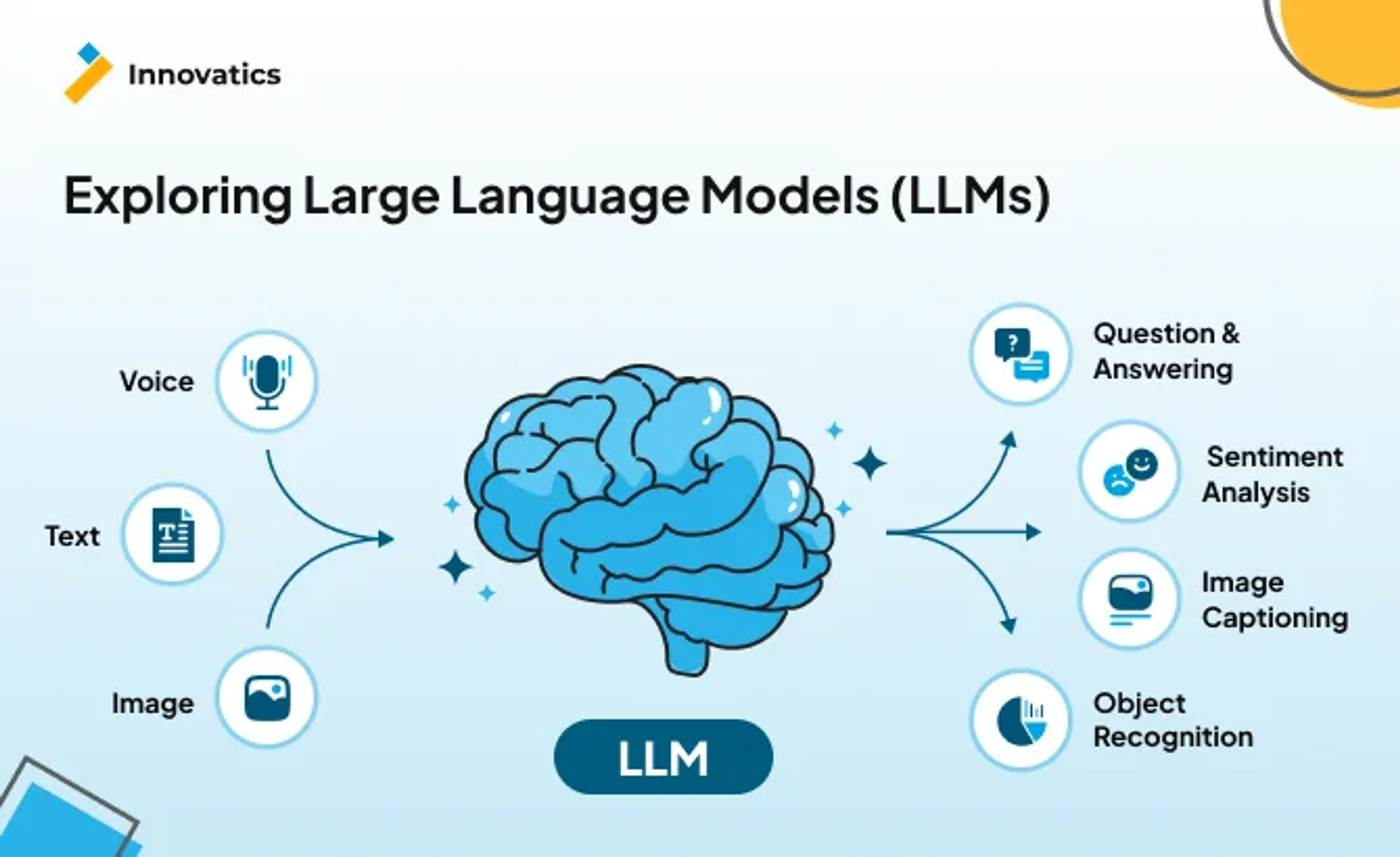
- They demonstrate versatile capabilities including text generation, summarization, translation, and reasoning.
- Training LLMs requires self-supervised learning on enormous datasets, huge computation power, and fine-tuning for specific tasks.
- Key examples include GPT and BERT, impacting industries such as customer service, content creation, coding, healthcare, and finance.
- LLMs differ significantly from traditional AI, providing broad generalization and adaptability.
Table of contents
- Defining Large Language Models: What Is a Large Language Model?
- How Do Large Language Models Work? Understanding the Engine Behind LLMs
- How LLMs Are Trained: The Learning Journey of Large Language Models
- LLM vs Traditional AI: How Large Language Models Revolutionize Artificial Intelligence
- Large Language Model Examples: Real-World AI in Action
- Conclusion: Why Understanding What Is a Large Language Model Matters
- FAQ: Common Questions About Large Language Models
Defining Large Language Models: What Is a Large Language Model?
To answer what is a large language model in straightforward terms: it is a type of language model that consists of billions to trillions of parameters. These parameters are the settings or “knobs” the AI adjusts as it learns from massive datasets full of text. The purpose? To predict and generate natural, human-like language.
Key Characteristics of Large Language Models
- Immense Scale
Large language models have billions—or even trillions—of parameters. This massive scale allows them to capture the subtle nuances and complexities of human language. - Diverse Training Data
They learn from a wide range of text sources such as books, websites, articles, and more. This diversity ensures they understand many different topics and writing styles. - Versatile Capabilities
LLMs can generate text, summarize information, translate languages, and even perform reasoning tasks. Their flexibility tackles multiple natural language processing (NLP) functions with minimal extra tuning.
Because of these traits, large language models can power many AI applications, from conversational agents to automated story writing.
Large language model examples include popular AI systems like GPT and BERT, which we will explore in depth later.
For technical details and an accessible breakdown, check out Stanford’s AI Demystified page on Large Language Models, along with the Wikipedia and Cloudflare resources linked above.
Also, to better understand how generative AI tools, often powered by LLMs, are used in business productivity, see: https://techcirclenow.com/harnessing-generative-ai-tools-productivity
How Do Large Language Models Work? Understanding the Engine Behind LLMs
Answering the question of how do large language models work requires a look into the unique neural network architecture behind them: transformers.
Transformer-Based Neural Networks
At the core, LLMs use transformer neural networks designed to analyze sequences of text. Instead of reading words one by one, transformers look at all the words in a sentence or paragraph at once.
- Neural Networks
Think of neural networks as computer systems inspired by the human brain—layers of interconnected “neurons” that process information. These layers learn to identify patterns in data. - Self-Attention Mechanism
Transformers use a feature called self-attention, which means the model weighs how important each word is in relation to every other word in the text. This helps the model understand context better than older models that processed words one after the other (sequentially).
Why Transformers Are Better
Older AI models often used recurrent neural networks (RNNs), which had trouble with long sentences or contexts because they processed text word by word. Transformers, by contrast, examine the whole sentence at once, making them faster and sharper at understanding language.
Types of Language Models in Practice
- Autoregressive Models (e.g., GPT)
These models predict the next word in a sentence based on the words so far. For example: “I like to eat” → the model might predict “ice cream” next. They generate text by building on what they have generated step-by-step. - Masked Models (e.g., BERT)
Instead of predicting the next word, these models fill in missing words in a sentence. For instance, “I like to _____ ice cream,” the model predicts the missing word “eat.” Masked models are great for understanding the meaning of text.
Contextual “Understanding”
While LLMs don’t “understand” language like humans, they use statistical probabilities learned from text data to predict and generate words in context. This probabilistic inference allows them to produce coherent and contextually relevant language.
For a practical demonstration, consider watching this explainer video on How Large Language Models Work, along with the linked Wikipedia and Cloudflare resources above.
How LLMs Are Trained: The Learning Journey of Large Language Models
To answer how LLMs are trained, we need to look at their unique learning approach: self-supervised learning.
What Is Self-Supervised Learning?
Unlike traditional “supervised” learning where humans label data, LLMs learn by predicting parts of the data itself. The model is fed huge amounts of text and tries to guess missing or next words based on the context. This process requires no manual labeling, making it possible to use vast, unlabeled datasets.
Training Datasets
LLMs train on enormous and diverse collections of text:
- Publicly available internet data (webpages, forums)
- Digitized books
- Articles and news
- Other text corpora spanning many domains
Training Process
- Starting From Scratch
The model starts with random parameters, generating gibberish. - Iterative Refinement
The model predicts words in sentences and compares them to the actual words. It adjusts parameters to reduce errors, repeating this over billions of examples. - Scale Unlocks Capability
The size of data and model parameters impacts learning. Larger scale allows the model to develop emergent abilities like few-shot learning, where it performs new tasks with very few instructions or examples.
Tokenization: Breaking Language Into Pieces
Before training, text is broken down into smaller units called tokens (words or subwords). This process—tokenization—helps the model learn the building blocks of language efficiently.
Fine-Tuning
After initial training, LLMs can be fine-tuned on specific tasks or industries. For example, a model might be fine-tuned to assist in legal document review or medical diagnosis, adapting its general knowledge to specialized domains.
Computational Demands
Training large language models requires massive computing power:
- Use of GPUs (Graphics Processing Units) and TPUs (Tensor Processing Units)
- Distributed computing across large clusters of machines
- Long training times consuming substantial electricity and resources
This is why only organizations with significant hardware and funding can train the largest models.
For more on training LLMs, see this detailed Stanford guide AI Demystified, Cloudflare’s explanation, and the YouTube overview referenced above.
LLM vs Traditional AI: How Large Language Models Revolutionize Artificial Intelligence
Understanding LLM vs traditional AI helps appreciate why large language models are considered a major breakthrough.
Aspect
Large Language Models (LLMs)
Traditional AI
Approach
Use transformer neural networks with self-attention to understand large context and complex patterns.
Use statistical methods, rule-based systems, or recurrent neural networks focused on specific tasks.
Capabilities
Generalize across many language tasks such as generation, translation, and reasoning with minimal tuning.
Require bespoke solutions for each task; narrow, often rule-bound functionality.
Flexibility
Handle ambiguous, vague inputs and long-context scenarios with emergent behaviors.
Limited adaptability and struggling with unclear or varied input.
Evolution
Leverage massive datasets and parallelized training for scale and speed.
Older, less efficient models with lower capacity for large-scale language tasks.
Why LLMs Are Groundbreaking
Unlike traditional AI systems that excelled only when carefully crafted for a narrow problem, LLMs bring broad capabilities from their vast training and sophisticated architecture. This flexibility enables a single model to power varied applications with little tuning.
See more details on the transformer edge and training advantages at Wikipedia and Cloudflare’s AI Learning Hub.
Large Language Model Examples: Real-World AI in Action
Having covered what is a large language model, let us look at concrete large language model examples and how they manifest in real applications.
GPT Series (Generative Pre-trained Transformer)
- GPT-1 (~117 million parameters): Early autoregressive LLM that showed strong text generation.
- GPT-2 (1.5 billion parameters): Highlighted capabilities in coherent writing, but was initially withheld due to misuse concerns.
- GPT-3 (175 billion parameters): Powers advanced AI tools, including OpenAI’s ChatGPT, capable of complex conversation, coding help, and creative writing.
GPT models generate text by predicting the next word based on what they have already written, enabling natural and coherent language creation.
BERT (Bidirectional Encoder Representations from Transformers)
BERT uses a masked language modeling approach, excelling at understanding text context. It is widely used in search engines and translation services due to its ability to grasp the meaning of words based on surrounding context.
Applications Across Industries
- Chatbots: Provide conversational AI for customer service.
- Content Creation: Assist writers and marketers in generating text.
- Coding Assistance: Tools like GitHub Copilot help programmers write code faster.
- Healthcare & Finance: Process and analyze vast textual data for insights and automation.
These examples show how large language models bring the technical concepts of scale, training, and architecture into useful tools with broad impact.
For expanded insights, refer to Stanford’s resource on Large Language Models and the foundational Wikipedia page.
Also see how AI in healthcare is evolving powered by AI tools including those leveraging LLMs: https://techcirclenow.com/ai-in-healthcare-transformation
Conclusion: Why Understanding What Is a Large Language Model Matters
This guide covered what is a large language model by exploring:
- The scale and nature of LLMs, with billions or trillions of parameters trained on diverse text.
- How LLMs work using transformer architectures and self-attention, enabling powerful language processing.
- The training process, involving self-supervised learning on massive datasets and requiring huge computational power.
- The contrast between LLMs and traditional AI, revealing why these models are an evolutionary leap in flexibility and capability.
- Examples of large language models like GPT and BERT, showing real applications across industries.
Understanding what is a large language model helps us appreciate AI’s rapidly changing role in automation, language understanding, and technological advancement. As these models become more integrated into products and workflows, having foundational knowledge empowers us to engage thoughtfully with future AI developments.
To keep learning, revisit resources such as the Wikipedia Large Language Model, Cloudflare’s AI Learning, and explore the latest AI trends shaping the industry: https://techcirclenow.com/latest-ai-trends-2025-updates
FAQ: Common Questions About Large Language Models
What makes an LLM “large”?
There is no fixed size, but generally, models with billions or more parameters are considered large. The number of parameters determines their ability to capture language complexity.
(Source: Wikipedia)
Do LLMs truly understand language?
LLMs don’t possess true comprehension. They predict word patterns based on data they learned from. This means they can sometimes reflect biases found in their training data.
(Sources: Wikipedia, Cloudflare)
Can consumers run LLMs on their devices?
The largest LLMs require enormous computing power and memory—often hundreds of gigabytes and thousands of dollars of GPUs—making them impractical for most consumer hardware.
(Source: Wikipedia)