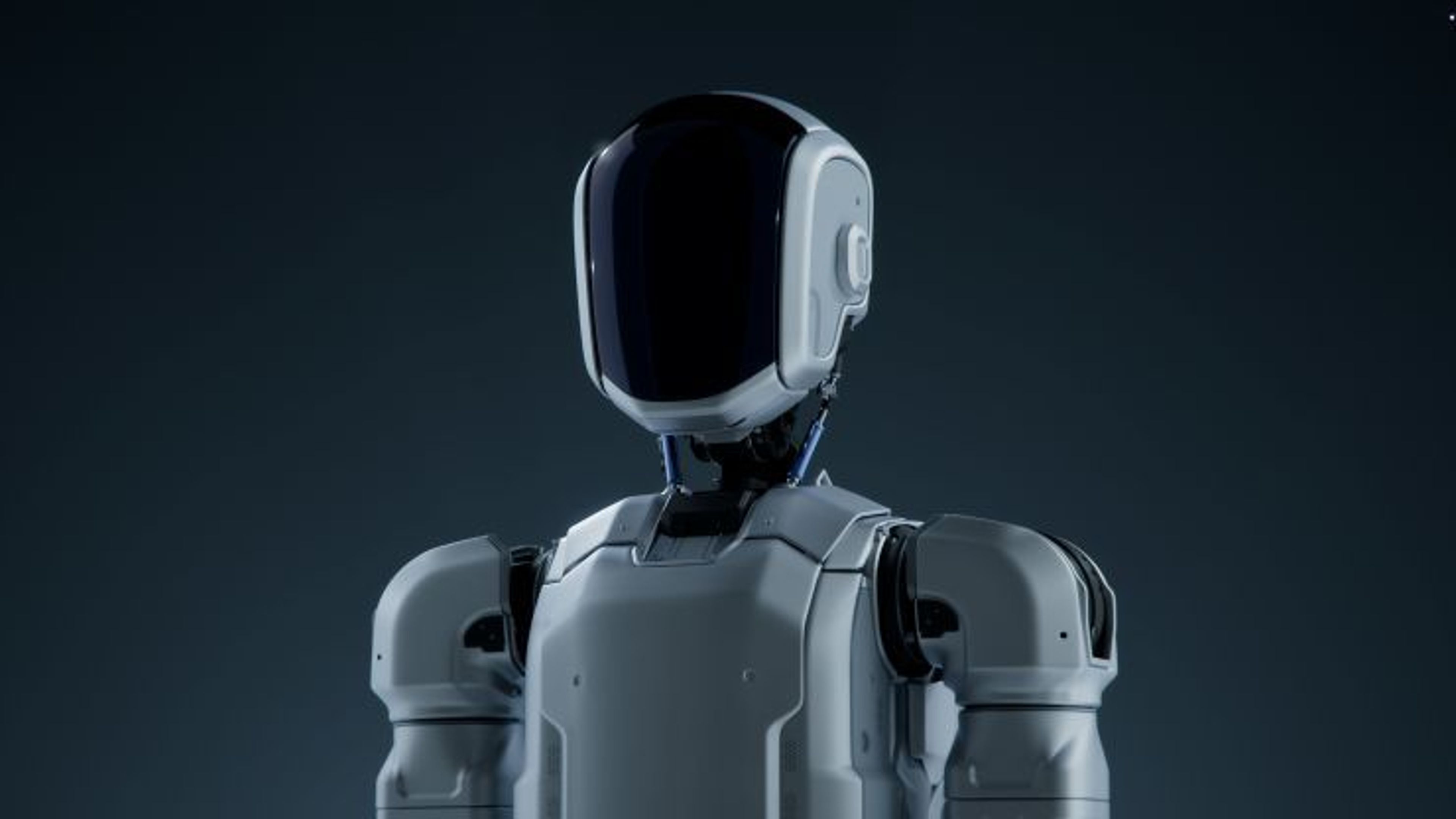

Humanoid Robot AI 2026: A New Era for Robotics and Workplaces
Estimated reading time: 12 minutes
Key Takeaways
- The rise of humanoid robot AI 2026 represents a milestone where autonomous humanoid robots achieve human-like dexterity, speed, and decision-making.
- Breakthroughs in generative AI, agentic intelligence, and hardware integration push these robots beyond prototypes into real-world applications.
- Flagship robots like the Figure AI robot, Tesla’s Optimus Gen 3, and Boston Dynamics’ Atlas showcase advanced autonomy, speed, and precision.
- Humanoid robots are increasingly deployed in manufacturing, logistics, healthcare, and customer service, creating new workplace paradigms.
- Ethical, economic, and safety considerations remain central as Robotics-as-a-Service (RaaS) models democratize access and labor markets adapt.
Table of contents
- Overview of Humanoid Robot AI 2026: Defining the New Standard
- Figure AI Robot Review: Defining Autonomous Precision in Humanoids
- Tesla Optimus Robot Update: Accelerating to 2026 with High-Speed Dexterity
- Boston Dynamics AI Advances: Industrial Dexterity and AI Integration
- Humanoid Robots in the Workplace: Present and Emerging Roles
- The Future of Humanoid Robots: Trends, Impact, and Ethics
- Conclusion: Staying Ahead in the Age of Humanoid Robot AI 2026
- Frequently Asked Questions
Overview of Humanoid Robot AI 2026: Defining the New Standard
Humanoid robot AI 2026 encapsulates the integration of advanced AI models with humanoid robotic platforms engineered to operate autonomously and adaptively in complex human settings by 2026.
Key Technological Innovations
- Artificial Intelligence Capabilities: By 2026, humanoid robots will harness powerful AI, including natural language understanding, enabling them to interpret and follow spoken commands. Self-evolving task execution allows continuous learning and improvement without human reprogramming. Multimodal interactions—combining voice, vision, and touch—produce seamless interaction with humans and environments.
- Mobility and Agility: Next-generation humanoids will achieve speeds up to 8.5 mph, rivaling human jogging speeds, and perform highly agile maneuvers, including backflips and precise acrobatics. This agility is coupled with enhanced dexterity, allowing fine motor skills once exclusive to humans. Learn more.
- Autonomy and Manipulation: Fully autonomous dexterous manipulation is now possible without remote teleoperation. Systems like Dream Dojo employ extensive pre-training on real human video datasets (at 10 to 11 frames per second) to simulate contact-rich tasks accurately, preparing robots to execute complex actions in unpredictable environments. Details here.
These advances mean humanoid robots are not only faster and more agile but natural partners in human workplaces with sophisticated, independent decision-making and multitasking abilities.
Sources for these insights include:
- YouTube CES 2026 Highlights
- IFR Global Robotics Trends 2026
- Interesting Engineering CES 2026 AI Robotics
Figure AI Robot Review: Defining Autonomous Precision in Humanoids
The Figure AI robot, specifically the Gen 3 model known as Figure 03, exemplifies the cutting-edge of humanoid robotics aimed at real-world deployment.
Key Features of the Figure AI Robot
- Planned for commercial production-line use in 2026, these robots are capable of autonomous manufacturing, including assembling new robot units without human intervention.
- Equipped with hardware designed for superhuman speed and surgical precision, enabling tasks demanding extraordinary control and repeatability.
- Leveraging the Dream Dojo AI platform, which pretrains models on large-scale human video datasets, enabling realistic simulation and rapid adaptation across different robotic embodiments. Read more.
Strengths
- Demonstrated superior precision and performance in highly demanding manufacturing-type tasks compared to previous humanoid baselines.
- Autonomous units actively navigate and operate at Figure’s California headquarters, proving real-world viability.
- Reflects a growing trend in robotics: scaling AI by pre-training on massive datasets and fast iteration cycles towards commercialization.
Limitations and Challenges
- Transitioning from demonstrations to sustained industrial cycle times remains a hurdle. Achieving continuous operation at speeds and dexterity matching skilled human workers is still under development.
- Scaling requires robust reliability, energy efficiency, and maintenance systems to operate at production-grade throughput.
Figure AI’s efforts embody how AI-driven humanoid robots of 2026 will learn complex manipulation and evolve rapidly to meet industrial demands.
Sources:
Tesla Optimus Robot Update: Accelerating to 2026 with High-Speed Dexterity
Tesla’s Optimus Gen 3 is a flagship humanoid robot pushing speed, agility, and task complexity beyond prior limits.
Latest Performance Milestones
- Achieved running speeds up to 8.5 mph, matching human jogging speeds and demonstrating swift mobility in industrial scenarios.
- Successfully performed complex maneuvers like backflips, pouring coffee, and folding laundry—tasks highlighting dexterous object manipulation and balance.
- Compressed their development timeline to an astonishing 18 months for these advanced capabilities, accelerating robot readiness.
AI and Hardware Integration
- Tesla adopts an embodied AI training platform, enabling the robot to learn from physical trial-and-error informed by simulation and sensor data. More details.
- The utilization of dexterous robotic hands allows sophisticated object handling.
- Designed explicitly for zero-teleoperation use in automotive production lines, aiming for seamless deployment without human remote control.
Deployment and Market Potential
- Planned scaled deployment during 2026.
- Currently running large-scale trials, including over 200 autonomous units operating in China and more than 500 enterprise evaluations worldwide.
- Expected to contribute billions to market capitalizations, especially for companies embracing Robotics-as-a-Service (RaaS) business models that allow scalable robot adoption without large upfront investments.
These developments position Tesla Optimus as a leading force in commercial humanoid robots capable of transforming industries.
Sources:
Boston Dynamics AI Advances: Industrial Dexterity and AI Integration
Boston Dynamics unveiled the latest Atlas robot at CES 2026, showcasing industrial-ready humanoid technology with impressive specifications.
Atlas Robot Capabilities
- Offers 56 degrees of freedom for intricate joint articulation.
- Possesses a 7.5-foot reach and can lift weights up to 110 pounds, suitable for heavy-duty manufacturing and handling.
- Features hot-swappable batteries that enable prolonged operation with minimal downtime, critical for industrial uptime requirements.
AI Breakthroughs
- Leverages Google DeepMind’s Gemini Robotics AI, powering enhanced task execution in unstructured environments. Learn more.
- Demonstrates complex operations like autonomous tire flipping and full joint motion control, highlighting superior dexterity.
- AI-driven navigation and learning improve adaptability in changing industrial conditions.
Workplace Integration
- Proven reliability through deployments at facilities such as Hyundai’s Georgia manufacturing plant, showcasing readiness for broader manufacturing and warehousing roles.
- Atlas serves as a preview of future humanoid capabilities, setting a new standard for agility, strength, and intelligence in robotics.
Sources:
Humanoid Robots in the Workplace: Present and Emerging Roles
The adoption of humanoid robots in diverse work settings is accelerating, extending beyond research labs into everyday operations.
Industry Applications
- Manufacturing: Robots like Boston Dynamics’ Atlas and Figure AI units are employed for assembly, heavy lifting, and precision tasks in automotive and electronics industries.
- Logistics: Humanoid robots facilitate path planning, inventory management, and autonomous movement of materials within warehouses, improving efficiency and adaptability.
- Customer Service: Emerging deployments include humanoid robots capable of natural interaction through AI-powered voice, vision, and touch interfaces, enabling roles in retail and hospitality.
AI-Enhanced Autonomy
- Analytical AI predicts equipment failure and optimizes maintenance schedules.
- Generative AI helps robots adapt to new and variable tasks dynamically. Explore here.
- Hybrid agentic AI systems combine reasoning, learning, and autonomous planning to navigate complex, unstructured environments.
Additional Horizon Robots
- Unitree’s G1 and H2 models perform inspection and manipulation duties.
- NEURA’s 4NE1 robots share task execution with human counterparts, demonstrating skill transfer and collaboration.
Challenges to Overcome
- Matching traditional automation in cycle time efficiency, energy consumption, and maintenance reliability.
- Complying with strict safety regulations to ensure safe human-robot interactions.
Opportunities
- Addressing global labor shortages and demographic shifts demanding automation.
- The emergence of Robotics-as-a-Service (RaaS) models enables scalable robot usage, reducing capital barriers for companies.
Sources:
The Future of Humanoid Robots: Trends, Impact, and Ethics
Looking ahead, the field of humanoid robotics is poised for transformative growth over the next 5 to 10 years.
Technological Trends
- Development of enhanced dexterous grippers capable of manipulating delicate and irregular objects.
- Robust perception and safety platforms ensuring reliable operation in human environments.
- Expanded AI-enabled autonomy integrating analytical, generative, and hybrid agentic approaches to enhance adaptability.
- Increasing integration of high-fidelity simulation tools such as NVIDIA Isaac GR00T and Gen Sim 0.0 for accelerated AI training and testing.
Human-Robot Collaboration
- Natural language commands will empower seamless interaction and control.
- Robotics will work alongside humans more intuitively, creating hybrid teams in manufacturing, logistics, healthcare, and domestic environments. Learn more.
Societal Impact
- In factories, humanoid robots will optimize productivity with precision and safety.
- Hospitals will leverage robots for assisted surgeries (e.g., Dynamis) and patient care support. Details here.
- Autonomous household chores will be handled by humanoids like CLOiD, enhancing daily living.
Ethical and Economic Considerations
- Balancing job displacement concerns with productivity gains and economic growth.
- Adoption of Robotics-as-a-Service (RaaS) will democratize access to humanoid automation and reshape labor markets.
- Hybrid AI systems will strive for reliability and safety, ensuring trustworthy operation essential for societal acceptance.
Together, these directions confirm humanoid robot AI 2026 as a foundation for innovation, deployment, and transformative impact across industries and daily life.
Sources:
Conclusion: Staying Ahead in the Age of Humanoid Robot AI 2026
The emergence of humanoid robot AI 2026 marks a milestone where advanced AI-powered humanoids blend autonomy, speed, precision, and workplace usability like never before.
This new generation of robots is already reshaping manufacturing, logistics, healthcare, and service industries. Key players like Figure AI, Tesla Optimus, and Boston Dynamics drive rapid innovation and commercialization.
To stay informed about this fast-evolving field, follow official CES recaps, industry trend reports from the IFR, and updates from leading companies including Figure, Tesla, and Boston Dynamics. More info here.
Tracking these developments is essential for individuals and businesses looking to leverage the coming wave of humanoid robotics and AI integration shaping the future of work and society.
Frequently Asked Questions
What is Humanoid Robot AI 2026? Humanoid Robot AI 2026 refers to the advanced integration of autonomous, AI-powered humanoid robots that operate with human-like capabilities across various industries by the year 2026. How do humanoid robots learn complex tasks? They undergo extensive pre-training on large datasets, including real human video data, combined with embodied AI trial-and-error learning platforms (e.g., Dream Dojo) to simulate and master dexterous and contact-rich tasks. What are the key applications of humanoid robots? Key applications include manufacturing, logistics, customer service, healthcare (surgery assistance and patient care), and household automation. Are humanoid robots safe to use around people? Safety is a critical focus, with strict regulations in place. Advanced perception, safety platforms, and human-robot interaction protocols aim to ensure reliability and trustworthiness in shared environments. Will humanoid robots replace human jobs? While some job displacement concerns exist, humanoid robots are intended to augment human work, address labor shortages, and create new opportunities via Robotics-as-a-Service and hybrid collaboration models. Learn more.