Open Source Models Replicate Frontier AI Breakthrough: What Anthropic's Leaked 'Mythos' Findings Really Tell Us
The AI industry's biggest dirty secret just got harder to ignore: open source models replicate frontier AI breakthrough results once thought exclusive to billion-dollar labs. Anthropic's experimental 'Mythos' model reportedly demonstrated remarkable capabilities in cybersecurity and vulnerability detection — until independent researchers began achieving near-identical outcomes using open-source alternatives costing a fraction of the compute budget. If you're tracking the latest AI breakthroughs and frontier model developments, this story rewrites the competitive rulebook entirely.
The thesis here is uncomfortable for the incumbent labs: frontier AI accessibility through open-source may not just be a long-term inevitability — it may already be here.
What We Know About Anthropic's 'Mythos' Model
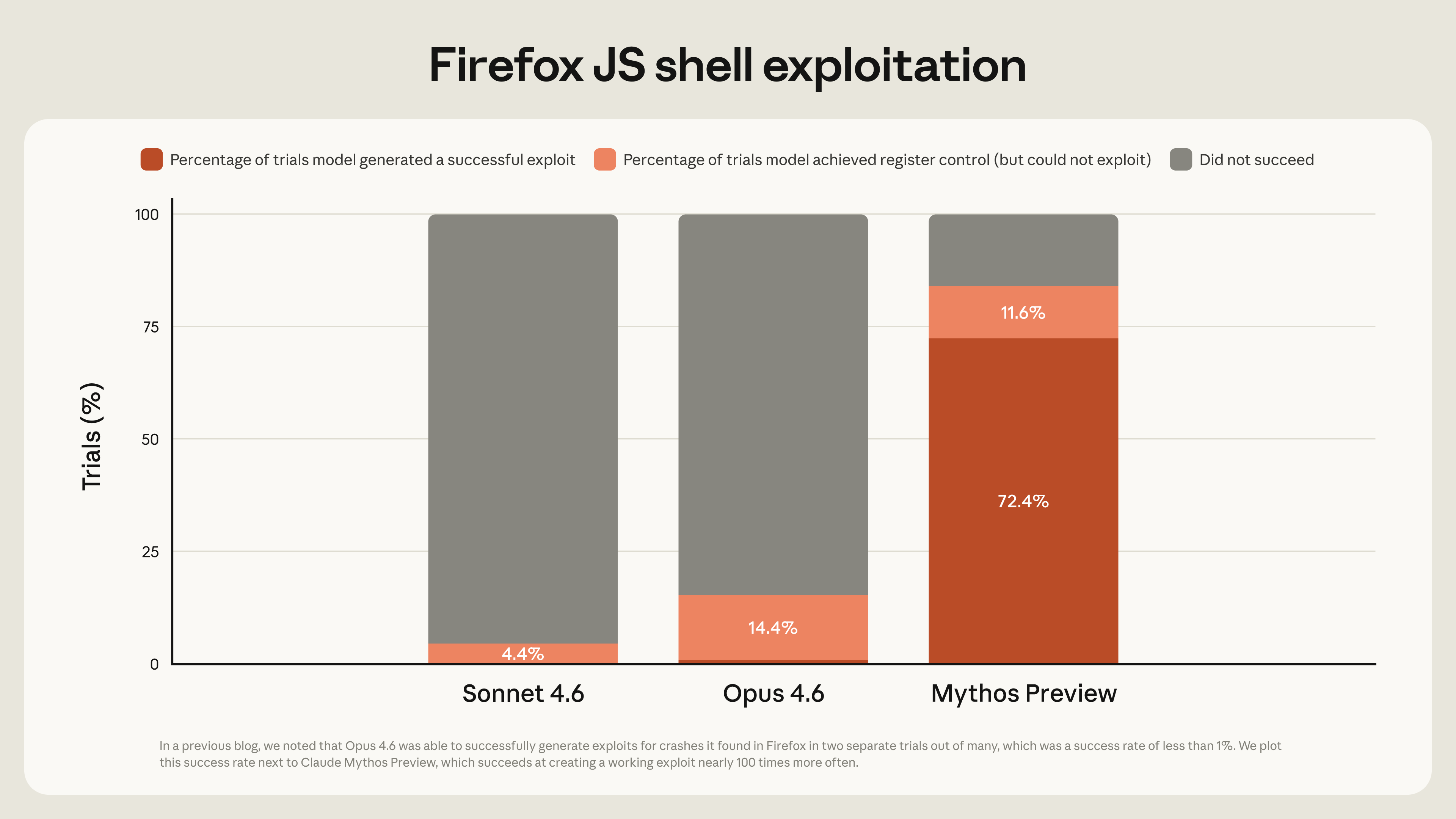
Anthropic's Mythos is not your standard Claude iteration. According to information surfaced across AI research circles, Mythos was developed as an experimental system with advanced cybersecurity capabilities — reportedly capable of identifying thousands of zero-day vulnerabilities across major operating systems and browsers at a scale and speed no prior model had demonstrated publicly.
Zero-day vulnerability discovery is genuinely hard. It requires deep code comprehension, multi-step reasoning across complex dependency chains, and an ability to model adversarial intent. Mythos, by most accounts, performed exceptionally on these dimensions, and Anthropic's internal assessments reportedly reflected genuine surprise at the capability jump.
That's what made the subsequent reproduction findings so striking. Visit Anthropic's research blog and you'll find careful, methodical safety-first framing around everything they publish. What you won't find is an acknowledgment that leaner, open-weight alternatives were quietly catching up.
The Reproduction Problem: How Cheap Models Matched Mythos Results
Here's where the narrative gets disrupted. Researchers working with open-weight models — running on consumer-grade clusters or modest cloud compute — began publishing findings suggesting that with the right prompting strategies, fine-tuning approaches, and task decomposition, they could replicate much of what made Mythos noteworthy in cybersecurity contexts.
The cost differential is the headline. Where Mythos presumably required Anthropic's industrial-scale training infrastructure and proprietary data pipelines, comparable outputs were reportedly achieved with compute budgets measured in the hundreds of dollars. That's not a rounding error — that's a structural rupture.
Open-source model capability parity on tasks once considered "frontier-only" raises a direct question: what exactly is the proprietary moat? If a well-tuned open model can match Mythos on vulnerability detection benchmarks, the argument that scale and secrecy justify frontier AI's premium pricing and restricted access becomes very difficult to sustain.
Peer-reviewed methodologies backing up these comparisons have been circulating on arXiv papers, where independent researchers have been systematically documenting benchmark reproducibility across frontier and open-weight models. The pattern is consistent: the gap is closing faster than the labs' public communications suggest.
AI Research Cost Democratization: The Numbers Behind the Shift
Let's talk about what AI research cost democratization actually looks like in practice. The conventional wisdom held that training and deploying models capable of advanced reasoning tasks — particularly in specialized domains like cybersecurity — required infrastructure only Anthropic, OpenAI, Google DeepMind, or Meta could provision.
That assumption has been steadily eroded by several converging forces. First, the release of high-quality open-weight models like Meta's Llama series, Mistral's model family, and various community fine-tunes created a foundation that researchers could build on without starting from scratch. Second, improvements in quantization, LoRA fine-tuning, and inference optimization dramatically reduced the compute required to run capable models. Third, task-specific fine-tuning on curated datasets proved far more efficient than general-purpose scaling for many real-world applications.
DeepMind research has itself demonstrated through work like Chinchilla that raw parameter count matters less than training efficiency and data quality. The open-source community internalized that lesson faster than the closed labs would prefer to admit.
The result: Mythos reproduction findings on cybersecurity tasks, achieved at a fraction of the cost, are not flukes. They are the predictable output of a research ecosystem that has learned to extract maximum capability from minimum compute.
Frontier AI Benchmark Reproducibility: What This Breaks
Frontier AI benchmark reproducibility is now a serious credibility problem for the major labs. For years, the implicit social contract of AI research was that benchmarks were a shared language — a way of comparing systems across organizations and architectures. That contract has frayed.
When a closed model achieves a striking benchmark result and then open-source alternatives reproduce those results, one of two things is true. Either the benchmark was a genuine measure of capability that open models now possess, which is good news for democratization but bad news for frontier lab moats. Or the benchmark was a flawed proxy that both systems are gaming in different ways, which is bad news for everyone trying to make sense of AI progress.
The Mythos situation highlights a third, more uncomfortable possibility: that "breakthrough" results in controlled lab environments don't always translate to real-world advantage when the task is sufficiently well-defined for open-weight models to learn from. Cybersecurity vulnerability detection, while genuinely complex, is also a domain with substantial existing datasets, published research, and structured problem formats — exactly the kind of task that targeted fine-tuning handles well.
For coverage of how these cybersecurity capabilities play out in deployment contexts, see our analysis of cybersecurity capabilities and vulnerability detection — the gap between lab demos and production security tooling remains significant, even if benchmark parity is real.
What the Competitive Moat Actually Is (And Isn't)
If Mythos results are reproducible with cheap open models, the question every investor, enterprise buyer, and policy maker needs to ask is simple: what are they actually paying for?
The honest answer involves a few legitimate differentiators that haven't collapsed yet. First, inference infrastructure at scale — running a model reliably for millions of users with low latency is an engineering challenge that raw model capability doesn't solve. Second, safety and alignment work — Anthropic's Constitutional AI approach and ongoing interpretability research represent genuine intellectual investment that open-weight releases don't package cleanly. Third, enterprise integration and support — the full stack of compliance, monitoring, and SLA guarantees that enterprise buyers require.
What's not a durable moat: raw benchmark performance, capability on well-defined technical tasks, or the claim that only frontier labs can produce research-grade results. The Mythos reproduction story directly undermines all three.
The open-source AI tools and model alternatives landscape has matured to the point where organizations willing to invest modest engineering effort can achieve results that would have required frontier model access eighteen months ago. That's the actual story — not that open source has "beaten" Anthropic, but that the capability threshold for access has dropped dramatically. Explore how organizations are deploying these open-source AI tools and model alternatives in real productivity contexts.
Implications for AI Governance and the Frontier Lab Narrative
There's a policy dimension here that can't be ignored. Much of the regulatory conversation around AI — in Brussels, Washington, and London — has been structured around the premise that frontier AI capability is concentrated in a handful of identifiable organizations. That concentration is what makes targeted regulation feel tractable.
If open-source models deliver frontier-equivalent results on tasks that regulators care about — like cybersecurity vulnerability discovery — then the regulatory architecture built around controlling frontier labs starts to look like perimeter security with no perimeter. You can require Anthropic to submit Mythos for third-party evaluation. You cannot require the same of every researcher with a GPU cluster and access to open-weight model weights.
This is not an argument against AI regulation. It's an argument that the regulatory framework needs to catch up to the technical reality. The Anthropic Mythos reproduction findings are a concrete data point that should be forcing that conversation now, not in three years. For more on how policy is — and isn't — adapting to these realities, see our comprehensive coverage of frontier AI model governance and responsible development.
The frontier lab model was always partly a story labs told about themselves to justify scale, secrecy, and premium pricing. The Mythos story suggests that story has a shorter shelf life than its authors anticipated.
Conclusion: The Democratization Is Already Happening
The Mythos episode is instructive precisely because it wasn't supposed to happen this way. Anthropic built something remarkable, measured it carefully, and found it capable of genuinely novel technical performance. Then the open-source research community demonstrated that capability parity was within reach at consumer-grade compute budgets.
That's not a scandal. It's a signal — one the industry has been receiving in various forms for the past eighteen months and largely choosing to interpret as noise. The democratization of advanced AI models isn't a future event on a roadmap. It's an ongoing process that has already moved faster than the labs' competitive positioning has acknowledged.
For enterprises, the implication is clear: build evaluation frameworks that test open-weight alternatives alongside frontier API access before committing to long-term contracts. For researchers, it means the most interesting work may increasingly happen at the boundary between lean open models and targeted fine-tuning rather than in the interior of closed frontier labs. For policymakers, it means the regulatory window for a frontier-centric approach is narrowing.
And for Anthropic? The Mythos findings are still impressive. The reproducibility story doesn't make them less technically credible. What it does is reframe the competitive question — from "can you build powerful AI" to "what do you do with it that others can't?" That's a harder question, and a more honest one.
Frequently Asked Questions
What is Anthropic's Mythos model and why does it matter? Mythos is an experimental AI model developed by Anthropic with reported advanced cybersecurity capabilities, including the ability to identify large numbers of zero-day vulnerabilities across major software systems. It matters because it reportedly demonstrated a significant capability jump beyond existing models — making the subsequent reproduction of its results by cheap open-weight alternatives all the more significant.
How were open-source models able to replicate Mythos findings at low cost? Researchers leveraged high-quality open-weight model foundations, combined with targeted fine-tuning using domain-specific datasets, efficient quantization techniques, and structured prompting strategies. The combination allowed them to achieve comparable performance on well-defined cybersecurity tasks without the industrial-scale training infrastructure Anthropic employs.
Does this mean open-source AI is as good as frontier AI across the board? Not across the board — not yet. Frontier models still lead on general reasoning, long-context handling, instruction following, and novel task generalization. But for well-scoped technical domains with sufficient training data and structured problem formats, open-weight alternatives are achieving parity faster than most expected. The gap is task-dependent and shrinking.
What does this mean for businesses currently paying for frontier AI API access? It means due diligence now requires testing open-weight alternatives against specific use-case benchmarks before defaulting to frontier API pricing. For many structured technical tasks, the cost-performance ratio of open models may be significantly more favorable. For general-purpose, high-reliability enterprise deployments, frontier APIs still offer meaningful advantages in consistency and support.
How should AI regulation respond to frontier capability being reproducible by open models? Regulation focused exclusively on controlling a handful of frontier labs may be structurally insufficient if open-weight models can reproduce frontier-grade results. Effective governance will need to address capability thresholds and use-case risks regardless of whether the underlying model is open or closed — a significantly more complex challenge than the current frontier-centric framework anticipates.
Stay ahead of AI — follow TechCircleNow for daily coverage.