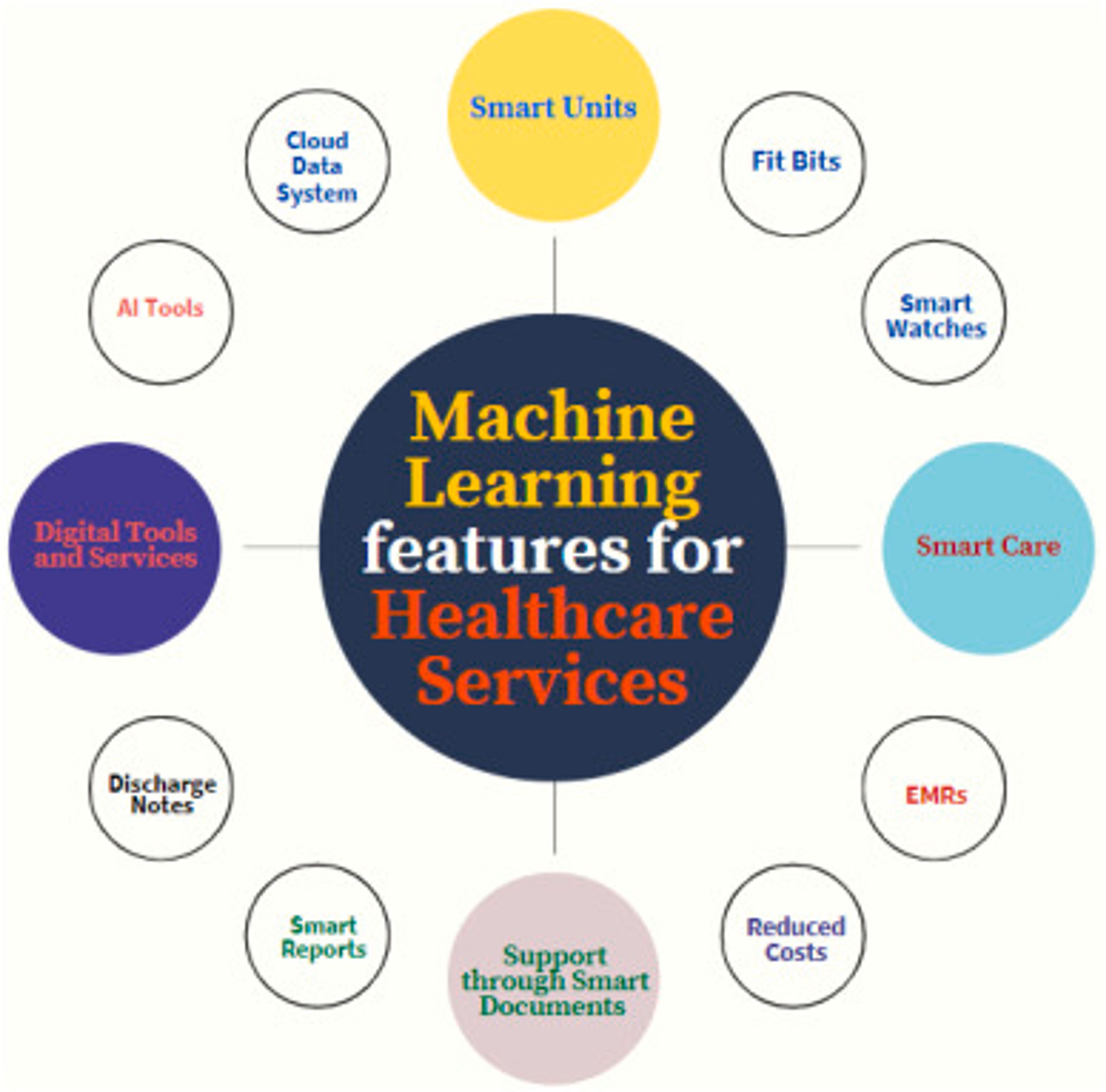

Machine Learning in Healthcare and Its Transformative Impact Across Industries
Estimated reading time: 15 minutes
Key Takeaways
- Machine learning in healthcare is revolutionizing diagnosis, treatment, and patient monitoring with significantly improved outcomes. Read more.
- Advanced applications include AI-driven diagnostics, precision medicine, and accelerated drug discovery, transforming patient care.
- Cross-industry adoption spans finance, retail, manufacturing, cybersecurity, and education, leveraging ML for automation, risk management, and personalization.
- Challenges such as data quality, privacy, algorithmic bias, and regulation remain critical to address for sustainable integration.
- The future of ML includes agentic AI, telehealth synergy, and broader AI-enabled business transformation strategies.
Table of contents
- Machine Learning in Healthcare: Leading Adoption and Transformative Applications
- AI in Finance and Banking: Strategic Automation and Risk Management
- Machine Learning in Retail: Customer Insight and Operational Efficiency
- AI in Manufacturing: Industry 4.0 and Smart Factories
- Machine Learning for Cybersecurity: Proactive and Adaptive Defense
- Machine Learning in Education: Personalized and Adaptive Learning
- Conclusion: Machine Learning as a Cross-Industry Strategic Capability
- Frequently Asked Questions
Machine Learning in Healthcare: Leading Adoption and Transformative Applications
Healthcare, a data-intensive and life-critical field, is a leading adopter of machine learning at scale, leveraging massive datasets to improve diagnoses, treatment precision, and operational efficiency. This adoption unlocks tremendous value in patient outcomes and care innovation worldwide. Learn more →
Key Applications of Machine Learning in Healthcare
Diagnostics: Early and Accurate Disease Detection
Machine learning enhances diagnostic precision by deeply analyzing medical images and clinical data, surpassing traditional variability and delays.
- Image Analysis: ML processes radiology scans, pathology slides, and dermatology images to detect cancers, strokes, and heart disease early. Models match or exceed clinician accuracy, reducing errors drastically.
- Multimodal Models: These combine imaging with lab results and clinical notes, improving differential diagnosis and risk stratification.
Clinical breakthroughs include identifying subtle tumor markers in MRI scans or detecting risky skin lesions, enabling earlier, life-saving interventions. Source, More info, Technical review
Personalized Treatment and Precision Medicine
Each patient is unique, and ML enables tailored therapies by analyzing genetic, lifestyle, and medical history data.
- Tailored Therapies: Multi-omic data including genomics guide precise drug recommendations, maximizing efficacy and reducing side effects.
- Oncology and Chronic Diseases: AI-driven multi-omic analysis supports highly targeted cancer and chronic disease treatments adapted to individual profiles.
This granular precision medicine improves outcomes by embracing patient variability. Details, Industry insights, More here
Drug Discovery and Development Acceleration
ML accelerates drug R&D by designing molecules virtually and predicting drug effects pre-clinically.
- Generative Models: AI generates novel molecular structures, reducing drug discovery timelines from years to months and lowering costs.
- Simulation and Screening: Virtual screening prioritizes promising compounds, streamlining physical testing.
This transforms pharmaceutical innovation by shortening time-to-market for new therapies. Learn more, Future outlook, Details
Patient Monitoring and Predictive Care
Continuous patient monitoring using ML enables early interventions and shifts care focus from reactive to predictive and preventive.
- ICU and Wearables: Analyzing sensor data detects early deterioration signs, prompting timely medical response.
- Chronic Disease Management: Predictive models estimate readmission risks and enable prioritized outreach with proactive care plans.
This leads to better health outcomes and cost reductions. Research, Clinical study, More info
Benefits of Machine Learning in Healthcare
- Increased Diagnostic Accuracy: Early detection and reduced errors improve treatment efficacy.
- Efficiency Gains: Automation of routine tasks enables clinicians to focus on patient care.
- Population Health Management: Predictive analytics optimize resource usage and patient outcomes.
Machine learning in healthcare delivers measurable improvements for all stakeholders. Explore benefits, Case insights, Deep dive, Additional reading
Challenges and Future Prospects
Despite successes, challenges remain:
- Data Quality and Interoperability: Integrating disparate sources is difficult but vital.
- Algorithmic Bias: Avoiding health disparities requires rigorous validation.
- Privacy and Security: Protecting sensitive data is paramount.
- Regulatory and Clinical Validation: Slow approval cycles necessitate strong clinical evidence.
Future trends include integrating agentic AI, expanding telehealth, and advancing precision medicine to deepen ML impact. Challenges discussed, Future outlook, Tech updates, More
AI in Finance and Banking: Strategic Automation and Risk Management
Financial institutions operate on large, complex data, embracing AI and machine learning to enhance efficiency, security, and client services.
Core Applications in Finance
- Fraud Detection and Anti-Money Laundering (AML): Real-time detection of abnormal transactions reduces false positives and enhances security.
- Risk Assessment and Credit Scoring: Using alternative data and granular models supports stress testing and scenario analyses.
- Algorithmic and High-Frequency Trading: AI optimizes trading via news flow, market microstructure, and macroeconomic data.
- Customer Service and Personalization: AI chatbots provide constant support and tailor financial advice.
Strategic Uses
- Accelerates inclusive lending by enabling faster, fairer credit decisions.
- Enhances regulatory compliance with AI monitoring and documentation.
- Improves capital allocation and portfolio management with predictive insights.
Finance parallels healthcare in AI adoption focusing on risk and relationship management. Machine learning in healthcare remains a benchmark for reliability and transparency. Fintech trends, Fraud & credit scoring
Machine Learning in Retail: Customer Insight and Operational Efficiency
Retail leverages ML to understand behavior, optimize inventory, and enhance marketing effectiveness.
Key Applications in Retail
- Customer Behavior Analysis: Segmentation, churn prediction, and lifetime value modeling personalize targeting.
- Inventory Management and Demand Forecasting: Forecast models integrate history, seasonality, and external factors to optimize stock. Source
- Personalized Marketing: Dynamic pricing and tailored campaigns boost conversions.
- Recommendation Systems: Suggest complementary items to increase basket size and satisfaction.
- Supply Chain Optimization: Routing and replenishment algorithms reduce costs and lead times.
Impact on Retail Operations
- Enhanced Customer Experience: Personalization fosters loyalty.
- Operational Efficiency: Improved inventory reduces waste and stockouts.
Retail’s ML adoption benefits from healthcare’s proven frameworks. More info
AI in Manufacturing: Industry 4.0 and Smart Factories
Manufacturing’s shift to Industry 4.0 features interconnected, self-optimizing factories empowered by AI.
Machine Learning Uses in Manufacturing
- Predictive Maintenance: Sensor data forecasts equipment failures, enabling timely maintenance.
- Quality Control: Computer vision detects subtle defects beyond human capabilities.
- Supply Chain and Production Planning: AI forecasts demand and schedules dynamically, reducing bottlenecks.
- Automation and Robotics: ML-powered robots adapt in real-time for flexibility and efficiency.
Role of ML in Industry 4.0
Machine learning drives smart factory intelligence, paralleling healthcare’s use of predictive analytics and sensor data. Explore trends
Machine Learning for Cybersecurity: Proactive and Adaptive Defense
With evolving threats, ML is critical to adaptive, proactive cybersecurity defense.
Core Security Applications
- Threat and Anomaly Detection: Models identify suspicious user and network behavior to flag threats.
- Intrusion Detection and Response: Integration with SIEM and XDR automates prioritization and countermeasures.
- Phishing Prevention: Classification detects malicious emails, URLs, and impersonations.
- Malware Analysis: AI classifies new and zero-day malware variants.
Benefits
- Accelerated detection and response improve security posture.
- Reduced breach frequency lowers operational risk.
The cybersecurity domain complements healthcare and finance ML applications with emphasis on privacy and real-time decisions. Cybersecurity trends, Insights
Machine Learning in Education: Personalized and Adaptive Learning
Education leverages ML to create tailored instruction that supports learners and educators alike.
ML Applications in Education
- Personalized Learning: Adaptive platforms adjust difficulty and pacing in real time based on student engagement.
- Automated Grading and Feedback: ML speeds assessment turnaround for formative feedback.
- Student Performance Prediction: Early-warning systems identify at-risk students.
- Adaptive Curricula and Recommendations: AI recommends tailored learning paths matching goals, knowledge, and style.
Benefits and Challenges
- Improved learning outcomes, reduced educator workload, and better teaching strategies.
- Challenges include privacy, bias mitigation, and ensuring human educator roles remain central.
Education shares ML concerns around privacy and fairness with healthcare and cybersecurity. Learn more
Conclusion: Machine Learning as a Cross-Industry Strategic Capability
Machine learning has transcended niche status to become a core strategic capability driving automation, personalized insights, and operational efficiency across sectors.
Healthcare’s pioneering ML adoption serves as a blueprint given its focus on precision, reliability, and measurable impact.
Considerations for organizations include:
- Identifying repeatable decisions ripe for automation or augmentation.
- Evaluating existing and potential data sources for predictive modeling.
- Targeting ML to significantly improve outcomes, efficiency, or user experience.
Investing thoughtfully in governance and ethics will secure competitive advantage as AI reshapes business landscapes including machine learning in healthcare, AI in finance and banking, machine learning in retail, AI in manufacturing, machine learning for cybersecurity, and machine learning in education. Read more
Frequently Asked Questions
What makes machine learning particularly impactful in healthcare?
Healthcare’s reliance on large, complex, and high-stakes data along with the critical need for precision diagnostics and personalized treatment positions ML as a transformative force in patient outcomes and operational efficiency.
How does AI in finance differ from healthcare applications?
Finance uses AI primarily for risk management, fraud detection, and client personalization, whereas healthcare focuses more on clinical decision support, diagnostics, and treatment personalization. Both demand high reliability but prioritize different types of data and outcomes.
What are the biggest challenges to adopting machine learning across industries?
Common challenges include data quality and interoperability, privacy and security concerns, algorithmic bias, regulatory hurdles, and the need for clinical or domain validation to build trust and efficacy.
Can machine learning entirely replace human expertise in healthcare or other sectors?
No. ML acts as an augmentative tool providing insights and automation, but human judgment, oversight, and empathy remain critical, especially in healthcare and education where ethical considerations and individual variability are paramount.
How can organizations start implementing machine learning effectively?
Begin with focused pilot projects addressing specific operational or strategic challenges, develop governance frameworks, engage domain experts, and leverage proven case studies to build confidence and scalability.