
What Is Machine Learning? A Simple Guide for Beginners
Estimated reading time: 10 minutes
Key Takeaways
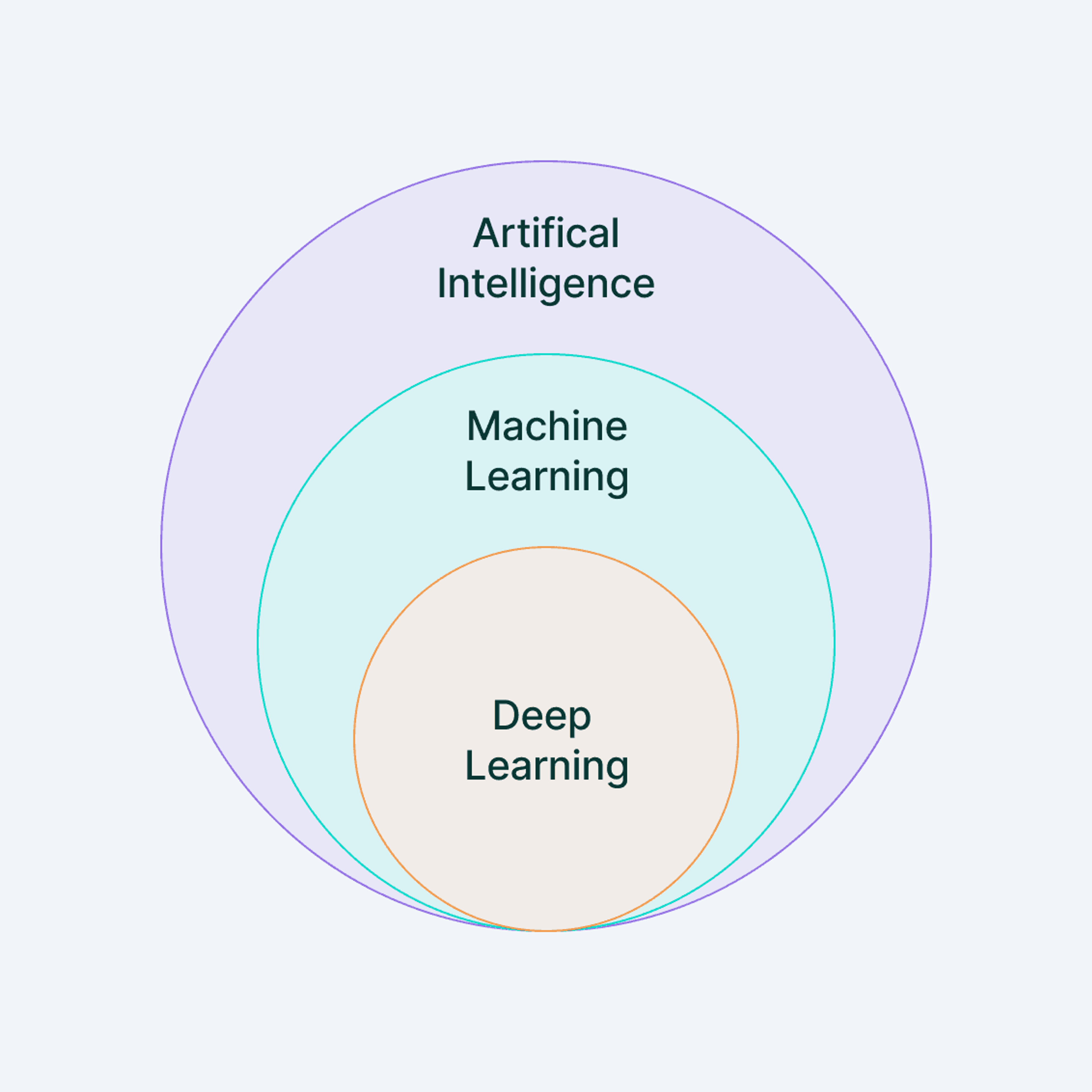
- Machine learning is a subfield of artificial intelligence (AI) that enables computers to learn from data and make predictions or decisions without explicit programming.
- There are three main types of machine learning: supervised, unsupervised, and reinforcement learning.
- Supervised learning uses labeled data for classification or regression tasks, while unsupervised learning uncovers hidden patterns in unlabeled data.
- Deep learning is a subset of machine learning that uses multi-layered neural networks to solve complex problems.
- Beginner-friendly, no-code tools and platforms make machine learning for beginners accessible to everyone.
Table of contents
- What Is Machine Learning? A Clear Definition
- Machine Learning Explained Simply: How It Works
- Types of Machine Learning: The Main Categories
- Supervised vs Unsupervised Learning: Key Differences
- Machine Learning vs Deep Learning: Understanding the Difference
- Machine Learning for Beginners: Getting Started Easily
- Conclusion: Why Understanding What Is Machine Learning Matters
- Frequently Asked Questions
What Is Machine Learning? A Clear Definition
Machine learning is a subfield of artificial intelligence (AI) that enables computers to learn from data and make predictions or decisions without being explicitly programmed to do so. Instead of following fixed rules, machines use algorithms to identify patterns and improve their performance over time.
For beginners and non-technical professionals, understanding what is machine learning is vital because this technology powers many everyday applications, including:
- Product recommendations on shopping sites.
- Fraud detection in banking.
- Voice assistants like Siri or Alexa.
This growing importance is why more people are seeking a simple, straightforward explanation of machine learning and how it impacts our lives.
Machine Learning Explained Simply: How It Works
Machine learning explained simply means understanding that machines “learn” by being trained on data rather than following hard-coded rules.
Imagine teaching a child to recognize animals. You show the child many pictures labeled “cat,” “dog,” “bird,” and so on. Over time, the child learns what features make a cat a cat or a dog a dog. Eventually, the child can identify new animals without labels.
This analogy works well for machine learning:
- Algorithms are trained on datasets where input data is paired with expected outputs (labeled data).
- Instead of explicit instructions (“If it has feathers, it is a bird”), the system learns internal parameters from historical examples.
- For example, a machine learning model might learn to identify flowers from photos or forecast stock prices by noticing patterns. See more here.
- As more data is fed in, the model refines its ability to predict and classify new, unseen information more accurately.
By continuously adjusting itself based on data, machine learning systems improve without human programmers rewriting code.
Sources:
Coursera |
MIT Sloan |
IBM |
OMQ AI |
AWS
Types of Machine Learning: The Main Categories
When studying types of machine learning, we focus on three broad approaches:
1. Supervised Learning
- Uses labeled datasets where input-output pairs are known.
- The model learns to predict the correct output (like “spam” or “not spam”) from inputs (emails).
- Commonly used for classification and regression tasks.
Example: Email spam detection, where emails are labeled as spam or not, and the system learns to classify future emails correctly.
Source: Coursera
2. Unsupervised Learning
- Works with unlabeled data, meaning no predefined answers are given.
- The model uncovers hidden patterns or groupings in the data.
Example: Customer segmentation to find groups of similar buyers in marketing without prior labels.
Source: OMQ AI
3. Reinforcement Learning (Optional Introduction)
- Involves learning through trial and error, receiving feedback as rewards or penalties.
- Often used in robotics or game AI to optimize actions over time.
Example: Teaching a robot to navigate a maze by rewarding paths that lead to the exit.
Source: IBM
Real-World Uses for Each Type
- Supervised learning: Netflix recommendations based on viewer ratings and history.
- Unsupervised learning: Discovering market trends by analyzing purchasing behavior.
- Reinforcement learning: Optimizing robot movements in manufacturing.
Supervised vs Unsupervised Learning: Key Differences
Understanding supervised vs unsupervised learning is critical when exploring types of machine learning. Here’s a side-by-side comparison:
Aspect
Supervised Learning
Unsupervised Learning
Data Type
Labeled data (e.g., photos tagged “cat” or “dog”)
Unlabeled data (raw input with no tags)
Training Process
Learns from input-output pairs to predict outcomes
Discovers patterns and clusters independently
Purpose
Predict or classify (e.g., medical diagnosis)
Find hidden structures (e.g., customer clusters)
Use Cases
Fraud detection, spam filtering
Anomaly detection, recommendation systems without prior labels
When to Use Which?
- Supervised learning shines when you have clear outcomes (labels) to guide training and want accurate predictions. Learn more.
- Unsupervised learning excels at providing insights and pattern discovery when no labels exist.
Machine Learning vs Deep Learning: Understanding the Difference
A common question is how machine learning vs deep learning differ.
What is Deep Learning?
Deep learning is a subset of machine learning. It uses multi-layered artificial neural networks modeled loosely on the human brain to analyze complex, unstructured data like images, audio, or text. More info here.
Comparison at a Glance:
Aspect
Machine Learning
Deep Learning
Complexity
Algorithms like decision trees or regression
Deep neural networks with multiple layers
Data Needs
Moderate amounts of labeled data
Large datasets plus significant computing power (GPUs)
Use Cases
Basic predictions like sales forecasts
Image recognition, natural language processing
Summary
- Machine learning includes various techniques helpful for more straightforward tasks.
- Deep learning handles intricate problems but demands more resources.
Machine Learning for Beginners: Getting Started Easily
For non-technical users, machine learning for beginners can be approachable using these practical tips:
Try No-Code Tools
- Platforms like Akkio allow drag-and-drop model building without coding.
Explore Everyday Examples
- Google Photos’ auto-tagging of people and places.
- Spotify’s personalized playlists.
- Credit card fraud alerts detecting suspicious transactions.
Source: AWS
Experiment with Free Platforms
- Google Teachable Machine: Train models using your webcam easily.
- Coursera offers beginner courses on machine learning basics.
Use Simple Analogies
Think of data as ingredients and algorithms as recipes that improve themselves with each attempt.
Cultivate Curiosity
Ask questions like “How does this app know that?” to deepen understanding and explore tutorials. Learn how to use ChatGPT effectively.
Conclusion: Why Understanding What Is Machine Learning Matters
In summary, what is machine learning? It is a powerful branch of AI focused on enabling computers to learn from data autonomously, making predictions and decisions without explicit programming.
Key takeaways include:
- Supervised learning uses labeled data for prediction and classification.
- Unsupervised learning finds hidden patterns from unlabeled data.
- Deep learning is a sophisticated neural network-based subset for complex tasks.
For beginners and professionals alike, mastering these basics unlocks countless opportunities in today’s AI-driven world.
Ready to start your machine learning journey? Try out beginner-friendly tools like Akkio or Google Teachable Machine. Consider enrolling in free introductory courses on platforms like Coursera or IBM to gain hands-on experience.
The future is powered by AI and machine learning. Understanding these foundations gives you a valuable edge. Learn more about AI trends.
Frequently Asked Questions
What is machine learning?
Machine learning is a branch of artificial intelligence that allows computers to learn from data and improve their performance on tasks over time without being explicitly programmed.
What are the main types of machine learning?
The three main types are supervised learning (using labeled data), unsupervised learning (finding patterns in unlabeled data), and reinforcement learning (learning through rewards and penalties).
How does machine learning work?
It works by training algorithms on data, allowing the system to recognize patterns and make decisions or predictions without following programmed rules.
What is the difference between machine learning and deep learning?
Deep learning is a subset of machine learning that utilizes multi-layered neural networks to handle complex, unstructured data for tasks like image and speech recognition.
How can beginners start learning machine learning?
Beginners can start with no-code tools like Akkio, experiment with platforms like Google Teachable Machine, and take free online courses on Coursera or IBM.